A billionaire automotive tycoon wants to drill a 500-meter private tunnel through a protected, UNESCO-listed Austrian hill just so his luxury car collection doesn't get stuck in the winter ice. It sounds like the plot of a heavy-handed satirical movie. But this actually happened in Salzburg, and the resulting public backlash has just triggered one of the most significant cultural preservation battles in recent memory.
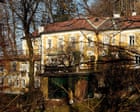
At the center of the storm is the Paschinger Schlössl, better known to history as Stefan Zweig's Salzburg villa.
The 17th-century estate on the rugged Kapuzinerberg hill was recently put on the market by its billionaire owner, Wolfgang Porsche, for a staggering €12.7 million. He listed it after public outrage forced him to abandon his private tunnel plans. Now, a massive campaign backed by thousands of Austrian artists, writers, and academics is scrambling to secure the funds to buy the villa and turn it into a public cultural site. They argue that saving the home of one of Europe's greatest literary figures is a moral and historical obligation.
This isn't just a dispute over local real estate zoning laws. It's a clash between billionaire entitlement and the preservation of a fractured European legacy.
The Backstory of a Billionaire's Subterranean Pet Project
Wolfgang Porsche, the chairman of Porsche’s supervisory board, bought the storied property back in 2020 for €8.4 million. The villa needed serious work, and Porsche poured millions into a meticulous renovation. The trouble started when he decided he didn't like the commute.
The Kapuzinerberg hill is notoriously difficult to navigate. The driveway is steep, narrow, and turns into a treacherous sheet of ice during Austrian winters. In a classic twist of historical irony, Stefan Zweig himself loved this exact inconvenience. The author famously described his home as romantic and impractical, noting that one of its primary charms was that it was entirely inaccessible to cars and could only be reached by climbing more than a hundred stone steps.
Porsche didn't share the author's appreciation for car-free romanticism.
In early 2024, Porsche quietly struck a deal with Salzburg's then-mayor, Harald Preuner. For a meager €40,000, the billionaire bought the underground rights to drill a private 500-meter access road through city-owned, protected public land. The tunnel was designed to lead directly from a public parking garage in the city center straight into a newly excavated underground cavern beneath the villa, large enough to park up to a dozen of his prized vehicles.
When local politicians and residents found out about the back-door deal, the reaction was explosive.
Salzburg is a city wrestling with an acute housing shortage and sky-high rental prices. Watching an international billionaire hollow out a natural reserve for his personal comfort struck a raw nerve. Critics labeled it the absolute height of inequality. The local Green party leader, Ingeborg Haller, fiercely condemned the project, pointing out the gross double standard. An average citizen trying to build a basic structure in a protected zone faces a decade of bureaucratic nightmares. A billionaire gets a private tunnel approved for the price of a mid-tier sedan.
Why Stefan Zweig's Salzburg Villa is Sacred Ground
To understand why people are so furious, you have to look at what the villa actually represents. Stefan Zweig lived in the house from 1919 to 1934. During those fifteen years, the villa became the beating heart of European intellectual life.
It was a sanctuary.
Monolithic cultural figures like James Joyce, Thomas Mann, Richard Strauss, and H.G. Wells walked up those hundred-plus stone steps to debate literature, music, and the future of a fragile continent. Inside those walls, Zweig penned some of his most brilliant masterpieces, capturing the psychological anxieties of an era sliding toward catastrophe. If you've ever watched Wes Anderson's film The Grand Budapest Hotel, you've tasted Zweig’s world; his melancholic, beautiful memoirs directly inspired the entire aesthetic and tone of that movie.
The peace didn't last.
In 1934, as the Austro-fascist regime tightened its grip, the police raided Zweig’s villa looking for weapons under a false pretext. Recognizing the terrifying writing on the wall, the Jewish author packed his bags and fled to Britain, eventually ending up in Brazil, where he tragically took his own life in 1942. His family was forced to sell the Salzburg property at a rock-bottom price.
Because of this dark history, many Austrians feel that treating the property as a luxury playground for automotive elite is an insult to Zweig's memory. The house is a physical monument to the displacement, exile, and cultural destruction caused by fascism.
The Escape Hatch and the Flawed Marketing Pitch
Faced with a relentless PR nightmare and a shifting local political climate that saw a left-wing mayor take office, Porsche decided to cut his losses. He halted the tunnel project and hoisted the villa back onto the market.
But he didn't leave quietly.
The property is now listed for €12.7 million—a massive jump from his original purchase price. Sneakily, the estate agents are using the heavily contested tunnel permit as a major selling point. The sales pitch explicitly tells prospective multi-millionaires that they will be seduced by the remarkable, approved private tunnel project and a unique annex for an underground garage.
Local activists are disgusted by this move.
The Greens have demanded that the city immediately revoke the drilling permit, arguing that public land shouldn't be leveraged for private real estate speculation. It's a completely valid point. Why should a billionaire profit from an inflated property valuation based on a controversial permit that the public explicitly rejected?
Porsche's representatives have tried to dismiss the outrage as nothing more than an envy-driven debate. That is a lazy defense. This isn't about jealousy. This is about whether public infrastructure and historical heritage exist to serve the community or whether they can be sliced up and sold off to the highest bidder.
The Fight to Bring the Villa Into Public Hands
This brings us to the current rescue campaign. A massive petition addressed to federal and local authorities has gained thousands of signatures, pulling in heavy hitters from the classical music world, literary circles, and academia.
They want the government to step in and buy it.
The petition calls the acquisition a cultural responsibility to future generations. The vision is simple yet profound: stop the estate from disappearing into private hands again. Open it up. Make it a space where regular people can experience its historical significance firsthand.
There's a financial glimmer of hope, too. Bernhard Fügenschuh, the rector of the University of Salzburg, has publicly stated that the university has the institutional means and desire to help secure the villa. They want to utilize the space for academic and cultural purposes, ensuring it remains an active intellectual hub rather than a dead monument or a corporate retreat.
Salzburg's current mayor, Bernhard Auinger, has expressed sympathy but claims the city's coffers simply don't have the spare millions required to match the asking price. It's a classic bureaucratic standoff. The local government points to the budget, while the cultural community points to the irreparable loss of a historical treasure.
What Needs to Happen Next
If you care about the preservation of cultural history, watching from the sidelines isn't enough. History gets erased quietly, usually behind the closed doors of high-end real estate brokerages.
First, pressure needs to remain fixed on the Salzburg city council to formally revoke the underground tunnel permit. Stripping that permit from the listing will instantly deflate the artificial premium on the property, making it less attractive to luxury developers and far more accessible to public buyers.
Second, the federal Austrian ministry of culture needs to step up. This isn't a municipal issue; Stefan Zweig belongs to global literary history. Federal intervention and joint financing with the University of Salzburg is the only realistic blueprint to match that €12.7 million valuation.
The campaign is organizing public rallies and expanding its digital petition worldwide. Keeping the international spotlight on Salzburg ensures that the local government cannot quietly let the property slide into the hands of another reclusive billionaire. The steps leading up the Kapuzinerberg should remain open to the thinkers, the readers, and the public—just as Zweig would have wanted.