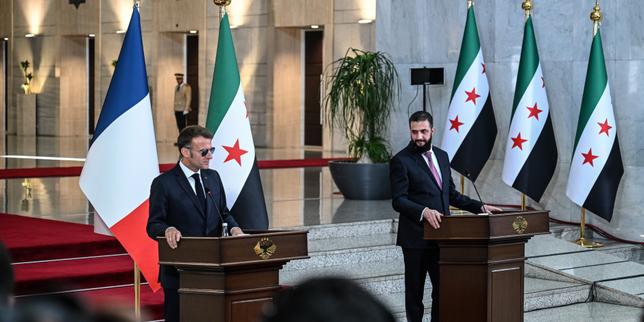
Forget the old assumptions about Middle Eastern diplomacy. Syria's new president, Ahmed al-Sharaa, just sat down with French President Emmanuel Macron in Damascus, and they're completely rewriting the regional playbook.
This isn't just a routine photo op. It's a massive, tectonic shift in how Europe interacts with the post-Assad Syrian state. For years, Western powers isolated Damascus, treating it as a pariah. Today, the conversation isn't about isolation anymore. It's about rebuilding, shipping lanes, and regional stability.
Amidst this diplomatic reboot, Al-Sharaa laid a heavy request on the table. He's counting on an active French role to stop what he calls systematic Israeli escalations against his country.
Behind the closed doors in Damascus
The meeting marks a historical milestone. After more than a decade of frozen relations, France and Syria officially agreed to reappoint ambassadors. France closed its embassy back in 2012 as the civil war erupted. They symbolically dipped their toes back in early 2025, but this latest agreement cements a full restoration of formal diplomatic channels.
The stakes are incredibly high. Just how volatile is the ground? Two bombs exploded near a hotel where Macron was holding meetings during his visit. It didn't stop him. Macron took to social media to state that nothing can undermine the desire of Syrians to live in a fully sovereign and secure nation.
Honestly, the security situation remains a tightrope walk. But both leaders seem determined to push forward anyway.
The heavy shadow of Israel and Lebanon
Al-Sharaa isn't holding back on his security concerns. Since the fall of the former regime, Israeli airstrikes and troop presence in southern Syria have continued to spike. The Syrian president explicitly condemned these actions during a joint press conference, calling them systematic aggressions that threaten the entire region.
He wants France to step in as a mediator and enforcer of international agreements. According to Al-Sharaa, Syria's stability is completely inseparable from that of Lebanon, and vice versa. It's a clear signal to Paris. If France wants to protect its historical interests in Lebanon, it has to help stabilize Syria first.
Many people think Syria is too broken to have diplomatic leverage. They're wrong. The ongoing crisis in the Strait of Hormuz has suddenly made Syria's geography highly valuable again.
Rebuilding from the ashes of dictatorship
Syria wants to position itself as a vital logistical crossroads linking the Mediterranean with Iraq and the Gulf. To do that, they need cash and corporate backing. Al-Sharaa used an economic forum during Macron's visit to pitch French business leaders directly.
The roadmap he outlined covers almost everything. We're talking about renewing commercial aviation fleets, upgrading air navigation, exploring offshore energy, and modernizing digital infrastructure.
Look at the numbers. French shipping giant CMA CGM already signed a €230 million deal to develop the Port of Latakia about 14 months ago. They just committed an extra €200 million to boost its capacity. That's real money flowing into a country that was completely blacklisted a short while ago.
Macron brought his own offering to the table. France is returning €51 million in assets that were illegally acquired by the family of the former dictator, Bashar al-Assad. This money will go straight into financing development projects across the country. Paris is also stepping in to help restructure the Syrian central bank and the wider banking sector.
What happens next for the region
Don't expect overnight miracles. The region is still incredibly fractured, and the shadow of war looms large. Western companies are still going to be cautious, regardless of what Macron promises.
If you're watching this situation develop, look for these specific developments next. Watch whether the new ambassadors are placed in their offices without further security disruptions. Track the progress of the Latakia port expansion over the next six months to see if European shipping actually shifts away from traditional routes. Finally, keep an eye on the diplomatic messaging out of Paris regarding Israeli actions in southern Syria. That will tell you exactly how much weight France is willing to pull for its new partner.