When a dictator’s family flees with the national treasury, the money rarely goes back to where it belongs. It usually sits in foreign bank accounts, frozen by red tape or swallowed by expensive European lawyers.
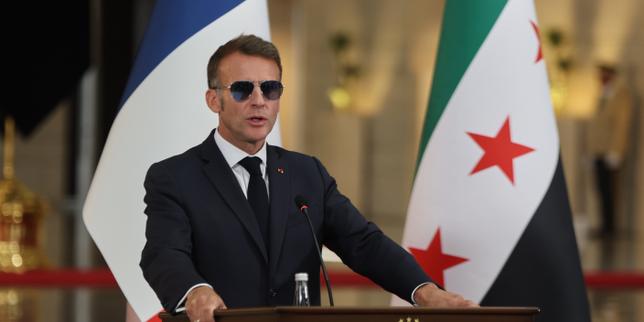
But a major shift just happened in Damas. On July 7, 2026, French President Emmanuel Macron announced that France will hand over more than 50 million euros to the Syrian people. The cash comes straight from the seized French property empire of Rifaat al-Assad, the notorious uncle of the deposed dictator Bachar al-Assad.
This isn't just a routine diplomatic gesture. It’s the first real test of France's 2021 asset restitution law, and it represents a massive gamble on the stability of Syria's new political leadership under Ahmad al-Sharaa.
The Butcher's Luxury Exile
To understand why this payout matters, you have to look at where the money came from. Rifaat al-Assad earned the moniker "The Butcher of Hama" for leading the horrific 1982 slaughter of thousands of civilians under his brother, Hafez al-Assad. After a failed coup attempt in 1984, he was essentially bribed to leave the country with hundreds of millions of dollars taken straight from the Syrian Central Bank.
He didn't hide in the shadows. He spent 37 years living like royalty in Paris and Marbella, building a massive real estate portfolio.
- The French Haul: Luxury townhouses, a stud farm, and prime Parisian apartments valued at roughly 90 million euros.
- The Spanish Empire: More than 500 properties worth an estimated 700 million euros.
- The Ultimate Escape: When French courts finally sentenced him to four years in prison in 2022 for money laundering and embezzlement, he skipped the country and fled back to Damascus.
Rifaat died in exile in early 2026 at the age of 88, never spending a single day inside a French prison cell. But while he escaped human justice, his money couldn't flee the country.
Moving Past the Competitor Narrative
Most mainstream coverage framing this story treats the 51 million euros as a simple charitable donation or a standard geopolitical handshake. That angle misses the core legal and practical friction points.
The real story isn't just that France is giving the money back. The real story is the unprecedented legal mechanism making it happen and the deep skepticism about where that cash will actually land.
France's 2021 law on development and global inequality explicitly states that confiscated "ill-gotten gains" cannot simply disappear into the French state budget. They must be funneled back to the population that was originally robbed. Sounds great on paper, right?
But executing this in a country like Syria, which is recovering from decades of Assad family rule and a brutal civil war, is incredibly complex. French authorities previously refused to return these funds because they knew the money would just fund Bachar al-Assad’s barrel bombs and luxury lifestyle. Now that the old regime has collapsed and Ahmad al-Sharaa is leading the country, Paris has finally signed a global partnership agreement to release the first major installment of 51 million euros.
Where the Money Is Actually Going
Syrian officials, including Deputy Justice Minister Mustafa Al Qasim, have been quietly working with French prosecutors and the National Anti-Terrorism Prosecutor's Office for months to iron out the details.
They aren't just cutting a blank check to the new government in Damascus. The letter of intent signed during Macron’s visit sets up strict, legally binding guardrails. The funds are earmarked for concrete, localized development projects rather than general government administration.
Given the current crisis on the ground, the priorities are stark. Syria is battling a devastating, multi-year drought alongside a severe domestic wheat shortage. Initial planning discussions indicate the French funds will be injected directly into rebuilding basic agricultural infrastructure, fixing shattered water systems, and supporting transitional justice initiatives to document mass graves left behind by the old regime.
The French Ministry of Foreign Affairs will maintain direct oversight over the liquidation of the remaining properties, including luxury estates like the Harras de Besancq, to ensure the proceeds go directly to humanitarian NGOs and local execution partners rather than disappearing into a new web of bureaucratic corruption.
What Needs to Happen Next
If you're tracking the rebuilding of post-war economies or monitoring international asset recovery, this case sets a massive precedent. What happens in Damascus over the next twelve months will dictate whether billions of dollars in other frozen dictator assets around the world ever see the light of day.
Here is what needs to be watched closely moving forward:
- Monitor the Spanish Seizures: The 51 million euros from France is small change compared to the 700 million euros frozen in Spain. Legal teams in Madrid are watching the French framework closely to see if they can replicate the model.
- Audit the Local Delivery: True transparency requires independent international auditing of the agricultural and infrastructure projects funded by this first tranche. Watchdog groups like the Syria Justice and Accountability Centre will need unhindered access to check the books.
- Establish Legal Precedents: Other nations holding looted Syrian assets, including Switzerland and the UK, need to formalize similar asset-return treaties to prevent frozen funds from sitting dormant indefinitely.
Recovering stolen state wealth is a slow, grueling process. Returning it without fueling a new wave of corruption is even harder. France took the first step, but the real work begins now on the ground in Syria.