The illusion of safety in the world's most critical energy chokepoint just shattered. If you thought the recent diplomatic agreements between Washington and Tehran would permanently calm the waters, the explosive reality of the last twenty-four hours proves otherwise. The recent Strait of Hormuz tanker attacks have not just reignited fears of a broader maritime war. They have fundamentally fractured the complex relationship between Qatar and Iran.
For years, Doha played the role of the ultimate regional tightrope walker, balancing its ties with Western powers while keeping a direct line open to Tehran. That neutrality evaporated overnight. Three commercial vessels, including a massive Qatari liquefied natural gas carrier, were hit by projectiles and drones near the coast of Oman. The response from Doha was immediate, uncharacteristically blunt, and entirely devoid of the usual diplomatic fluff. Qatar is blaming Iran directly, declaring that Tehran bears full legal responsibility for the aggression.
This is a massive shift in Middle Eastern geopolitics. When Qatar, a state that historically coordinates with Iran to manage the shared South Pars/North Dome gas field, publicly accuses its neighbor of risking global energy sabotage, the old rules are dead. The maritime corridor through which a fifth of the world’s oil and gas flows is back on the brink.
The Night the Strait of Hormuz Tanker Attacks Shocked the Energy Market
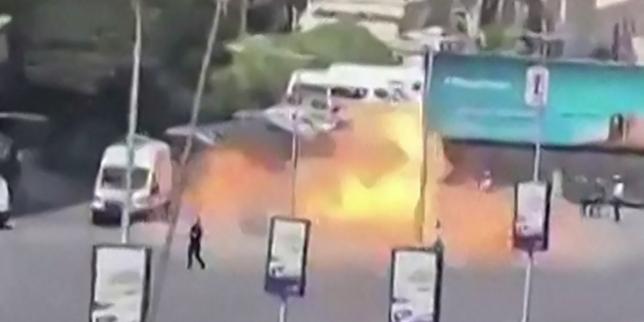
The crisis began under the cover of darkness off the coast of Oman, near Limah. According to alerts issued by the United Kingdom Maritime Trade Operations agency, an unknown projectile slammed into the Al Rekayyat, a massive LNG carrier owned by QatarEnergy. The impact tore into the ship's port side, sparking a violent fire in the engine room that quickly filled the lower decks with heavy smoke.
Radio distress calls reviewed from the incident paint a terrifying picture. The captain’s voice broadcasted three frantic maydays, reporting that the crew could not safely assess the structural damage due to the smoke. While the crew managed to evacuate safely without casualties, maritime security operators warned that the vessel remained at extreme risk of a catastrophic explosion.
The Al Rekayyat was not the only target in this coordinated assault. Hours later, two more vessels suffered strikes in the same narrow stretch of water. Security sources confirmed that a Saudi-flagged crude oil supertanker, the Wedyan, sustained significant structural damage. A third commercial ship was hit directly by an uncrewed aerial vehicle, commonly known as a drone. United States military officials later confirmed that Iranian Revolutionary Guard forces fired at least two missiles during the overnight barrage.
The timing of these strikes makes them particularly toxic. Millions of Iranians were filling the streets of Qom and Tehran to mourn the death of Supreme Leader Ayatollah Ali Khamenei, who was recently killed in US-Israeli air strikes. Tehran had already declared that peace talks with the West were effectively dead unless Donald Trump retracted his threats to restart a full-scale war. By targeting global shipping during a period of national mourning, Iran sent a clear signal that it is willing to burn down the region's fragile maritime truce to project strength.
Behind the Sudden Route Dispute Near Oman
To understand why these ships were targeted, you have to look at the hidden fight over maritime geography. Three weeks ago, the US and Iran signed a secret memorandum of understanding. The temporary deal was simple: Iran agreed to stop charging arbitrary transit tolls and promised to clear underwater mines from the main shipping lanes for a period of sixty days. In exchange, commercial traffic would be allowed to return to normal levels to ease global economic inflation.
The agreement fell apart over a mapping disagreement. Oman recently suggested a new, safer southern shipping corridor that hugs the Omani coastline, keeping international merchant ships safely outside Iran’s territorial waters. The US military immediately backed this plan, even providing direct air cover for vessels utilizing the Omani route.
Tehran fiercely opposed the southern corridor. Iranian foreign ministry officials argued that the American-backed route violated the terms of their memorandum. They insisted that all commercial traffic must transit through a northern route situated directly along the Iranian coast, near the military hubs of Larak and Qeshm islands. Why? Because Iran wants to maintain physical control over the traffic and eventually enforce a mandatory transit fee on all ships using the waterway.
The three tankers targeted in the latest attacks were all utilizing the southern route recommended by Oman. By dropping drones and missiles precisely on ships adhering to the Omani path, Iran is enforcing its own cartography through raw violence. They are telling the shipping industry that any vessel refusing to sail under the direct shadow of the Revolutionary Guards will be treated as a target.
Why Doha Dropped Its Traditional Neutrality
The public fury from Qatar surprised almost everyone in the diplomatic corps. Qatari Foreign Ministry spokesperson Majed Al-Ansari released a statement on X that left no room for interpretation. He labeled the strike on the Al Rekayyat a rejected aggression against international navigation and a grave violation of international law. More importantly, he stated that Doha holds the Islamic Republic of Iran fully legally responsible for the attack and any economic repercussions that follow.
This is a complete break from historical precedent. Qatar has spent the last decade positioning itself as the indispensable mediator of the Middle East. It hosted talks between the US and the Taliban, facilitated billionaire hostage swaps, and constantly tried to soften tensions between Washington and Tehran. Doha did this out of pure survival instinct. It shares the world’s largest natural gas field with Iran, meaning a hot war with Tehran would mean instant economic suicide for the Qatari state.
That calculus has changed. Iran crossed a red line by targeting an actual Qatari asset loaded with Qatari gas. Doha realizes that Iran's regional strategy has become entirely unguided by economic rationality. By destroying a ship belonging to the very country that has consistently acted as its diplomatic shield in Western capitals, Iran showed that it no longer values its relationship with Doha over short-term geopolitical retaliation.
The diplomatic fallout is spreading across Asia. Pakistan had previously negotiated a separate security deal with Iran's Revolutionary Guards specifically to guarantee that its vital Qatari LNG imports would pass through the strait without interference. Following the overnight attacks, a second Qatari LNG tanker, the Al Areesh, abruptly turned around and fled the area before entering the strait. Pakistani procurement officials are now locked in frantic, back-channel talks with both Doha and Tehran, trying to secure basic safety guarantees before attempting another transit.
The Economic Reality of Choked Shipping Lanes
The immediate market reaction to the attacks shows just how vulnerable global supply chains remain. Brent crude jumped 2.6 percent to hit seventy-three dollars and eighty-four cents a barrel, its highest price point in over a week. Safe navigation through the strait is a mirage, and maritime insurance companies are already adjusting their premiums accordingly.
Data from Lloyd’s List Intelligence reveals that ship captains were already losing faith in the US-Iran memorandum before the missiles even flew. In the week leading up to July 5, the number of vessels attempting to cross the Strait of Hormuz dropped from 262 to 211. Expect that number to fall off a cliff now. When a sovereign state’s navy or paramilitary force actively hunts commercial tankers, no amount of US air cover can convince a conservative maritime board to risk a hundred-million-dollar hull.
The situation leaves commercial operators with few good choices. If you run ships through the gulf, you can no longer rely on diplomatic agreements or backroom deals to keep your crew safe.
What Navigators Must Do Next
If you have assets currently operating in or transiting toward the Persian Gulf, you need to alter your operational risk management immediately.
First, halt all planned transits through the southern Omani corridor until the US maritime administration issues an updated security framework. The current air cover strategy is failing to deter drone and missile strikes.
Second, instruct your fleet operations to coordinate directly with the UKMTO and regional naval coalitions for convoy support if transit is absolutely unavoidable. Do not rely on independent routing choices.
Third, review your hull and machinery insurance policies for war risk exclusions. Underwriters are re-evaluating risk variables along both the Omani and Iranian coasts, and coverage terms are shifting by the hour. Stay anchored in safe zones outside the Gulf of Oman until explicit maritime safety guarantees are re-established by international naval forces.