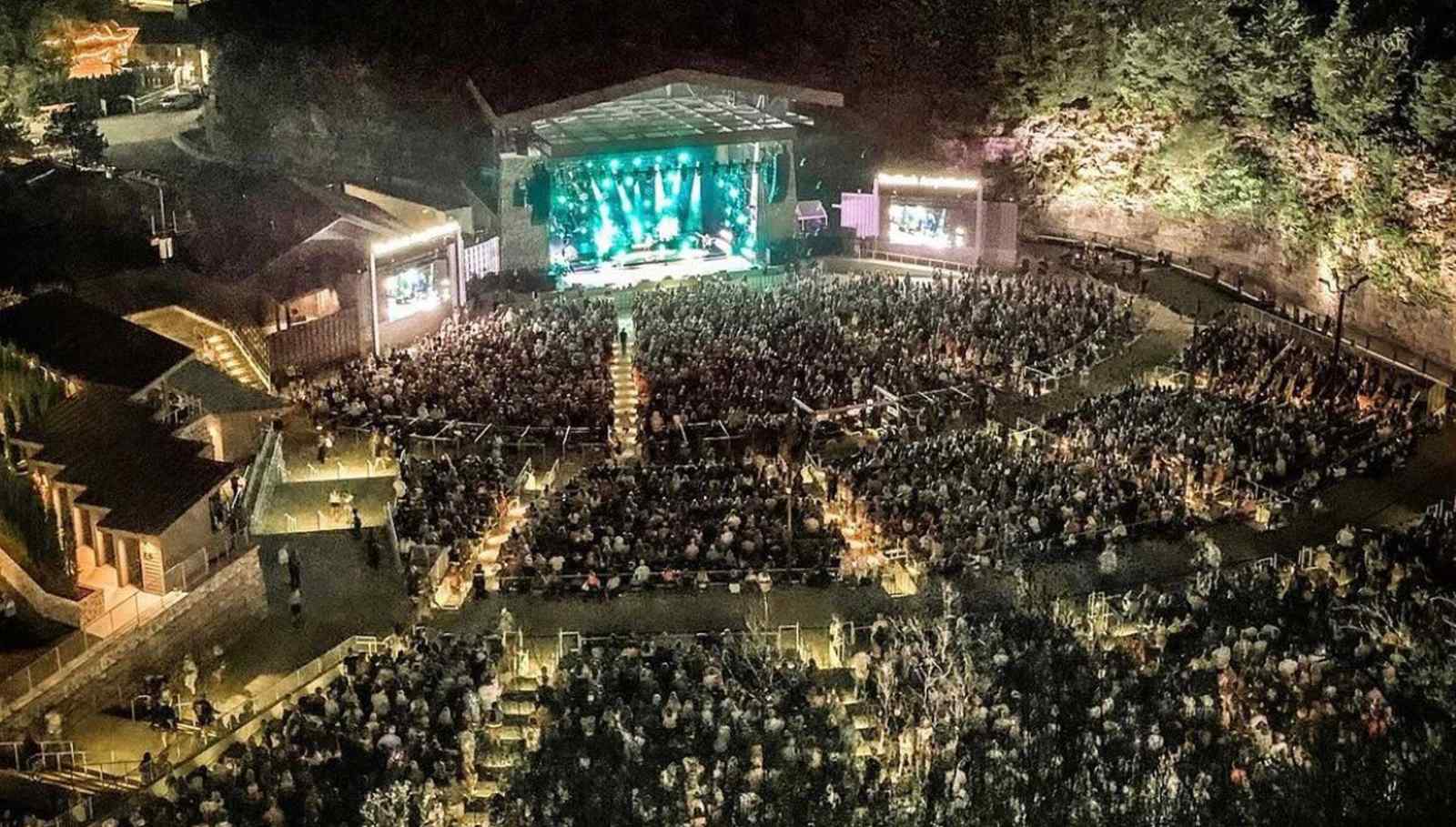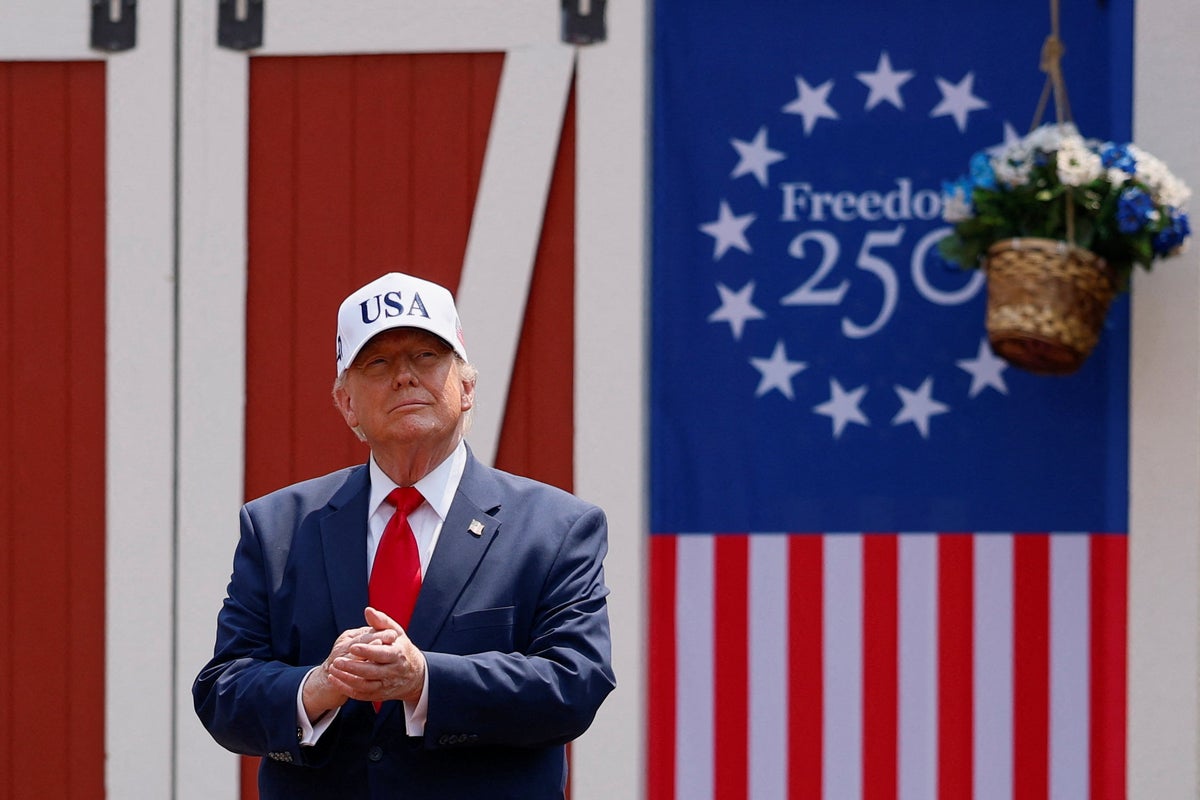
Donald Trump just proved once again that he can turn a prestigious, solemn historical event into a viral internet moment with a single off-the-cuff line. During a visit to Medora, North Dakota, for the dedication of the newly built Theodore Roosevelt Presidential Library, Trump's threesome joke caught the crowd—and the political media—completely off guard. While delivering remarks at the Burning Hills Amphitheater after touring the $450 million facility, the president took an unexpected detour from honoring America's 26th president to riff about himself, his sons, and the nation’s highest military decoration.
The moment happened while Trump was discussing the historical rarity of the Medal of Honor. He pointed out that Theodore Roosevelt and his son, Brigadier General Theodore Roosevelt Jr., are one of only two father-and-son pairs in American history to receive the award. Looking over at his adult sons, Donald Trump Jr. and Eric Trump, who were sitting in the crowd, Trump dropped a classic, unfiltered line that immediately lit up social media. He joked about awarding medals to himself and his sons so they could form a special trio. The exact phrasing turned out to be an accidental piece of double entendre that left the press corps scrambling for headlines.
The Anatomy of Trump's Threesome Joke in North Dakota
When you dissect how the moment played out, it reveals a lot about how Trump uses humor to connect with his audience. He was recounting how Theodore Roosevelt Jr. earned his medal posthumously for his heroic actions on D-Day during the 1944 invasion of Normandy.
"Now, as I see my two beautiful sons sitting there, I think I'm going to give one to myself, one to them, and we'll have a threesome," Trump said.
He didn't stop there. Realizing the crowd's reaction, or perhaps just leaning into the absurdity of the moment, he immediately tried to clarify the joke by adding more bizarre details. He mentioned that he would give his sons the Congressional Medal of Honor for their "genius at hunting." For himself? He claimed he deserved one for "taking on Russia, Russia, Russia." He quickly wrapped up the riff by telling the crowd he was "only kidding," but the damage—or the entertainment, depending on who you ask—was already done.
This isn't the first time Trump has joked about wanting the Medal of Honor. He has repeatedly told crowds at his rallies over the years that he would love to award himself the honor, usually followed by a self-aware acknowledgement that his advisors tell him it's a terrible idea. Bringing his sons into the mix and using that specific phrasing just gave the media a fresh angle to run with.
Understanding the Real History Behind the Quip
To appreciate why the comment stood out so much, it helps to understand the actual history Trump was referencing before he went off-script. The Medal of Honor is incredibly difficult to earn, and the father-son connection is practically mythic in military history.
There are only two families who have ever achieved this. First, there was Arthur MacArthur Jr., who earned it during the Civil War, and his son, General Douglas MacArthur, who received it during World War II for his defense of the Philippines.
The second pair is the Roosevelts. Theodore Roosevelt led the Rough Riders up San Juan Hill in 1898 during the Spanish-American War, though he didn't actually receive the Medal of Honor until President Bill Clinton awarded it posthumously in 2001. Trump actually brought that physical medal with him to North Dakota to officially hand it over as a gift to the new presidential library.
Theodore Roosevelt Jr. earned his medal the hard way. He was the only general officer to land in the first wave of troops on D-Day at Utah Beach. Walking with a cane due to severe arthritis and a previous heart condition, he personally led troops through chaotic gunfire to secure the beachhead. He died of a heart attack in France just over a month later, never knowing he had been awarded the nation's highest honor for valor.
When you contrast that level of historical sacrifice with a joke about Eric and Don Jr. getting medals for hunting deer, it's easy to see why critics find the president's rhetoric jarring.
Why Unfiltered Moments Value More Than Scripted Speeches
Political analysts love to fight about whether these moments hurt Trump or help him. The truth is, they do both, depending entirely on who is watching. For his loyal base, this kind of humor is exactly why they like him. He rejects the stiff, teleprompter-reliant persona of traditional politicians. He talks like a guy telling stories at a bar, even when he's standing in front of a multi-million dollar presidential library in the rugged North Dakota Badlands.
For his critics, it looks like a total lack of respect for the office and the military. The Medal of Honor represents the absolute pinnacle of bravery and sacrifice. Joking about handing them out like party favors to family members strikes many veterans and historians as deeply inappropriate.
But from an attention standpoint, it works perfectly. Before the speech, the news cycle was focused on Trump arriving in North Dakota on a newly refurbished Boeing 747 or his comments about wanting to take back the Panama Canal. The moment he dropped the quip about his sons, every major news outlet updated their live blogs.
The Broader Context of the North Dakota Visit
The speech wasn't just about the joke. The event marked a massive moment for North Dakota and the legacy of Theodore Roosevelt. The 96,000-square-foot library sits in western North Dakota, right near the lonely, rugged terrain where Roosevelt lived and ranched in the 1880s after the tragic deaths of his wife and mother on the same day. It's the place where TR developed his deep commitment to conservation and the outdoor life.
During his tour, Trump even interacted with an artificial intelligence version of Theodore Roosevelt. He asked the digital replica if he considered the Panama Canal his greatest achievement. The digital TR talked about the canal but also pointed to his work with national parks and the Square Deal.
Trump also used the speech to preview his upcoming plans for America's 250th birthday celebrations on the Fourth of July. He told the crowd that temperatures are expected to hit 107 degrees, but he plans to give a "really long speech just to show that I can do anything."
How Political Figures Use Shock Humor to Control the Cycle
If you want to understand modern political strategy, you have to look at how media coverage functions. A standard, respectful speech about Theodore Roosevelt's conservation values gets a brief mention on the evening news. A joke that sounds like a sexual double entendre gets millions of clicks, shares, and late-night television monologues.
Trump understands this dynamic better than anyone in modern politics. By injecting these bizarre, headline-grabbing jokes into formal events, he ensures that he controls the narrative. People aren't talking about policy disputes or legislative gridlock; they are talking about his latest wild quote.
It keeps his opponents on the defensive and forces the media to cover him on his own terms. You don't have to like the strategy to admit that it completely changed how political communication works in the modern era.
If you are trying to keep up with how these events shape public opinion, stop looking at the prepared text of the speeches. The real action always happens when the speaker looks away from the screen and starts talking directly to the crowd. Pay attention to how audiences react in real-time to these unscripted moments, because those are the lines that actually stick in people's minds long after the formal event is over.