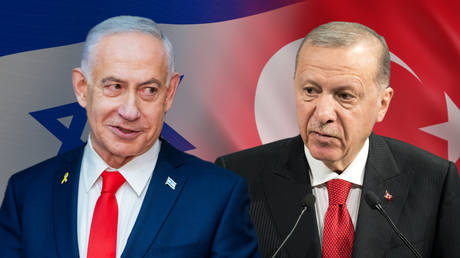
For decades, Israel treated its relationship with Ankara with a degree of delicate care that bordered on walking on eggshells. No matter how loud Turkish President Recep Tayyip Erdogan yelled during previous Gaza escalations, Israeli officials always pulled their punches behind closed doors. They knew that trade was flowing, intelligence channels remained open, and keeping a massive NATO member somewhat stable in the Eastern Mediterranean was vital. Those days are officially over. The recent unanimous vote by the Israeli cabinet to formally recognize the 1915 Armenian genocide shows that Jerusalem has completely changed its playbook. It proves that the long standing policy of avoiding Ankara's absolute red lines has vanished.
This is not a sudden burst of moral clarity. It is a calculated, aggressive move targeting a structural vulnerability that drives Turkish nationalists insane. By dropping its strategic ambiguity on the events of 1915, Israel just found Türkiye’s weak spot and pressed down hard. The timing tells you everything you need to know. This diplomatic grenade was rolled into the room right when bilateral ties had already collapsed into open hostility.
A Tool of Choice for Diplomatic Warfare
To understand why this hurts Ankara so deeply, you have to understand the core of Turkish identity. The official stance of the Turkish state has always been a fiercely protected wall of denial regarding the systematic destruction of the Armenian population during the final years of the Ottoman Empire. For a century, Turkish diplomats have threatened, cajoled, and cut ties with any nation that dared to use the term genocide.
Israel knew this. For years, the Knesset routinely blocked bills attempting to recognize the atrocities. Why? Because Israeli defense strategists valued Turkish airspace, trade agreements, and cooperation against regional adversaries far more than a symbolic historical statement. Former diplomats openly admitted that the Armenian issue was kept in reserve as a bargaining chip.
Turkish-Israeli Two-Way Trade Value Before the Halt:
Total Volume: Roughly $7 billion
Turkish Exports to Israel: Around 6% of Israel's total imports
Israeli Exports to Turkiye: $1.5 billion to $1.6 billion
When Foreign Minister Gideon Sa'ar pushed the resolution through the cabinet, he claimed it was not an act of revenge. Honestly, nobody believes that. It is a direct response to Erdogan's sweeping actions over the past two years, including a total ban on trade, denying refueling access to Israeli aircraft, and offering vocal support to Hamas leaders. Israel waited until it had nothing left to lose economically before pulling this specific trigger.
The Power Balance in a Post Assad Levant
The collapse of the relationship goes way deeper than a war of words or historical debates. The regional chessboard has fundamentally broken down, leaving Israel and Turkiye in a direct geopolitical collision.
With Iran's conventional military capability heavily degraded and its regional proxy network severely fractured after intense fighting, a massive power vacuum opened up. Turkiye has moved swiftly to fill that space. The sudden fall of Bashar al-Assad in Syria shifted the dynamic entirely. Suddenly, Turkish troops and their aligned local governance structures are firmly embedded right across northern Syria.
This presents a massive issue for Israeli defense planners. While Israel has scrambled to expand its security operations in southern Syria to keep hostile forces away from the Golan Heights, it now faces a highly capable, conventional military power moving down from the north. Turkiye is no longer just a loud voice across the sea. It is an immediate neighbor in the Syrian theater.
A fragile deconfliction line was established between Turkish and Israeli forces operating in Syria, particularly around sensitive areas like the Hama and Tiyas air bases. But make no mistake, this is a marriage of convenience born out of fear of a direct military clash. Both capitals distrust each other deeply. Israel sees Turkiye as an unpredictable entity that wants to establish a major foothold in the Levant. Turkiye looks at Israel's expanding military footprint in Syria and fears that Tel Aviv's long term security goals will eventually threaten its own southern borders.
The Massive Naval Disparity in the Mediterranean
The friction is also boiling over into the waters of the Eastern Mediterranean. Turkiye has been aggressively pushing its Blue Homeland maritime doctrine. This doctrine asserts expansive claims over vast swathes of the sea, intentionally cutting across energy corridors that Israel, Greece, and Cyprus have spent years trying to build.
For Israel, these maritime lanes are absolute lifelines to European markets. If Turkiye controls the transit routes, Israel loses its strategic autonomy in the Mediterranean. This has forced the Israeli military to do something it has neglected for decades. It is completely overhauling its navy.
Israel Projected Naval Expansion:
Estimated Investment: $20 billion over the next decade
Primary Focus: Correcting the numerical and technological imbalance against Turkish naval forces
Key Partners: Expanded joint drills and intelligence sharing with Greece and Cyprus
Channel 12 recently reported that the Israeli military began a massive reassessment of its naval doctrine. They are preparing for the terrifying possibility of an actual maritime confrontation with Turkiye. Right now, the naval balance is heavily skewed in Ankara's favor. Turkiye has a larger fleet, a rapidly developing domestic shipbuilding industry, and advanced electronic warfare capabilities. Israel is trying to close that gap by dropping billions into new hulls and advanced defensive systems, while building a tight defensive axis with Athens and Nicosia.
Real Economic Pain Behind Political Posturing
People often assume that political drama does not affect the corporate world, but the economic divorce between these two nations is very real. When Erdogan faced a brutal beating in local elections against a rising Islamist opposition that accused him of hypocrisy, he had to act. The opposition pointed out that while Erdogan called Israel a terrorist state, Turkish steel and cement were still keeping Israeli construction sites moving.
To save his domestic political skin, Erdogan implemented a total trade freeze. This cut off seven billion dollars in bilateral trade. Turkish ports closed to Israeli ships, and Israeli planes were banned from using Turkish airspace.
Did it cripple Israel? No. The Bank of Israel noted that the nation's open economy allowed companies to find alternative suppliers very quickly. Supply chains shifted to Greece, Bulgaria, and Romania within weeks. Even some Turkish exporters quietly used third-party hubs to bypass their own government's restrictions.
Yet, the economic pain is not entirely one-sided. Turkish producers lost a highly lucrative market that paid in stable currency. More importantly, it pushed Israel permanently into the arms of Turkiye's regional rivals. The tourism, shipping, and logistics industries in Greece and Cyprus are boomed because they absorbed the business that used to flow through Antalya and Istanbul.
What Lies Ahead for This New Conflict
We are looking at a permanent structural shift. The old ideas of a quick diplomatic patch-up are gone. Israel has labeled Turkiye an enemy state in all but name, and Turkiye views Israel as an existential rival capable of challenging its regional ambitions.
If you are a corporate logistics planner, an energy investor, or a regional analyst, you can no longer treat the tension between Tel Aviv and Ankara as temporary theater. It is the new fault line of the Middle East. You need to take immediate steps to insulate your operations from this fallout.
- Diversify maritime supply chains: Do not rely on shipping routes or transit hubs that require Turkish political goodwill if your cargo is tied to Israeli markets. Shift your primary focus toward Greek and Cypriot ports.
- Monitor Syrian airspace and borders: The deconfliction mechanism between Israeli and Turkish forces in Syria is incredibly fragile. Any accidental strike on Turkish assets in northern Syria could cause a rapid escalation.
- Hedge against energy asset risks: Natural gas infrastructure projects in the Eastern Mediterranean are highly vulnerable to Turkish maritime interdictions. Ensure that any long term investment has political risk insurance that accounts for state-level maritime disputes.
The historical playbook has been thrown into the fire. Israel used a century of historical trauma as a diplomatic weapon, and Ankara is not going to forget it anytime soon. The conflict has moved from rhetoric to structural confrontation.
Israel Calls Armenian Killings 'Genocide' — Turkey Furious as Diplomatic Storm Explodes
This video provides an excellent summary of the immediate political fallout and the tense cabinet vote that completely reshaped the diplomatic relationship between the two nations.