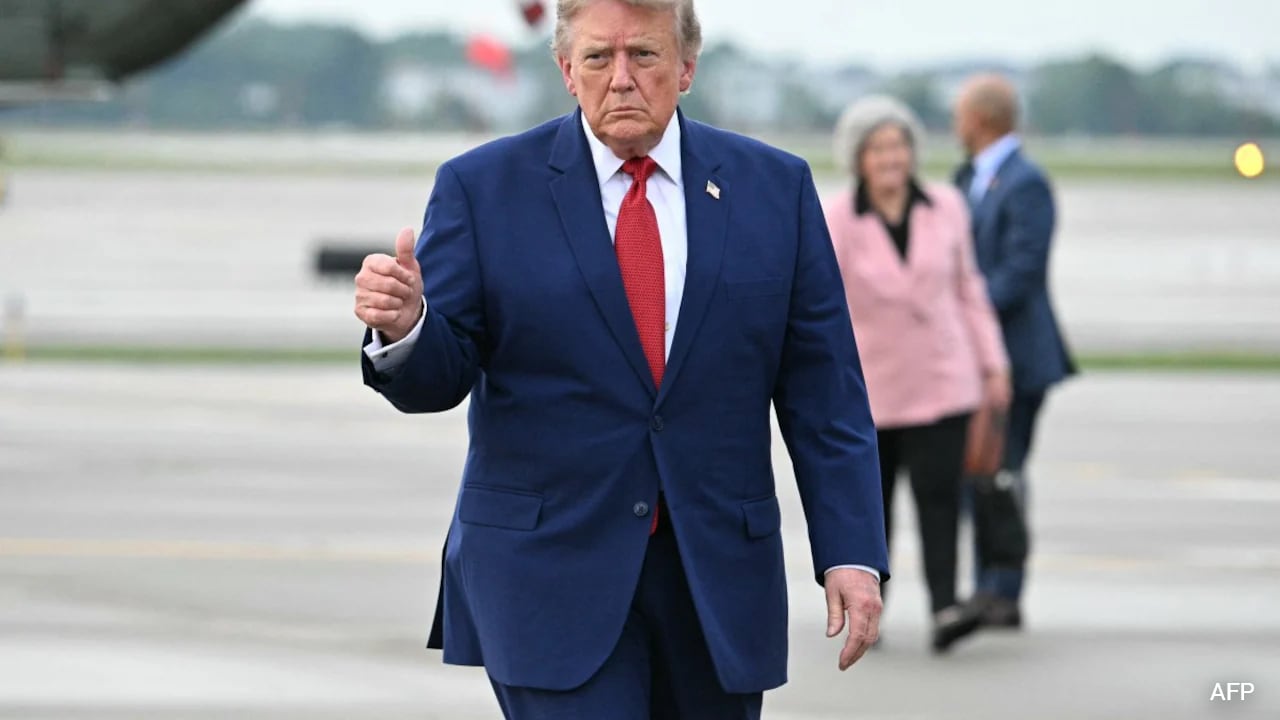
You can't build a modern economy while outsourcing your eyes in the sky to your primary geopolitical rival. Donald Trump just signed a proclamation slapping tariffs of up to 100% on imported drones and critical components. If you run a commercial aerial photography business, a construction firm, or a public safety department relying on affordable hardware, your entire operational budget just got thrown into chaos.
The White House didn't stutter on this one. Under the new rules taking effect on September 3, 2026, heavy unmanned aircraft systems weighing over 25 kilograms—alongside anything packing sensitive tech like thermal imaging or automated docking stations—will face a massive 100% tariff. Smaller consumer and commercial drones missing those high-end features aren't escaping either, landing a hefty 25% duty.
Let's look at why this is happening right now, what it means for the supply chain, and why pretending domestic manufacturing can instantly fill the gap is a dangerous delusion.
The China Monopoly Problem
For the past decade, Chinese manufacturers—led overwhelmingly by DJI—have captured well over two-thirds of the global drone market. They did it by building reliable, remarkably cheap hardware that outclassed almost anything built in Western nations. American public safety agencies, police departments, and private contractors bought them by the thousands because the price-to-performance ratio was unbeatable.
Washington has watched this dependence with growing anxiety. Drones aren't just toys or camera platforms anymore. They are flying computers equipped with sophisticated sensors, GPS navigation, and wireless transmission lines that feed data back to servers.
The Trump administration's Section 232 investigation, overseen by Commerce Secretary Howard Lutnick, concluded that relying on foreign supply chains for unmanned aerial systems poses an unacceptable risk to national and economic security. When a foreign adversary controls the skies above your infrastructure, you have a vulnerability that money can't fix. That is the exact justification behind these staggering duty rates.
The Real Breakdown of the New Tariffs
Not all drones are created equal under this new executive action, and the devil is entirely in the details.
- The 100% Penalty Tier: Drones with a maximum takeoff weight exceeding 25 kilograms, units featuring thermal imaging gear, and specialized automated docking stations get hit immediately on September 3.
- The 25% Baseline Tier: Smaller drones lacking sensitive national security capabilities face a 25% tariff, though these get a longer 180-day grace period before enforcement kicks in.
- The Ally Caps: Imports originating from specific allied regions—including South Korea, Japan, the European Union, and Taiwan—are capped at a much lower 15%, while the United Kingdom secures a 10% cap.
Commerce Secretary Howard Lutnick is also authorized to spearhead an onshoring program designed to funnel incentives toward companies willing to build manufacturing lines right here in the United States.
The Immediate Fallout for American Businesses
If you think American drone manufacturers can step in tomorrow and supply every police department and roofing contractor in the country, you haven't looked at the factory floors. Domestic alternatives exist, but they are often significantly more expensive and lack the refined software ecosystems that operators have used for years.
Prices for enterprise-grade hardware are going to skyrocket overnight. Companies that budgeted for fleet expansions this autumn are scrambling to recalculate their margins. Smaller operators might find themselves priced out of the market entirely, squeezed between rising equipment costs and stagnant client budgets.
Beijing isn't sitting quietly while Washington redraws the map, either. Just days before this proclamation, China rolled out its own export restrictions on drones and blacklisted several American-linked entities in retaliation for ongoing trade sanctions. We are watching a full-scale technological decoupling play out in real time, and hardware is caught right in the middle.
What You Should Do Right Now
If your business relies on unmanned aircraft systems to operate profitably, sitting back and hoping for a policy reversal is a losing strategy.
First, audit your existing inventory immediately. Figure out how many backup frames, batteries, and critical components you have on hand to weather the initial September price shocks.
Second, look closely at allied alternatives outside of China. Diversifying your supply chain toward manufacturers based in nations facing the lower 15% tariff cap might save your profit margins from total destruction.
Finally, keep a close eye on the upcoming domestic onshoring initiatives. If federal subsidies or grants open up for local defense and commercial tech production, position your company to grab them before your competitors do. The era of cheap, imported aerial dominance is officially over. Adapt your operations now or watch your overhead climb past the point of no return.