Washington just drew a hard line in the sand, and India landed squarely on it. A high-profile White House report released by trade adviser Peter Navarro has accused over 40 nations of acting as pass-through hubs for Chinese exporters trying to dodge heavy American tariffs.
If you think this is just standard bureaucratic posturing, you're missing the bigger picture. The US administration is rolling out artificial intelligence systems to track shipments and punish countries that let foreign goods change labels at the dock.
Let's break down what this means, why India made the list, and how it impacts global trade.
Understanding the Great Transhipment Scam
The core issue comes down to labeling. When the US clamped down on Chinese imports with steep Section 301 duties, exporters needed a workaround.
Instead of shipping directly, goods began taking scenic routes through third-party nations. A product might stop in a foreign port, get a new box, receive a minor tweak from a screwdriver factory, and suddenly emerge with a non-Chinese certificate of origin.
Washington calls this the "Great Transhipment Scam." The White House Office of Trade and Manufacturing Policy released a breakdown splitting more than 40 nations into three tiers based on risk.
India found itself dropped into Tier 1, labeled as a "Diversified Scale Leader."
Why India Landed in Tier 1
You might wonder why a major economy with its own booming manufacturing sector ended up grouped alongside places like Canada, the European Union, Japan, and South Korea.
The report argues that large industrial economies naturally carry higher transhipment risks because their massive trade volumes hide illicit pass-through traffic. Washington pointed specifically to India's industrial manufacturing belts—naming regions like the Pune-Gujarat-Chennai corridor—alleging that certain imported components like pumps and compressors can get absorbed and re-exported into American supply chains, displacing domestic manufacturing in cities like Cincinnati and Dayton.
Navarro didn't mince words during his briefing. He explicitly warned India and other developing export hubs that preferential market access isn't an open invitation to launder someone else's merchandise.
The AI Counter-Offensive at the Border
Old-school customs checks relied heavily on human inspectors flipping through paperwork. That era is over.
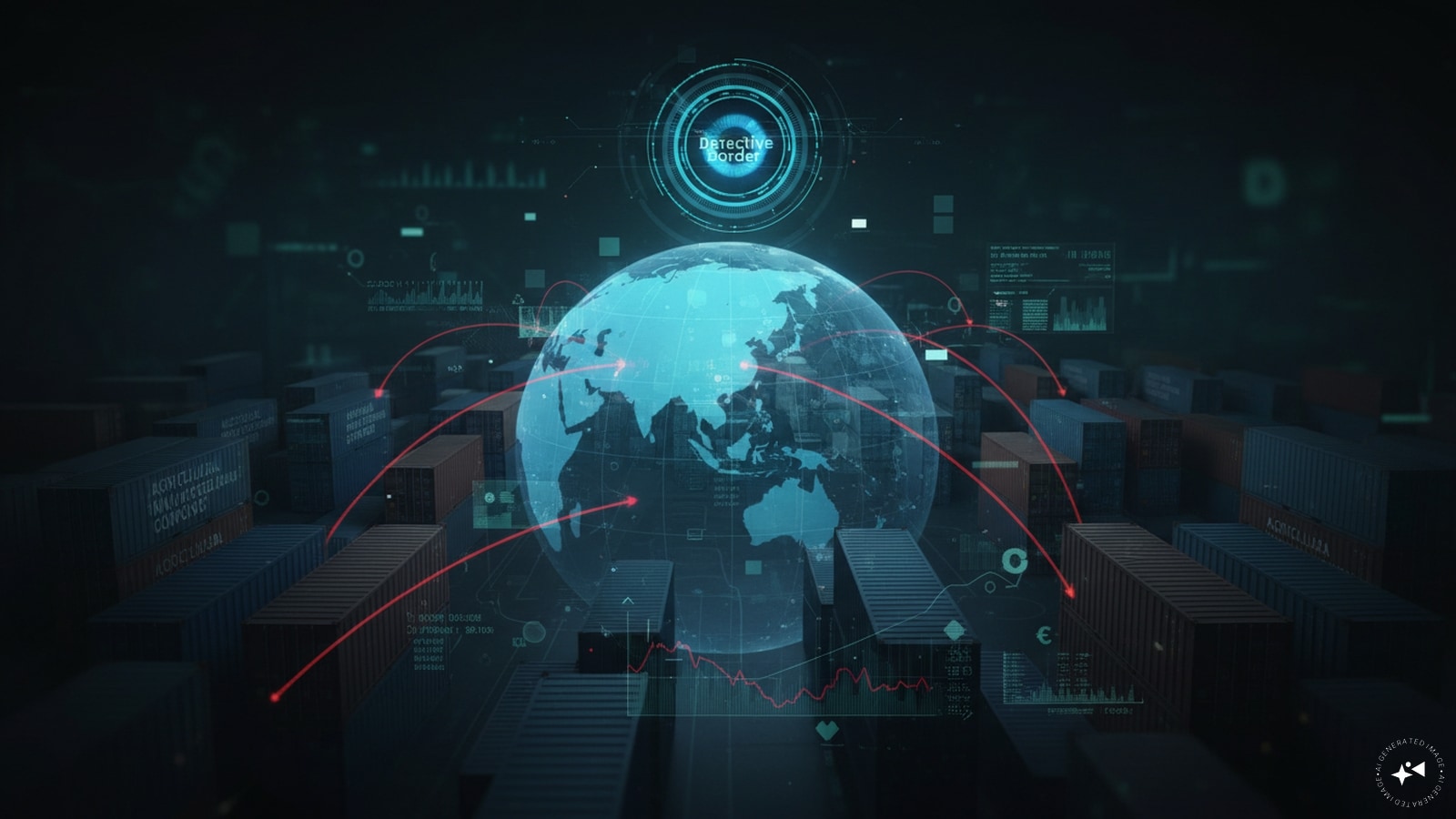
The US is deploying an automated intelligence platform dubbed "Detective Border." This system cross-references shipping data, routing histories, corporate ownership structures, and production capacity indicators in real time.
If an Indian factory claims it manufactured ten times more units than its physical floor space permits, the system flags it instantly.
The enforcement teeth behind this are brutal. Under the new rules, US Customs and Border Protection won't just block a single suspicious container. They can retroactively claim tariffs on an offending company's entire shipment history stretching back a full year.
The Timing Could Not Be Worse for New Delhi
This watchlist arrives during an already tense diplomatic window. New Delhi and Washington are currently locked in complex negotiations over a reciprocal trade deal.
At the same time, American officials continue pressuring Indian leadership over independent economic choices, including energy purchases from Russia. Adding a tariff-evasion warning to the mix gives US negotiators extra leverage across the table.
Indian exporters now face a choice. Do they tighten domestic customs audits to weed out suspicious Chinese inputs, or risk losing smooth access to the world's most lucrative consumer market?
The grace period for backdoor trade routes has officially expired. Watch how quickly regional ports tighten their origin verification processes over the coming months.