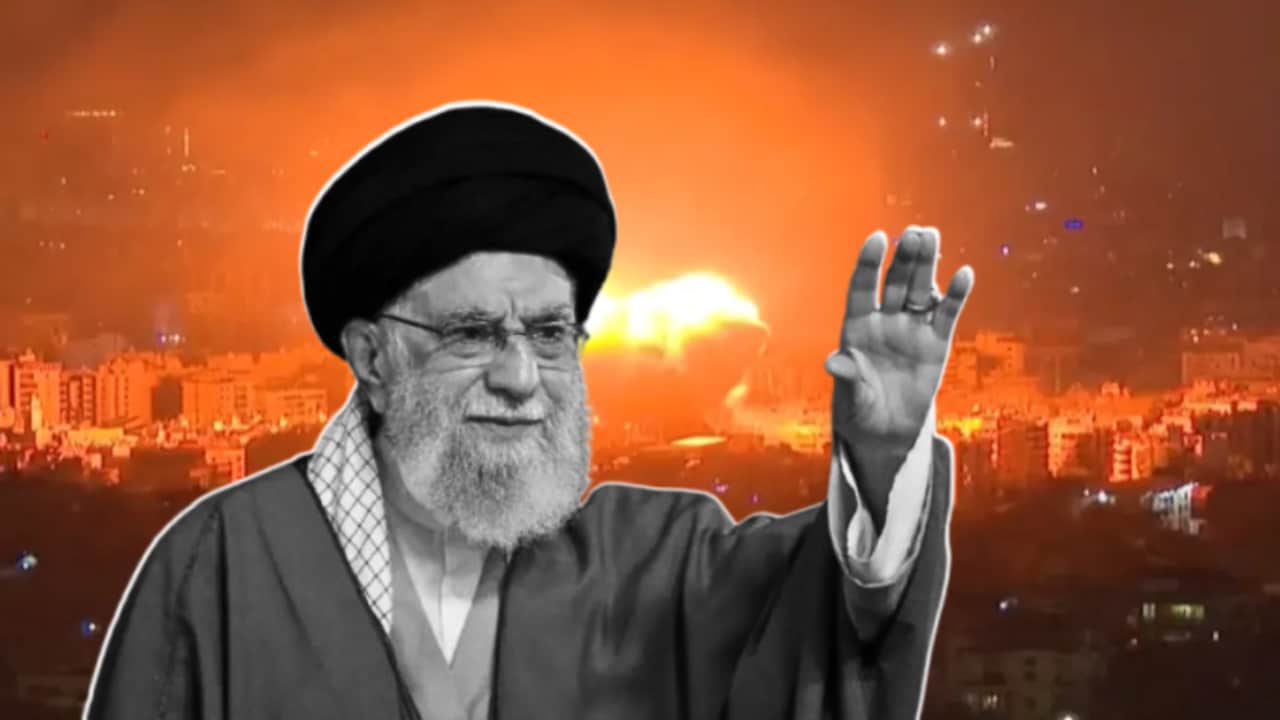
State funerals in Iran aren't just about grief. They are raw, calculated power plays. When an elite leader dies, the regime uses the casket to sketch its geopolitical boundaries and scream its continued survival to the world.
The extensive multi-city funeral procession for the late Supreme Leader Ayatollah Ali Khamenei does exactly that. It isn't a simple logistics plan. Moving a body across Tehran, Qom, Karbala, Najaf, and Mashhad is an aggressive theological and political statement. Each specific geographic checkpoint serves to consolidate power, project cross-border influence, and smooth over a chaotic transition of authority during a time of intense conflict.
If you're wondering why Iran chose this specific international route, the answer doesn't lie in mere tradition. It lies in survival. The state is telling its internal public and its foreign adversaries that the clerical establishment hasn't fractured, even after a massive security breach.
Tehran and the broken seat of power
The journey starts where the political control resides. Tehran is the bureaucratic heart of the Islamic Republic. It's where Khamenei ruled for more than three decades. Beginning the procession here serves a stark, dual purpose.
First, it offers the core conservative base a chance to perform public loyalty. Huge crowds in the capital create the imagery of an unbreakable state. Western intelligence frequently looks for cracks in the Iranian capital during moments of high tension. By filling the streets of Tehran with millions of mourners, the regime seeks to project a facade of absolute unity.
Second, it acts as a direct message to the civilian population of Tehran, which has historically been the epicenter of anti-regime protests. The overwhelming security presence required to march a funeral procession through the capital effectively locks down the city. It signals that despite the death of its top figure, the internal security apparatus remains fully lethal and firmly in control.
Qom and validating the next clerical order
The procession moves directly from the political capital to the ideological center. Qom is the heart of Shia Islamic learning and the place where the clerical elite are minted. You can't rule Iran without the explicit or implicit blessing of Qom's grand ayatollahs.
Bringing Khamenei's body to Qom is about securing legitimacy for whoever steps into the void. The regime needs the senior clerics to visibly participate in the mourning rituals. Their public presence acts as a formal endorsement of the system's continuity.
It also serves to quiet any internal dissent among the clergy. Not every theologian in Qom agreed with Khamenei's absolute political control. By centering the funeral rituals in their backyard, the ruling faction forces a public show of solidarity from every major clerical house. It shuts down theological debates about the future of the office before they can even begin.
Najaf and Karbala as tools of transnational power
The most shocking aspect of the journey is its push across international borders into Iraq. Taking the procession to Najaf and Karbala is a massive logistical nightmare and an even bigger political gamble.
Karbala and Najaf are the ultimate spiritual capitals of the Shia world. Najaf holds the shrine of Imam Ali, while Karbala is the resting place of Imam Hussein. By forcing a route through these Iraqi cities, Tehran is making several aggressive points.
- Erasing borders: The regime wants to demonstrate that its religious and political authority isn't contained by modern nation-state lines. It views the Shia populations of Iran and Iraq as a single, unified block under its spiritual shadow.
- Challenging local authority: Najaf has long been a rival to Qom. The Iraqi clerical establishment, traditionally led by figures like Grand Ayatollah Ali al-Sistani, favors a quietist approach to politics. They don't believe clerics should run a government. By parading Khamenei's body through Najaf, Tehran asserts its dominance over this competing school of thought.
- A message to regional foes: Moving a highly symbolic state asset through Iraq requires immense coordination with local militias and state forces. It tells the region that Iran's proxy networks and political leverage in Baghdad are deep, operational, and entirely unbothered by the crisis.
Mashhad as the final resting place
The journey ends in Mashhad, located in the far northeast of Iran. This is Khamenei’s birthplace, giving the final stop a personal touch. But more importantly, Mashhad houses the Imam Reza shrine, the only resting place of a Shia Imam located within Iran's borders.
Burial at this shrine elevates Khamenei from a mere political ruler to a historic religious martyr. The regime wants his legacy permanently tied to the most sacred ground in the country. It makes his political actions seem divine.
Future leaders will visit this burial site to draw authority. By placing him next to Imam Reza, the state ensures that criticizing Khamenei's legacy in the future will be viewed as an act of outright blasphemy against Shia Islam itself.
Critical next steps for observing the region
The theater of the funeral will eventually end. The real test begins the moment the dirt settles in Mashhad. If you're tracking the stability of the Middle East, shift your focus away from the mourning crowds and watch these specific pressure points.
Watch the Assembly of Experts closely. This is the body tasked with choosing the next Supreme Leader. Look for who leads the prayers at the final burial services. The individual chosen to perform these highly visible religious rites is usually the frontrunner to take over the supreme office permanently.
Monitor troop movements along the Iran-Iraq border. The transnational nature of this funeral procession requires a massive security mobilization. Look at whether Iran maintains its heavy military footprint in Iraq after the body leaves, as this will signal a permanent change in their regional defense posture.
Track internal security crackdowns. Historically, periods of regime mourning are followed by intense domestic sweeps to neutralize activists who might try to exploit a vacuum of power. Watch for sudden internet disruptions or localized curfews in major urban centers over the coming weeks.