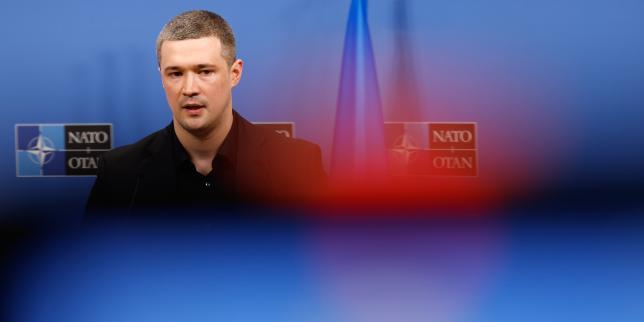
The political temperature in Kyiv is rising. Mykhailo Fedorov, once the government’s golden boy and face of digital modernization, has just dropped a political bombshell. After being pushed out of the Ministry of Defence this past July, he’s publicly calling for Ukraine to organize presidential elections despite the ongoing invasion.
You might wonder why this matters. It’s not just an ex-minister venting. It’s the first real, high-stakes crack in the unity that has defined Ukraine’s resistance since 2022.
The rift between control and reform
Fedorov’s exit wasn’t just a simple cabinet shuffle. It was a collision of two very different visions for how Ukraine survives this war. On one side, you had Fedorov pushing for an agile, tech-forward approach. He wanted to win by out-innovating the enemy with drones, better logistics, and less bureaucracy.
On the other side, the presidential office prioritized stability and centralized control. President Zelenskyy faced a choice between his defense minister and his military commander, Oleksandr Syrskyi. He chose neither, opting instead to reset the board to reclaim authority.
The result? Fedorov was out in mid-July. The public outcry was immediate, with nightly protests turning the air thick with tension near the presidential office. People weren't just protesting a firing; they were protesting what they saw as a move away from the reformist energy that kept the country afloat during the darkest days.
Why elections are back on the table
Fedorov’s demand to "restore a full democratic process" isn't just about voting. It’s about accountability. In a country fighting for its life, the question of whether to hold elections is incredibly divisive.
Some argue it’s a security nightmare. How do you protect polling stations when the threat of missile strikes is constant? How do you account for millions of displaced citizens and the hundreds of thousands of soldiers currently on the front lines?
However, Fedorov’s camp is arguing that democracy can't be a casualty of the war. His logic is simple: if we are fighting for a free European future, the machinery of that freedom—the ability to choose leadership—must continue to run.
Current polling data adds another layer to this. If an election were held today, the field is crowded. Zelenskyy still holds significant support, but he’s not the default winner he once was. Figures like Valerii Zaluzhnyi and Fedorov himself are polling as serious contenders, suggesting that the public appetite for a leadership shift is real.
What happens when the public demands change
The government is walking a tightrope. Keep the lid on, and you risk losing the very middle-class support that powered the resistance. Open the door to elections, and you risk a chaotic political transition during an active combat phase.
It’s easy to dismiss this as just political infighting, but that misses the point. Ukraine is a "warring democracy," a term often used to describe the messy, vocal reality of a country that manages to protest its own government even while fighting a foreign invader.
What we’re seeing right now is the inevitable stress test of those democratic institutions. Fedorov has positioned himself as the standard-bearer for a more transparent, tech-driven management of the war. Whether he has the political weight to actually force a vote is another story, but he’s successfully shifted the conversation from how the war is fought to who gets to decide how it’s fought.
For now, the government remains focused on the military situation, nominating Yevhenii Khmara as a stable, low-profile replacement for the defense post. But the rallies haven't stopped entirely, and the debates in the Rada are getting sharper.
Keep an eye on the parliamentary response to Khmara’s confirmation and the government’s messaging on upcoming legislative sessions. The pressure to define the path toward post-war—or mid-war—governance isn't going anywhere. It’s the new reality for a nation trying to balance survival with the very freedoms it’s dying to protect.