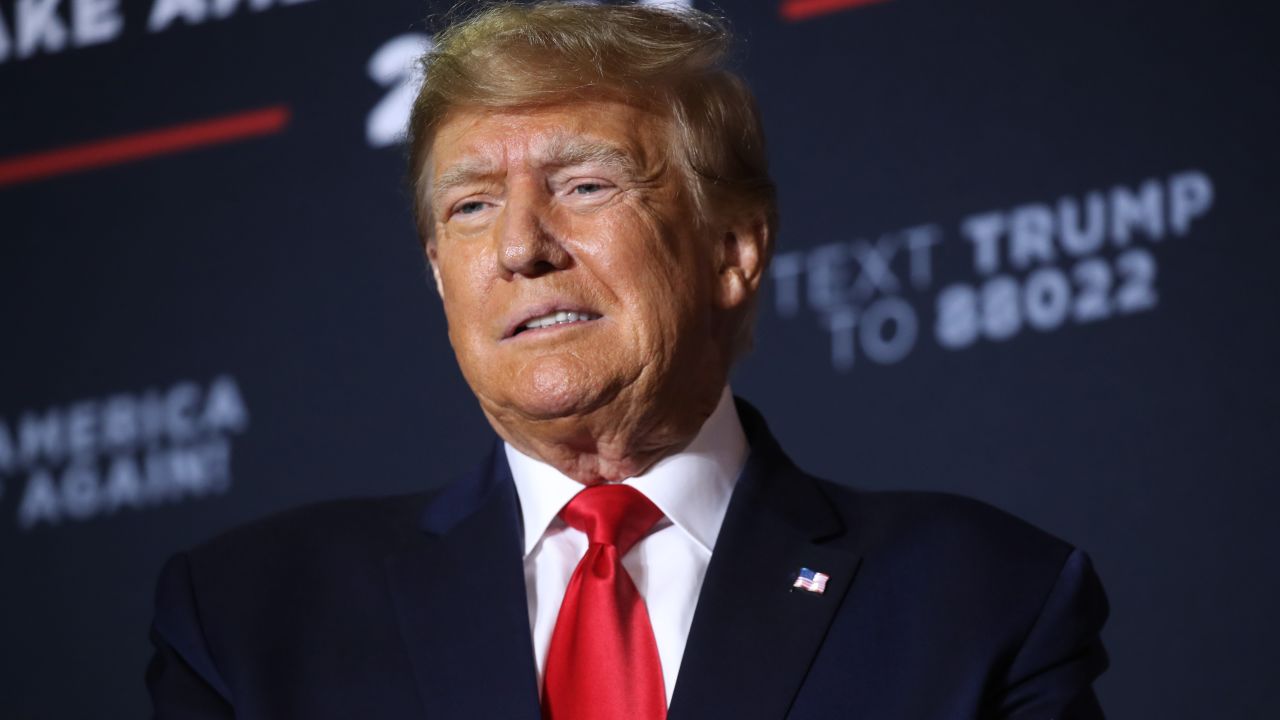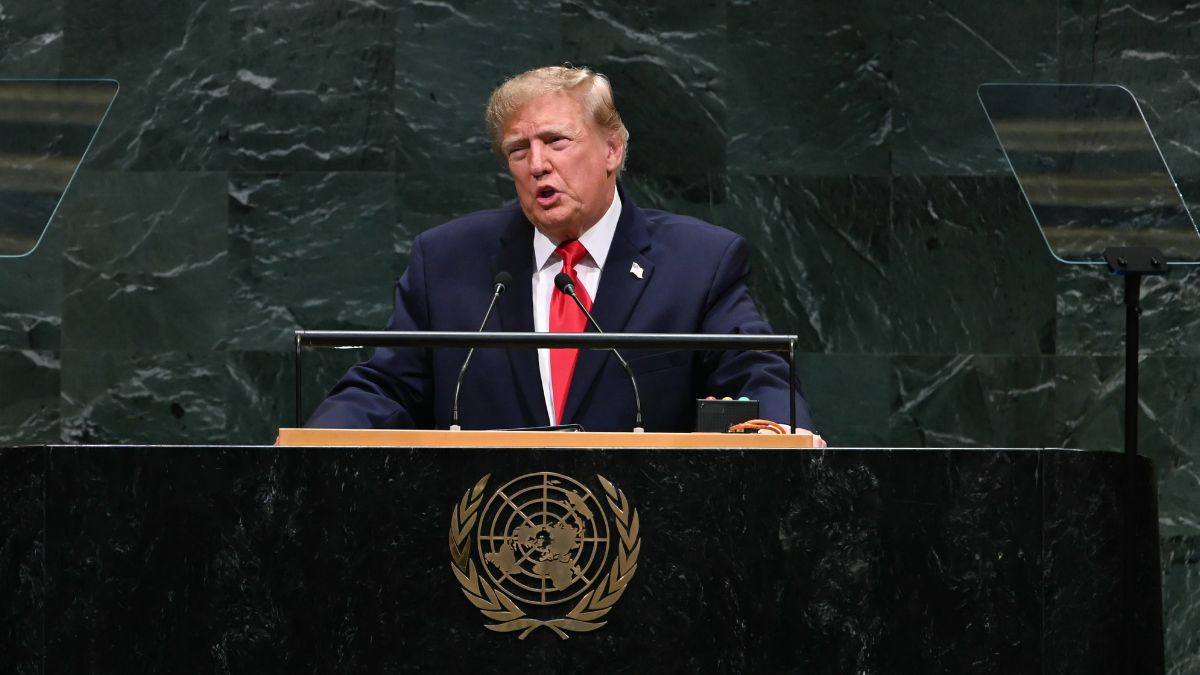
Donald Trump just walked onto the global stage at the United Nations General Assembly and completely threw out conventional diplomatic language. If you expected a standard, boring speech about international bureaucracy, you haven't been paying attention. Trump used his UNGA address to demand a total rebranding of artificial intelligence, issue a stark ultimatum to Iran, and claim credit for heading off a catastrophic war between India and Pakistan.
Let's look at what actually happened in New York and what it means for global politics.
The Death of Artificial Intelligence
Trump announced that official United States government documents will no longer use the phrase "artificial intelligence." Instead, the country is officially adopting the term super intelligence.
Why? Because he thinks "artificial" sounds weak and inaccurate. During his speech, he made it clear that the US is going to win the global race for technological supremacy.
"Whoever wins AI, wins!" Trump told the assembly.
He didn't stop at just renaming the technology. Trump dismissed ongoing safety warnings and ethical alarms raised by tech researchers as a total hoax. He argued that over-regulating the sector will only stifle a movement bigger than the industrial revolution. This lines up with his recent proposals to form a specialized "AI Force" and appoint a high-IQ "AI Czar" to oversee domestic development.
The India-Pakistan War Claim
Trump repeated a staggering geopolitical claim during his address. He asserted that his administration successfully intervened to stop a full-scale war between India and Pakistan.
According to Trump, Pakistani Prime Minister Shehbaz Sharif personally thanked him for saving upwards of 30 million lives. While diplomatic channels often downplay these types of sweeping interventions, Trump leaned heavily into his self-styled role as a global dealmaker. He contrasted his active disruption of traditional conflicts with what he views as decades of diplomatic inaction from his predecessors.
The Big Decision on Iran
Nothing in the speech matched the bluntness of Trump's ultimatum regarding Iran. Standing before world leaders, he called the Iranian government the premier sponsor of global terror. Then, he laid out his upcoming foreign policy choice in stark, unfiltered terms.
"I have a big decision to make," Trump said.
He framed the choice as a binary path. Either Tehran accepts a deal that allows the country to rebuild and rejoin the global economy as a major regional player, or the United States chooses rapid annihilation. He questioned whether he should drive the regime into total collapse with zero hope of future survival.
This rhetoric signals that his administration's maximum pressure campaign isn't softening. Instead, it's entering a volatile new phase where military force remains right on the table.
What This Means Moving Forward
Trump's UN address wasn't about seeking consensus. It was about signaling dominance. Whether it's forcing a linguistic shift on super intelligence or backing Tehran into a corner, he's rewriting the rules of engagement on his own terms. Watch how foreign capitals respond to the tech rebrand and the Iran ultimatum over the coming weeks. The fallout has only just begun.