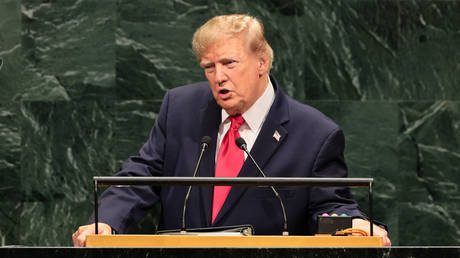
Foreign policy shifts rarely happen overnight, but when they do, they usually start in New York during the annual United Nations General Assembly. President Donald Trump took the podium at the United Nations and walked away with a signed security pact that changes the geopolitical landscape of the Arctic. If you missed the details, you aren't alone. Mainstream media outlets spent weeks guessing what would happen, but the reality on the ground is much clearer now.
Let's look at what actually went down, why Denmark and Greenland finally caved, and what this means for American strategy moving forward.
The Reality Behind the Greenland Security Pact
For months, critics claimed Trump's push for control over Greenland was just rhetoric. They called it posturing. They were wrong. On the sidelines of the UN General Assembly, Trump, Danish Prime Minister Mette Frederiksen, and Greenlandic Prime Minister Jens-Frederik Nielsen officially signed a binding security agreement.
This new pact gives the United States permanent military rights on the island. It's not a temporary lease or a vague memorandum of understanding. It is a permanent framework that addresses Washington's core strategic worries in the North Atlantic.
Here is what the agreement actually entails:
- Expansion of the existing Pituffik Space Base, which serves as a critical early-warning missile defense hub.
- Authorization to build two brand-new military bases at strategic locations known as Narsarsuaq and Mestersvig.
- Strict prohibitions preventing non-NATO or non-European Union nations from establishing bases or making sensitive investments without Washington's written approval.
You won't hear many politicians admitting it, but this deal checks every single box the White House wanted. It completely blocks adversarial influence from nations like China and Russia in the Arctic circle.
Why Denmark and Greenland Signed
You might wonder why Copenhagen and Nuuk agreed to terms that grant the U.S. such broad authority after months of high-stakes friction. Simple pragmatism.
Relations hit a breaking point when Washington made it clear that Arctic security was non-negotiable. European nations even sent symbolic military personnel to Greenland earlier in the year to show readiness. But when push came to shove, leaders realized that standing against Washington's strategic umbrella wasn't practical.
Prime Minister Jens-Frederik Nielsen made it clear during the signing ceremony that the world has changed drastically since the 1951 defense pact. The Greenlandic government recognized that long-term security threats are real. By signing this deal, Greenland preserves its right to self-determination and respects the territorial integrity of the Kingdom of Denmark while locking in American protection.
Denmark's leadership also secured its red lines. The agreement explicitly respects Danish sovereignty, meaning Greenland isn't becoming American soil, but its defense is now firmly anchored to the U.S. military apparatus.
A Masterclass in UN Diplomacy or High-Stakes Pressure?
Trump's speech at the United Nations set the tone for the entire week. He didn't shy away from his trademark directness. While addressing world leaders, he contrasted his approach with past administrations, stating that while others talk, he acts.
Critics hate this style. They argue it alienates traditional allies and upends decades of diplomatic norms. But supporters point to the tangible outcome: a signed treaty that secures the Arctic corridor permanently. You can argue about his tone all day long, but you can't argue with the signature on the paper.
Beyond Greenland, Trump used his UN platform to address other hot-button global issues, including the aftermath of military actions against Iran and strong warnings regarding foreign subversion. But the crown jewel of his diplomatic trip was undoubtedly the Arctic pact.
What Happens Next in the Arctic
The ink is dry, but the heavy lifting is just beginning. Building out two new military bases in a harsh environment like Greenland requires immense logistical coordination. Expect the Pentagon to move quickly on site surveys and construction timelines over the coming months.
If you are tracking international relations or defense stocks, keep a close eye on Arctic infrastructure spending. This deal guarantees that the North Atlantic will remain a heavily fortified zone for decades to come.
Take a moment to look past the political noise. The U.S. just locked down the roof of the Western Hemisphere on a permanent basis. Plan your understanding of modern geopolitics around that reality.