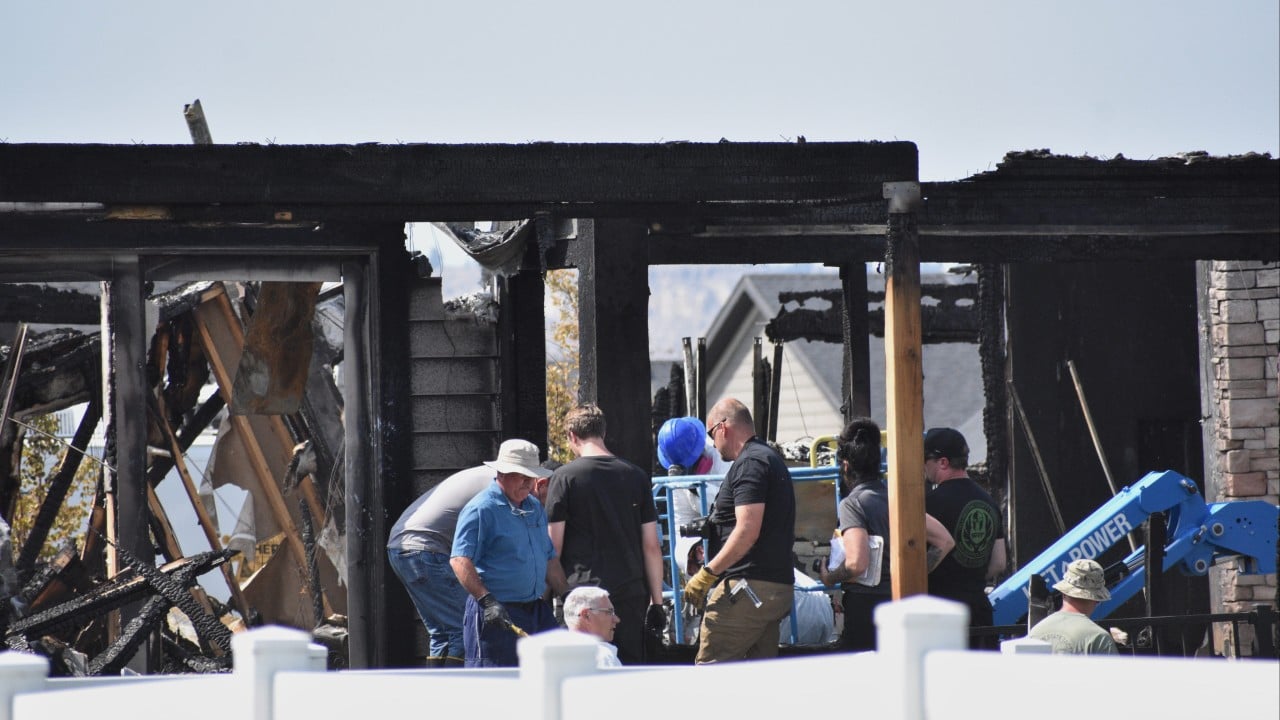
When a single ballistic missile flattened a family home in the Ukrainian village of Radushne, the immediate horror overshadowed a critical tactical question. How did a weapon fired from hundreds of kilometers away strike with such devastating finality?
We now have part of the answer, and it is grim. Ukrainian investigators confirmed that a second North Korean-made KN-23 ballistic missile landed in a field just 3.5 kilometers away from that initial, deadly blast.
Let's look at what this secondary impact actually tells us. Vladyslav Vlasiuk, Ukraine's Presidential Commissioner for Sanctions Policy, pointed out a chilling detail. There are zero potential military targets within a five-kilometer radius of where these missiles came down.
When you map out the impact sites, you realize something stark. These weapons aren't hitting precision targets because they cannot. They are blunt instruments of terror, raining down on civilian areas with terrifying unpredictability.
The July 30 barrage brought back a grim reality that security analysts have tracked for months. Moscow is leaning heavily on Pyongyang to keep its missile campaign alive. The KN-23 is functionally an alternative to Russia's own Iskander system. It shares physical dimensions, flight profiles, and crucially, an alarming reliance on foreign technology.
The Global Supply Chain of Death
Look inside these fragments, and you'll find components sourced from Western countries. Sanctions are supposed to choke off the microchips and guidance parts needed to build ballistic missiles. Yet, somehow, commercial microelectronics still find their way into factories in North Korea and Russia.
The appearance of these weapons signals a troubling shift. After a relative lull in using Pyongyang's ballistic hardware, Moscow has unlocked a fresh inventory.
When a family home is wiped out, killing parents and children in an instant, talking about supply chains feels clinical. But you can't separate the battlefield explosion from the warehouse procurement network. Every single component that slips past border controls ends up as shrapnel in a Ukrainian field.
What the Second Crater Reveals About Accuracy
Military experts often debate the circular error probable of modern missile guidance. In plain English, how close does the missile land to what the operator aimed at?
In the case of Radushne, a 3.5-kilometer spread between two missiles launched in the same salvo speaks volumes about KN-23 scatter. If you miss your intended coordinate by miles, you aren't hitting a logistics hub or an air defense battery. You are hitting houses, schools, and fields.
That lack of accuracy makes the deployment even more dangerous for anyone living within range of a launch zone. It turns every town near a transit route into a randomized target zone.
Stopping the Flow
Tracing the scrap metal in a muddy crater won't bring back the victims of the Radushne strike. Kryvyi Rih observed a day of formal mourning while rescue teams sifted through the wreckage looking for missing minors.
The international community faces a hard truth here. Denying that Moscow and Pyongyang can wage this war means choking off the logistical arteries that supply them. Until those enforcement loops tighten around every shell company laundering microchips, the craters will keep appearing.
Check your local representatives, track the enforcement of secondary sanctions on industrial components, and demand strict transparency from tech manufacturers whose parts end up in active war zones.