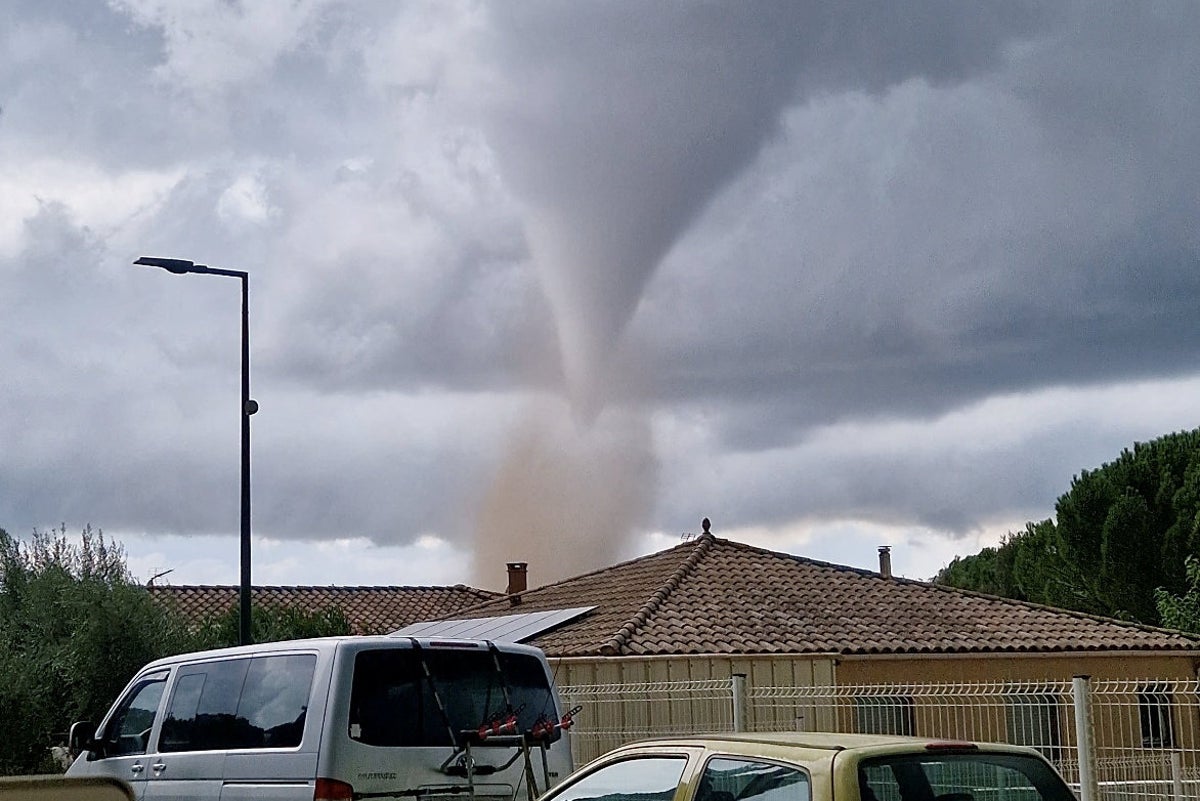
A violent tornado tore through the Aude department in southwestern France, destroying homes, shattering windows, and injuring dozens of people. While American weather watchers track over a thousand twisters annually, France rarely sees storms of this magnitude. When a severe vortex smashed into the village of Pomas and brushed past Verzeille, it shattered the common misconception that European extreme weather stops at torrential rain and heatwaves.
If you're wondering how a routine summer heatwave turned into a destructive natural disaster so quickly, you aren't alone. Let's break down what actually happened on that chaotic Monday evening, why the region was uniquely vulnerable, and what local authorities are doing right now to pick up the pieces. For a deeper dive into similar topics, we suggest: this related article.
What Happened During the Aude Tornado Outbreak
Late on Monday, August 24, 2026, severe thunderstorms abruptly slammed southern France after weeks of oppressive summer heat. Météo-France had placed swathes of the southwest on an orange alert, but the rapid formation of the tornado caught residents completely unprepared.
The storm peaked around 5:20 PM, striking the village of Pomas with ferocious intensity. Roofs were ripped clean off buildings, windows were blasted inward, and heavy gusts clocked up to 117 km/h in nearby areas. For further details on this development, detailed reporting can be read at The New York Times.
- Pomas: Roughly 300 homes suffered heavy damage, and entire structures were flattened. Emergency services evacuated the village to check structural safety.
- Verzeille: Verified social media footage captured the dark funnel cloud swirling overhead, smashing windows and pelting properties.
- Broader Impact: Power outages affected thousands of households across the region, while transport networks faced severe disruptions, including the cancellation of a stage of the Vuelta a España cycling race due to dangerous hailstorms.
The Human Toll and Immediate Response
Thirty-nine people sustained injuries during the outbreak, with two victims hospitalized in critical condition in Pomas. Among the injured was a pregnant woman trapped when her home collapsed.
Local residents recounted terrifying escapes. Severine, a Pomas local, told reporters that the vortex shook her family's car violently as they sped away to escape the collapsing neighborhood, describing the moment as pure survival instinct.
More than 120 emergency workers rushed to the scene, establishing shelters in Pomas and Limoux for displaced families. Grid operators and utility crews worked through the night to restore power to thousands of homes still left in the dark by Tuesday morning.
Why This Storm Breaks the Mold
France logs several dozen small tornadoes every year, but they rarely cause catastrophic damage. Météo-France classifies most domestic twisters as mild events. This outbreak stands out because of its rare intensity and the sudden transition from extreme heat to violent convective storms.
Senior officials like Marie-Helene Bouissac labeled the event deeply traumatic and exceptional, emphasizing that European infrastructure isn't universally built to withstand tornadic winds. Interior Minister Laurent Nunez deployed immediate state backing via social channels as emergency services cordoned off unstable zones.
If you live in or travel through southern Europe, keep a close eye on local orange weather alerts. When summer heat spikes give way to sudden atmospheric instability, extreme weather can escalate faster than traditional forecast models can predict. Check local prefecture updates, heed evacuation orders immediately, and stay away from downed power lines or structurally compromised buildings.