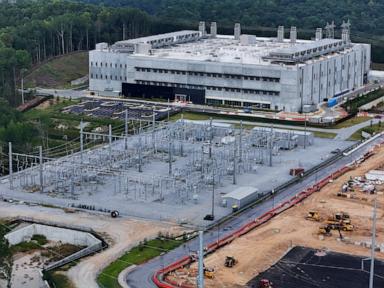
Earth is running out of juice and space for artificial intelligence. Hyperscalers face massive grid bottlenecks, soaring water bills, and local pushback over noise and emissions. Moving computation off-planet sounds like a wild sci-fi pitch, but tech giants aren't laughing. Google is prepping an experimental satellite launch to test custom tensor processing units in low Earth orbit.
Forget traditional cooling towers and multi-gigawatt substations. The orbital environment offers a completely different set of engineering variables.
The Energy Math Behind Orbital Compute
Terrestrial facilities struggle to secure clean, continuous power. Local grids buckle under the weight of modern model training clusters. Space eliminates terrestrial grid limits through direct, uninterrupted solar harvesting. Satellites in specific orbital slots capture sunlight twenty-four hours a day without atmospheric filtering.
You get higher photovoltaic efficiency right away. Solar panels in orbit yield significantly more power per square meter than panels bolted to a cloudy field in Ohio.
Yet, power generation is only half the battle. Thermal management on Earth requires massive chillers and millions of gallons of water. In space, you cannot use convection or conduction easily because you are surrounded by a vacuum.
Radiative cooling becomes your only option. Excess heat must be pumped into giant radiator panels and dumped into the abyss as infrared radiation. It sounds counterintuitive, but radiating heat away in a vacuum requires massive surface areas and careful fluid loop engineering.
Surviving the Harsh Orbit
Chips hate cosmic radiation. High-energy particles flip bits, corrupt memory states, and fry transistors in minutes unless hardware gets heavy shielding.
Standard server racks weighing thousands of pounds cannot fly affordably. Launch costs, while dropping thanks to reusable rockets, still demand extreme weight optimization.
Engineers must redesign custom accelerators like Google's TPUs to withstand radiation without adding excessive lead or tungsten armor. Fault-tolerant software architectures must assume components will fail constantly.
Software needs to self-heal when a stray proton crashes a core. Companies testing these systems are basically rewriting the rules of hardware reliability.
Latency and the Real Bottleneck
If you think orbital processing replaces local data centers for everything, you're wrong. Speed-of-light propagation delays mean space-based computing introduces latency.
A query bouncing to low Earth orbit and back adds milliseconds. That lag ruins real-time consumer apps and high-frequency financial trading.
Instead, orbital infrastructure targets heavy batch processing, large-scale model training, and cold storage archives that don't need instant human responses. You offload the massive compute jobs that choke local grids, leaving terrestrial centers to handle low-latency user traffic.
Cost parity remains the ultimate hurdle. Google estimates that space-based infrastructure could become financially competitive with terrestrial builds by the mid-2030s. That timeline assumes launch costs keep plunging and rocket cadence accelerates.
Don't expect your next search query to route through the stars tomorrow. But do expect the first wave of orbital testbeds to reshape how tech giants think about resource constraints.
Evaluate your own infrastructure roadmap now. If you're planning multi-decade energy needs, keep an eye on aerospace supply chains and orbital solar vendors. The physical limits of Earth are forcing tech out of the atmosphere, and the transition is happening faster than most industry watchers realize.