The headlines are buzzing again. President Trump just ordered a "substantial reduction" in the joint military exercises between the United States and South Korea. If you’ve been following the news, you probably saw the usual mix of shock and confusion. But there is a lot more going on under the surface than just a tweet about "costly" drills and a "good relationship" with Kim Jong Un.
To understand why this is happening, you have to look past the political theater. This isn't just about money or personal rapport. It's about a shifting strategy that prioritizes specific geopolitical goals—like the current pressure campaign against Iran—over traditional alliance optics. If you found value in this piece, you might want to check out: this related article.
Why the Drills Actually Matter
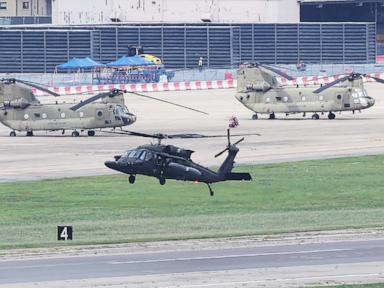
For decades, these joint exercises, specifically the annual Ulchi Freedom Shield, have been the bread and butter of the U.S.-South Korea alliance. They involve tens of thousands of troops. They test everything from rapid mobilization to complex live-fire scenarios. Military planners call them essential for deterrence. They signal to Pyongyang that the U.S. and Seoul are ready to act as one.
When Trump calls these drills "inappropriate" or "hostile," he isn't just speaking off the cuff. He is signaling a desire to change the nature of the alliance entirely. He sees these exercises as an unnecessary irritant in his personal diplomatic gambit with Kim Jong Un. For another look on this development, check out the recent coverage from Reuters.
Is he right? It depends on who you ask.
From the perspective of a military commander on the ground, cutting back on drills is a risk. You can't just "dial down" combat readiness and expect your forces to stay sharp. Muscle memory matters in the military. You stop practicing, you stop being ready.
The Iran Connection
The most surprising detail in the President’s recent announcement was his pivot to Iran. He explicitly mentioned that he asked the South Korean government to join U.S.-led efforts to denuclearize Iran. When Seoul said no, the mood clearly shifted.
This is the "realpolitik" part of the story. Trump isn't just dealing with North Korea in a vacuum. He is building a global pressure campaign, and he expects his allies to carry their weight. When a long-term partner like South Korea declines to jump on board with his Iran policy, the reaction isn't just a shrug. It’s a direct consequence.
Basically, he’s showing the world that alliance support is a two-way street. You don't have to agree with his foreign policy, but you should understand the mechanism here: transactional diplomacy. If South Korea wants the full force of American military backing for their security, the President is signaling that they need to align with his priorities elsewhere.
The Kim Jong Un Factor
Let’s talk about the "very good relationship" with Kim Jong Un. Whether you think this is a brilliant diplomatic opening or a dangerous delusion, it remains the core of Trump’s approach to the Korean Peninsula.
For the last few years, North Korea has been aggressively testing new weapons systems. Despite the rhetoric about being "unthreatening," the actual hardware in Pyongyang suggests they are preparing for a different reality. By scaling back the drills, the administration is effectively buying time—or at least an appearance of progress—with the hope that it keeps the door to dialogue open.
Critics argue that this strategy has already failed, pointing to the collapse of the 2019 Hanoi summit. But the administration clearly believes that high-level personal ties can overcome the friction that lower-level negotiations have failed to solve. It’s high-stakes gambling, and the chips are our regional defense posture.
What This Means for You
If you’re wondering how this affects the average person, look at the regional stability index. The Korean Peninsula remains one of the most volatile places on earth. When the U.S. and South Korea pull back from their drills, it leaves a power vacuum that gets filled with uncertainty.
- Watch the next move from Pyongyang: If North Korea continues to fire missiles or ramp up rhetoric despite these concessions, the "good relationship" narrative will become much harder to sell to the American public.
- Monitor the defense spending debate: We will likely see a push for South Korea to spend even more on their own defense, as the U.S. continues to push for "burden-sharing."
- Pay attention to the Iran policy: This link between Korea and Iran isn't going away. If the U.S. continues to struggle with its Iran strategy, expect more friction with allies who want to stay out of the crossfire.
The reality is that we are in a period of intense diplomatic volatility. The old rules of the U.S.-South Korea alliance are being rewritten in real-time. Don't expect things to stabilize anytime soon. Keep an eye on the actual troop numbers in the next few weeks—because in the military, that is where the truth usually lies.