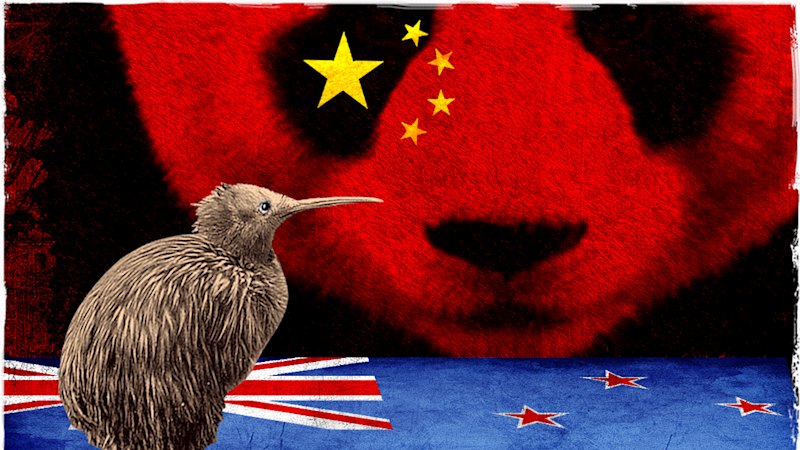
Australia and New Zealand often get grouped together by the rest of the world. We share a similar accent, a love for rugby, and a history of being Pacific neighbors. But when it comes to Beijing, the two nations are basically reading from different scripts.
You’ll hear constant talk about how Canberra treats China with suspicion, while Wellington prefers a softer, trade-first approach. It’s a common observation, but there’s more to it than just "being nice" or "playing tough." It’s a calculated divergence in national interest.
The economics of diplomacy
Let’s be real. New Zealand’s economy is heavily reliant on primary exports. China is their largest trading partner by a significant margin. For a small nation with a small population, keeping those trade doors wide open isn't just a political preference—it’s an economic necessity.
In 2026, Prime Minister Christopher Luxon doubled down on this. At the China Business Summit in Auckland, he didn't mince words. He called China "one of the biggest opportunities" during a time of global economic disruption. You don't say that if you’re looking to pick a fight.
Australia, meanwhile, has taken a more security-conscious stance. After years of trade strikes and diplomatic freezes, Canberra shifted toward a strategy focused on "proactivity, principle, and patience." They aren't avoiding the "C" word; they are managing the reality of a massive power shift in the Pacific.
Beyond the trade talk
Some critics suggest New Zealand is just "selling out" its values for a quick buck. They point to Wellington’s hesitation to join certain Five Eyes statements regarding Hong Kong or human rights issues.
However, ask any diplomat in Wellington and they’ll give you a different answer. They’ll tell you they prefer a "quiet diplomacy" model. The idea is simple: if you have a genuine seat at the table and a respectful relationship, you have more influence behind closed doors than you do screaming into a megaphone on the front page of a newspaper.
It’s an approach that values being heard over being loud. Whether it works is another question entirely.
The Pacific squeeze
The real pressure cooker for both countries is the Pacific Islands. Australia and New Zealand are the dominant players here, but they aren't the only ones interested in the region anymore.
You see the friction in the Pacific Islands Forum meetings. When issues arise—like regional security or Chinese influence—there is a subtle but clear divide. New Zealand often pushes for a "Pacific way," which prioritizes consensus and keeping the region free from becoming a testing ground for superpower competition. Australia, often backed by the United States, is more focused on preventing any erosion of the regional status quo.
The reality of the Five Eyes
People often ask why the "Five Eyes" intelligence partners (the US, UK, Canada, Australia, and New Zealand) aren't acting as a monolith.
The truth is that they never were. Intelligence sharing is one thing, but foreign policy is entirely sovereign. New Zealand has always walked a fine line. They’ve benefited from the security blanket of the Western alliance while simultaneously maintaining a highly independent trade posture.
It’s a balancing act that is getting harder to sustain. As China’s military footprint expands and the geopolitical stakes rise, the "softly-softly" approach faces more scrutiny. Can you really have a deep, trust-based security relationship with the West while maintaining a "comprehensive strategic partnership" with Beijing?
What to watch next
Don't expect either nation to suddenly flip their strategy. Australia’s commitment to AUKUS and a stronger defense posture is locked in. New Zealand’s reliance on agricultural trade won’t vanish overnight.
If you’re watching this space, look for how they handle the next major crisis in the Taiwan Strait or the South China Sea. That’s where the "difference in approach" will stop being a polite debate and start becoming a real diplomatic headache for both Canberra and Wellington.
The distance between the two neighbors is only growing. Watch the trade statistics closely, but pay more attention to the quiet meetings that don't make the headlines. That’s where the real policy is written.