Geopolitics usually stops at the edge of the atmosphere, but the tension on the ground is getting harder to ignore.
On Tuesday, NASA Administrator Jared Isaacman stood at the Baikonur Cosmodrome in Kazakhstan. It is a sprawling, remote facility leased by Russia, steeped in Soviet space history. His presence marks a massive shift. This is the first time a NASA chief has set foot on Russia's premier launchpad in eight years.
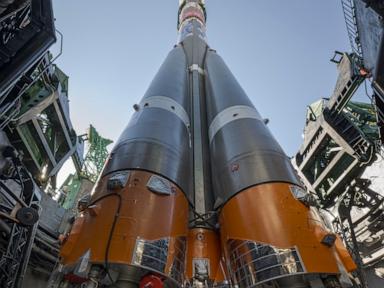
He wasn't there for a vacation. Isaacman arrived to watch the Soyuz MS-29 rocket blast off into the Kazakh sky, carrying NASA astronaut Anil Menon alongside Russian cosmonauts Pyotr Dubrov and Anna Kikina. They are heading to the International Space Station (ISS) for an eight-month mission.
While Washington and Moscow trade harsh diplomatic blows over the ongoing war in Ukraine, their premier space agencies are still sharing rides. Space, it seems, remains the last functioning bridge between two bitter rivals.
The High Stakes Diplomacy in the Kazakh Desert
Isaacman didn't just stand on the tarmac and watch the smoke. On Monday, he met directly with the crew and Roscosmos head Dmitry Bakanov. He went out of his way to praise the technical teams who made the flight possible.
"The integrated work performed over the past several months reflects the professionalism and dedication of everyone involved," Isaacman stated during a pre-launch meeting.
That kind of public politeness doesn't happen by accident. It is highly calculated. The US needs Russia's Soyuz seats to maintain a continuous American presence in orbit, and Russia needs American technical cooperation to keep the aging ISS from falling apart.
Who Is Up There Right Now
Anil Menon is making his very first trip to space on this flight. For his crewmates, Dubrov and Kikina, it's their second time leaving the planet.
When their capsule docks with the ISS just three hours after launch, the station is going to get incredibly crowded. They are joining a massive international crew that already includes NASA astronauts Jessica Meir, Jack Hathaway, and Chris Williams. European Space Agency astronaut Sophie Adenot is also up there, alongside Russian cosmonauts Sergei Kud-Sverchkov, Sergei Mikaev, and Andrei Fedyaev.
Managing a house that full takes flawless coordination. If either side lets earthly politics bleed into the station's life support systems, everyone loses.
The Fracturing Future of Outer Space
Don't mistake this successful launch for a sign that everything is fine. The old era of deep U.S.-Russian space collaboration is dead.
A few years ago, there were quiet talks about Russia joining NASA’s ambitious Artemis program to put boots back on the moon. Those plans completely collapsed after the 2022 invasion of Ukraine and the subsequent wave of Western economic sanctions.
Russia is already looking elsewhere for its future. Starved of Western technology and cash, Roscosmos has steadily pivoted toward Beijing. Moscow is now heavily invested in collaborating with China on its own prospective lunar missions. We are watching the formation of two distinct space blocs: the US and its Western allies on one side, and a China-Russia coalition on the other.
What Happens Next
Keep your eyes on the de-orbiting timelines for the International Space Station. While this joint crew will spend the next eight months running experiments, the clock is ticking on the station itself. The ISS cannot fly forever, and the division of labor required to safely bring it down at the end of its lifespan will require even more delicate diplomacy than the launch we just witnessed.
If you want to track the orbital mechanics yourself, check out NASA's official flight schedule or log onto the live tracker to watch the Soyuz MS-29 dock later today.