Helsinki has a massive secret, but it's not the kind you keep locked in a drawer. It's the kind you swim in, play floorball in, or park your Volvo in.
If you walk through the snowy streets of Finland’s capital, you’re walking directly above a staggering parallel world. The media loves to call this Finland’s "hidden underground city." They paint pictures of a sci-fi metropolis waiting for the end of the world.
But that is not what this is.
It’s actually much more practical, far more interesting, and completely misunderstood.
Most people assume these shelters are dusty, damp concrete tombs built during the height of Cold War hysteria, left to rot until someone pushes a panic button. That’s completely wrong. In Finland, civil defense isn't a doomsday hobby. It’s normal, everyday urban planning.
The Finns built a network of over 5,500 highly advanced bunkers beneath Helsinki alone. It has the capacity to shelter nearly one million people. Think about that. Helsinki’s surface population is only about 675,000. They built enough room to protect every single resident, every commuter, and every tourist, with plenty of space to spare.
They didn't do this because they are paranoid. They did it because they know their neighbor.
The Hard Truth of Shared Borders
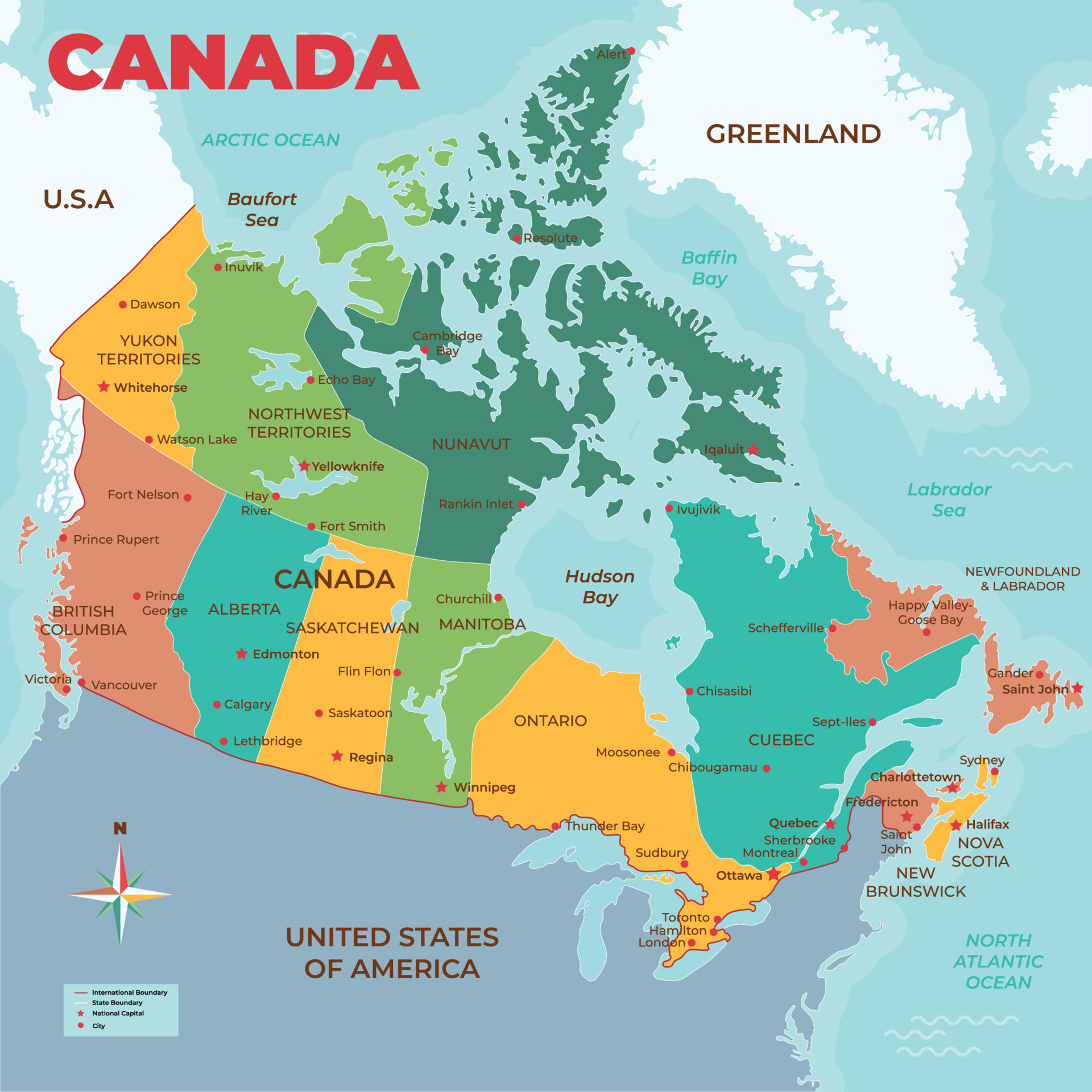
To understand why Helsinki literally carved a second city into solid granite, you have to look at a map. Finland shares a 1,340-kilometer border with Russia.
History is a brutal teacher, and the Finns are straight-A students. In 1939, the Soviet Union invaded Finland in what became known as the Winter War. Despite being massively outnumbered, the Finns fought back with legendary grit, a concept they call sisu. They protected their independence but lost territory.
They vowed never to be caught off guard again.
While the rest of Europe dismantled its civil defense infrastructure after the Berlin Wall fell, Finland kept digging. They never stopped. The ongoing war in Ukraine has shown the world the terrifying reality of modern missile and drone strikes on civilian centers. For the Finns, this wasn't a wake-up call. It was a confirmation of what they already knew.
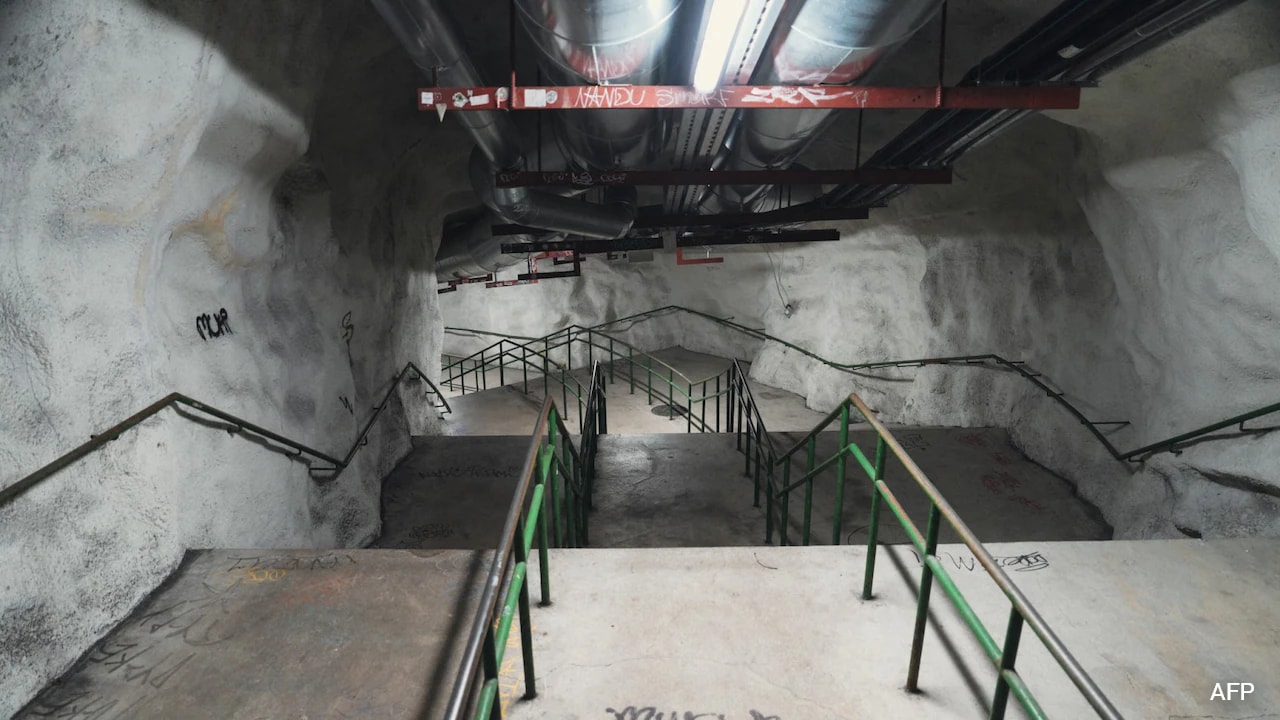
They build these structures directly into the Baltic Shield, some of the hardest, oldest granite bedrock on Earth. This isn't soft soil or sand. To get down there, you have to blast through stone that has survived billions of years.
Inside the Dual-Use Strategy
No government wants to spend billions of euros on massive concrete caves that just sit empty, gathering cobwebs. That’s why Finland pioneered the dual-use strategy.
These spaces are woven into the fabric of daily life. Under normal conditions, you don't feel like you're in a military installation.
Take the Itäkeskus Indoor Swimming Pool in eastern Helsinki. On any given Tuesday, it’s filled with the sounds of splashing children, lanes of fitness swimmers, and people relaxing in hot saunas. It handles about 1,000 visitors at a time.
But look closer. The walls are smooth, grey granite. The entrance tunnels are curved at sharp angles to deflect blast waves. If a military crisis hits, the pool water can be drained or used as a reservoir, the division walls can be cleared, and in less than 72 hours, this tropical leisure park transforms into a blast-resistant bunker for 3,800 people.
The same goes for the Merihaka civil shelter in downtown Helsinki.
Merihaka sits 25 meters below the surface, a massive 15,000-square-meter cave blasted out of solid rock. On a normal day, it’s a bustling sports complex. Local kids play floorball, athletes lift weights, and people use the indoor playgrounds.
If the warning sirens sound, those floorball rinks are packed away. Massive steel doors seal shut. Bunk beds are rolled out of storage.
The facility quickly morphs into a shelter capable of keeping 6,000 people safe from explosions, toxic gas, and radiation.
Renting these spaces out to sports clubs and parking garage operators isn't just about recovering costs. It serves a brilliant psychological purpose. It makes the shelters familiar. If a crisis happens, people aren't running into a terrifying, unknown dark hole. They're going to the place where they played soccer last week or where they park their car every day.
The submarine rules of survival
Living underground with thousands of strangers during a military bombardment sounds like a nightmare. It would be, if not for Finland’s obsessive attention to detail.
These shelters are designed to operate as completely closed loops, entirely independent of the outside world’s power, water, or sewage grids. They have their own massive diesel generators, deep water wells, and advanced air filtration systems.
But the physical survival stuff is only half the battle. The psychological strain of being crammed into a rock cave is a different beast.
Finnish rescue officials manage these shelters using a strict shift system inspired by submarine operations.
- One-third of the population rests. They are in the designated quiet zones, sleeping on bunk beds.
- One-third is active. They are in the common areas, socializing, eating, or moving around to prevent stiffness and anxiety.
- One-third is on duty. They are cleaning, managing the ventilation, preparing meals, or maintaining security.
This rigid rotation keeps people occupied, reduces friction, and prevents the chaos that usually destroys morale in tight spaces.
And what about supplies? The government expects citizens to do their part. The Finnish national standard is the "72-hour rule." Every household is expected to maintain enough food, water, and medicine to survive independently for three days before rescue services step in. When citizens head to the public shelters, they are expected to bring their own basic necessities and sleeping bags, allowing the shelter's resources to last significantly longer.
The Legal Secret to National Preparedness
How did Finland manage to build 50,500 shelters across the entire country, with space for 4.8 million people, without bankrupting itself?
They didn't build them all at once, and they didn't pay for them all out of the state treasury.
They did it through smart, uncompromising laws. Under the Finnish Rescue Act, any builder constructing a residential or commercial building larger than 1,200 square meters is legally required to build a certified civil defense shelter inside it. The cost of building the shelter is factored directly into the construction budget of the property.
If you build an apartment building in Helsinki, you build a bunker in the basement. Period.
Most of these smaller, property-specific shelters serve as bicycle storage rooms, dry storage, or laundry areas during peacetime. But they have the heavy concrete walls, the steel blast doors, and the hand-cranked air filtration units ready to go.
This decentralized system is the real backbone of Finnish safety. Public bedrock shelters like Merihaka are there for people on the move, tourists, and commuters. But the average Finn living in Helsinki has a shelter right in their own basement. They don't even have to leave their building to find safety.
Why the World is Rushing to Helsinki
For decades, other countries viewed Finland's obsession with bunkers as an outdated quirk, a remnant of Cold War paranoia that they should have outgrown.
They aren't laughing anymore.
In 2026, foreign military officials, urban planners, and government delegations are constantly flying into Helsinki. They want to see how a small nation of 5.5 million people built a bulletproof defense shield without turning their cities into grim military zones. Delegations from the UK, Poland, and even war-torn Ukraine have toured these facilities to take notes.
They realize that in an era of long-range missile threat and hypersonic weaponry, relying solely on air defense systems isn't enough. You need physical protection.
Finland’s model of "Comprehensive Security" proves that preparedness doesn't have to be loud, scary, or economically wasteful. By making civil defense an invisible part of normal life, they have created the ultimate deterrent.
Practical Lessons We Can Actually Use
You might not be able to blast a 15,000-square-meter cave into granite bedrock beneath your house, but the Finnish approach offers some serious, real-world lessons for personal and community resilience:
- Embrace the 72-hour rule. Don't wait for an emergency to realize you don't have bottled water or canned food. Keep a basic, rotating supply of food, water, and medicine in your home that can last your family for three days.
- Make preparedness a habit, not a panic response. The Finns succeed because their systems are checked regularly and used daily. Know where your local emergency services are, understand basic first aid, and have a clear plan with your family on where to meet if communication networks go down.
- Invest in dual-use solutions. If you are building or renovating a property, think about how spaces can serve multiple purposes. A reinforced basement room can be an excellent home office or gym today, and a secure safe room tomorrow.
Helsinki’s underground city isn't a monument to fear. It’s a testament to practical, long-term thinking. It proves that you don't have to live in terror of the future if you simply prepare for it.