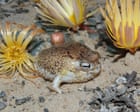
Nature is incredibly good at adapting. Over millions of years, evolution has figured out how to keep life thriving in places that should be entirely unlivable. We are talking about snails that thrive next to underwater volcanoes throwing out water at 450°C, and fat little frogs that live in bone-dry deserts without ever needing a sip of standing water.
But evolution has a major design flaw. It moves too slowly to outrun a bulldozer or a deep-sea mining drill.
The International Union for Conservation of Nature released its latest global update, and the numbers are brutal. The global tally now stands at 175,909 species assessed, and a staggering 49,505 of them are staring down the barrel of extinction. The core takeaway from this data is simple yet terrifying. The most brilliant, hyper-specialized survival mechanisms on Earth are completely failing against human industry. We are rewriting the rules of the planet faster than biology can adapt, and the consequences are wiping out creatures we barely understand.
The Destruction of Deep Sea Super Survivors
For a long time, we assumed the deep ocean floor was safe from our reach. It turns out nowhere is deep enough.
Hydrothermal vents are some of the most hostile environments on the planet. Deep on the ocean floor, volcanic fissures heat water to crushing temperatures up to 450°C. Yet, an entire ecosystem lives there. Over 200 species of specialized molluscs—clams, limpets, and bizarre snails—have adapted to live exclusively around these toxic, boiling vents. They don't rely on sunlight. Instead, they thrive on a complex web of chemosynthesis, using the chemicals pumping out of the Earth.
The global assessment reveals that two-thirds of these deep-sea vent mollusc species are now threatened with extinction.
The culprit isn't climate change or plastic pollution. It is deep-sea mining.
These volcanic vents are surrounded by massive deposits of rare minerals and precious metals. Companies want those minerals. When heavy mining machinery crawls along the seabed to explore and extract these resources, it kicks up colossal plumes of sediment. This floating debris travels through the water and smothers the vents. For a creature like Lirapex felix, a tiny snail found only in specific parts of the Indian Ocean, this disruption is fatal. The species has officially been classified as critically endangered.
It is a grim irony. These animals figured out how to survive toxic chemistry and bone-crushing pressure, but they cannot survive a cloud of dirt stirred up by a mining corporation.
The Power of Protected Zones
We actually have proof that we can stop this. The data shows that more than 30 vent species are currently safe from this threat.
Why? Because they happen to live inside Marine Protected Areas where mining is strictly illegal. Take Provanna exquisita, an ornately shelled snail that lives in the Mariana Arc of Fire national wildlife refuge in the Pacific Ocean. It is doing fine because the law protects its home.
This proves that extinction isn't an inevitable side effect of modern life. It is a choice. When we choose to draw a hard line and ban industrial activity in sensitive habitats, wildlife survives. When we prioritize resource extraction over biology, species vanish.
Dying for Diamonds in the Desert
The crisis isn't confined to the bottom of the ocean. It is happening in the driest corners of the land, too.
Consider the desert rain frog. Most frogs are wet, slimy creatures that require ponds, lakes, or swamps to breed and survive. The bulbous desert rain frog threw out that playbook entirely. It lives along the hyper-arid coastlines of South Africa and Namibia.
To survive the blistering sun, this creature buries itself deep into the cool sand during the day. It emerges only under the cover of darkness to hunt insects, absorbing tiny amounts of moisture from the sea fog that rolls across the dunes. It is an evolutionary masterpiece.
Now, it is classified as vulnerable on the global threatened list.
The desert rain frog is losing its habitat to diamond mining and rapid energy infrastructure expansion. Companies are tearing up the coastal dunes to search for gems and build power lines, completely destroying the delicate sand layers these frogs need to burrow and hide. A frog can adapt to a desert, but it cannot burrow through a diamond mine.
The Brutal Reality of the Australian Extinction Crisis
Australia is a textbook case of what happens when human disruption meets isolated ecosystems. The continent has a terrible track record with wildlife preservation, having recorded more than 40 modern mammal extinctions.
The latest data formalizes a tragic milestone. Five more Australian marsupials have been officially declared extinct.
- The crest-tailed mulgara
- The southern mulgara
- The northern mulgara
- The little mulgara
- The little bettong
These species were small, unique, and vital to their ecosystems. The four mulgara species were rat-sized carnivores that hunted insects and small reptiles, while the little bettong was a rabbit-sized hopping marsupial. None of them have been seen in the wild for at least 60 years.
They didn't die out because of a lack of food or shifting weather. They were eaten out of existence. When European settlers arrived, they introduced invasive predators like feral cats and red foxes. Australia’s native mammals had spent millions of years evolving without these specific threats. They had zero natural defenses against them, and the slaughter was absolute.
The Numbat Proves Conservation Works
It is easy to get overwhelmed by the bleakness of these updates, but the data also contains a massive blueprint for hope. Look at the numbat.
The numbat is a beautifully striped, termite-eating marsupial. It is the very last surviving member of the Myrmecobiidae family. By the late 1970s, human neglect and invasive predators had absolutely devastated the population, leaving a mere 300 individuals alive on the entire planet. It was a ghost species walking toward oblivion.
Today, the numbat has been moved from endangered to near threatened. The population has rebounded to between 2,000 and 3,000 individuals.
This turnaround didn't happen by accident. It took decades of aggressive, hands-on conservation management. Teams used targeted baiting programs to suppress feral cat and fox numbers. They built massive, predator-proof fences to create safe havens. Perth Zoo established a highly successful captive breeding program, allowing scientists to translocate healthy groups back into the wild.
Because of this work, at least five new self-sustaining populations are now established.
Saving the numbat isn't just about keeping a cute animal alive. It is an investment in the entire landscape. Numbats spend their days digging up thousands of termites. This constant digging breaks up the hard crust of the earth, which massively increases how deeply rain penetrates the soil. Without numbats, the surrounding woodlands dry out and degrade.
But we can't celebrate too early. The numbat currently occupies just 0.04% of its historical original range across southern Australia. If we stop managing the fences and the baiting programs, feral predators will wipe them out within a few seasons.
Actionable Next Steps to Move the Needle
Reading about global biodiversity loss usually leaves people feeling helpless. You can't personally swim down to an Indian Ocean hydrothermal vent and stop a mining drill. But systemic change requires public pressure, and there are direct actions you can take right now to influence the outcome.
1. Demand Moratoriums on Deep-Sea Mining
The push to mine the ocean floor is driven by the demand for battery metals. Dozens of countries are currently fighting for a global moratorium on deep-sea mining until the ecological impacts are fully understood. Write to your federal representatives and demand that your government support a binding international ban on seabed mining.
2. Audit Your Luxury Purchasing
The desert rain frog is dying because humans want diamonds. If you are buying jewelry, look into the origin of the stones. Demand certified conflict-free and ecologically sustainable gems, or bypass the mining industry entirely by opting for lab-grown alternatives that don't require tearing up coastal ecosystems.
3. Support Fenced Reserve Conservation
The numbat recovery proves that predator-proof fencing is the most effective tool we have for saving vulnerable island and mainland species from invasive predators. Direct your philanthropic giving to organizations like the Australian Wildlife Conservancy or local land trusts that actively buy acreage, clear invasive pests, and build physical barriers to give native wildlife space to breed.
4. Push for the 30 by 30 Goal
The global scientific community agrees that we must protect 30% of the planet's land and oceans by 2030 to stop the extinction crisis. Support local and national policies that establish strict Marine Protected Areas and national parks. As the vent snails prove, when a habitat is legally off-limits to industry, nature takes care of itself.