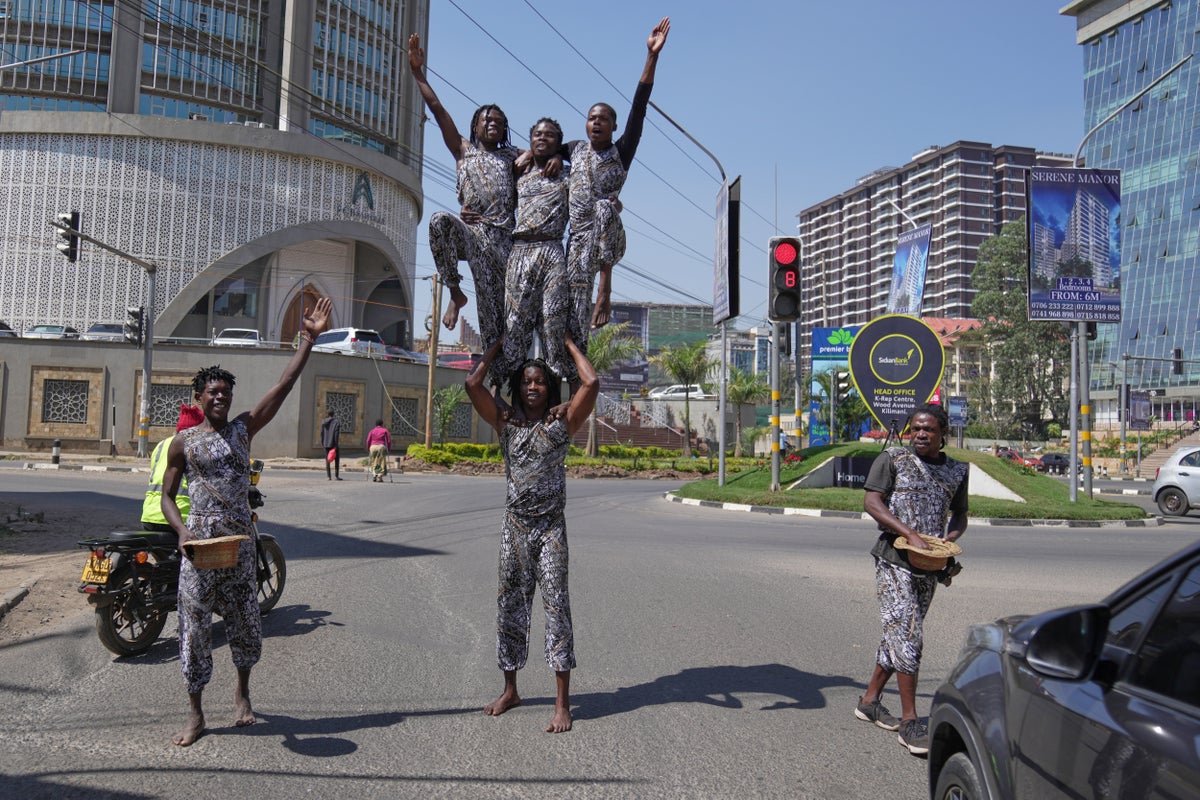
Red lights in Kenya's capital are no longer just about waiting for traffic to move. They have turned into stages. When cars come to a halt on busy roads like Lang'ata Road, young men in striking leopard-print gear step onto the asphalt to flip, tumble, and build human pyramids.
This isn't just street performance. It's survival. You might also find this related article insightful: How The Philippines Defence Chief Turned China’s On-stage Note Into A Global Embarrassment.
With youth unemployment pressing hard across the nation—recorded anywhere from 4.9% to 9.9% by the Kenya National Bureau of Statistics—thousands are left without traditional career routes. Instead of sitting idle, young performers are using their athletic talents right where the gridlock happens.
The Reality of Street Performance in Nairobi
You won't find safety nets or official backing for these impromptu shows. Groups like the one led by 22-year-old Mohammed Nyale wake up early, practicing in open fields in low-income neighborhoods like Kawangware before hitting the tarmac during rush hour. As discussed in latest reports by USA Today, the results are notable.
The mechanics of the job require precision. Performers have mere seconds to execute a backflip or form a pyramid before the light turns green and angry horns start blaring. While some team members tumble, others weave between cars with woven hats, asking for tips.
Money is tight. Most drivers hand over small coins—about 50 Kenyan shillings, which equals roughly 40 US cents. Because physical cash is becoming less common in urban Kenya due to mobile money adoption, these performers have adapted. They hand out small slips of paper featuring their phone numbers so motorists can send digital tips directly via mobile wallets.
On a decent day, an acrobat might rake in the equivalent of six US dollars. That matches the daily wage of many casual laborers in construction or agriculture. For young men who migrated from distant coastal villages to find a better life in the city, that money pays rent and puts food on the table.
Diverging Views From the Driver's Seat
Reactions from motorists are mixed. Some drivers embrace the chaos, viewing the acrobats as a welcome mental break from the frustrating Nairobi traffic jam. Entrepreneurs like Geoffrey Kioi see the hustle as a legitimate way for youth to make a living, tipping them gladly and treating them like hardworking younger brothers.
Others aren't so forgiving. Critics argue that performing amidst moving vehicles creates major traffic hazards and increases the risk of avoidable accidents. Motorists caught in a rush often view the sudden interruption as an annoyance rather than a cultural spectacle.
Beyond the Intersection Dreams of the Circus
Despite the daily grind under a scorching sun, performers hold onto larger ambitions. Many view street acrobatics as a stepping stone rather than a permanent career.
Take 28-year-old Jackson Okoth, who performs regularly on busy corridors. He uses the street hustle to stay physically fit and keep busy, but his eyes are fixed on global stages. Like many others in his troupe, Okoth dreams of joining a professional circus, touring Europe, and turning raw street talent into a sustainable international career.
Working the streets isn't glamorous, and the financial returns are modest. But until formal opportunities open up for Kenya's younger generation, the traffic lights of Nairobi will remain an open-air theater where talent meets raw necessity.