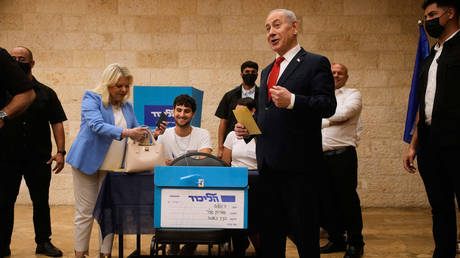
Cross-border politics can turn messy very quickly. When former U.S. diplomat Morse Tan took the stage in Washington, D.C., back in June 2025, he probably didn't expect a South Korean court travel ban a year later. Yet here we are. Tan—who served as ambassador-at-large for global criminal justice during the first Trump administration—is facing a high-stakes criminal defamation trial in Seoul.
The core issue? Comments he made targeting South Korean President Lee Jae Myung.
If you think free speech stops at national borders, South Korean jurisprudence disagrees. This case creates a fascinating legal collision between American style protections and international judicial reach. Let's break down what actually happened, why prosecutors pushed this forward, and what it means for political speech moving forward.
The Washington Press Conference That Sparked an International Clash
The controversy stems from an event held in the American capital. Tan claimed during a press conference that President Lee spent time in a juvenile facility during his youth due to involvement in a serious crime. South Korean courts have already labeled that assertion false.
When Tan flew to South Korea in late May to monitor local elections, local authorities moved fast. Police officers met him directly at Incheon International Airport. They handed him a formal summons for questioning.
Tan refused to comply. He submitted written statements rejecting the police summons and attempted to swap out his assigned investigators. That strategy backfired. Law enforcement viewed his uncooperative stance as a flight risk. The Ministry of Justice slapped him with an exit ban, which courts have repeatedly upheld as the legal proceedings march toward a September 11 hearing.
Navigating Extra-Territorial Jurisdiction
You might wonder how a South Korean court claims jurisdiction over words spoken on U.S. soil by an American citizen. It's a valid question.
Initially, Seoul police closed the case. They figured they lacked jurisdiction over a foreign national making statements across the Pacific Ocean. But prosecutors stepped in and ordered the investigation reopened. Their legal argument relied on the idea that the impact of a crime matters just as much as where it was physically committed.
Because digital communication and global media ensure statements travel instantly across oceans, South Korean authorities argued that false allegations made in Washington directly damage reputations and political processes inside Seoul. Prosecutors formally indicted Tan on July 16, setting the stage for a courtroom showdown.
The Trump Administration Link and Political Fallout
Tan's past government credentials inject heavy geopolitical friction into the proceedings. Mentioning his ties to the first Trump administration immediately turns a standard criminal defamation matter into a sensitive diplomatic talking point.
Legal teams on both sides are digging in. Tan's defense lawyers have publicly blasted the judiciary, arguing that the travel bans and ongoing prosecution represent a collapse of the rule of law and constitutional separation of powers. They view the measures as an aggressive attempt to muzzle foreign critics.
On the other side, supporters of the ruling administration argue that unchecked disinformation threatens democratic stability. They maintain that cross-border political figures cannot weaponize false personal attacks from safe distances without facing legal accountability.
What Comes Next
The first formal court hearing is locked in for September 11. Until then, Tan remains stuck in South Korea under strict travel restrictions while his legal team attempts to overturn the ongoing judicial constraints.
Watch this case closely. It sets a sharp precedent for how foreign nations handle speech originating abroad. The outcome will test the limits of international legal reach in an era of borderless media.