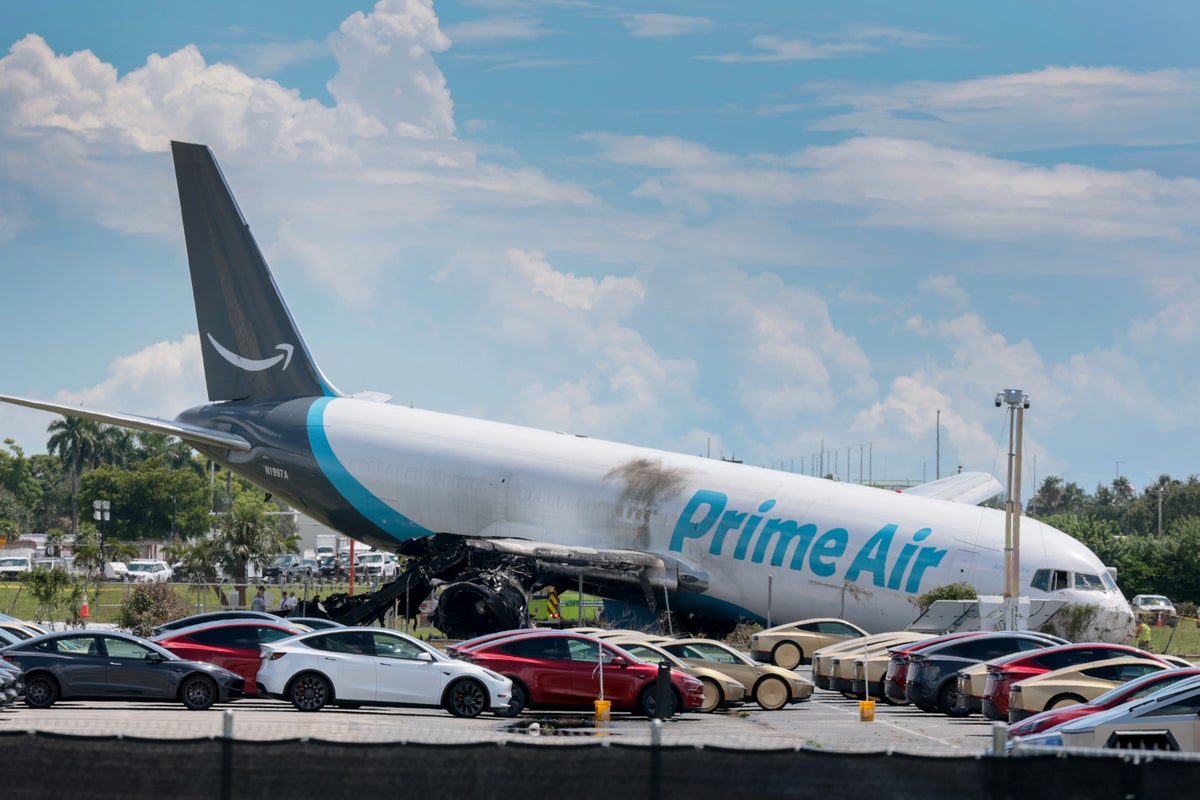
An Amazon cargo plane overshooting a runway doesn't just happen. It leaves behind a terrifying trail of wreckage, shattered lives, and hard questions that aviation authorities spend months trying to answer. When a Boeing 737 cargo jet bursts through an airport perimeter fence in Miami, tearing a contractor's van apart and killing five people, it forces a brutal look at how vulnerable ground areas really are.
National Transportation Safety Board chair Jennifer Homendy described the impact site as a scene of "utter devastation." Jet fuel sprayed everywhere. Vehicles were crushed. Investigators descended on the site with a 32-person team to pull flight data recorders, comb through twisted metal, and interview witnesses. But behind the chaotic images broadcast across the news, a much deeper systemic debate is happening about runway safety areas and why certain airports lack critical life-saving technology.
The Anatomy of the Crash
The flight operated by contractor 21 Air wasn't even on its first leg of the day. It had already completed rotations from Cincinnati to Miami and then down to San Juan, Puerto Rico, before making its fateful final approach back into Miami. Video footage later showed the jet hovering awkwardly over the runway, its left rear landing gear bouncing against the tarmac before it failed to stop.
Instead of coming to a halt on paved concrete, the jet skidded roughly 1,300 feet past the runway surface, plowed through a security fence, and slammed directly into two vehicles. A Ford van carrying seven people from a cleaning contractor was shredded on impact, while a Toyota Corolla SUV was also caught in the path of destruction. Five people lost their lives on the ground.
You have to ask how a commercial cargo aircraft can travel over a thousand feet past a runway boundary without something stopping it. That question points directly to a glaring infrastructure gap.
The Missing Safeguards
A major focal point of the ongoing NTSB investigation is whether an Engineered Material Arresting System could have altered the outcome. These systems, often called EMAS beds, use crushable lightweight concrete blocks designed to safely decelerate aircraft that overshoot runways, swallowing the wheels and bringing the plane to a halt before it breaches airport perimeters.
Miami International Airport reportedly lacks an EMAS bed at the end of that runway. If it had been installed, the Boeing 737 might have been stopped before punching through the fence and striking service vehicles on airport grounds. Airports operating heavy commercial traffic without these safeguards face intense scrutiny every time a runway excursion turns fatal.
What Happens Next in the Investigation
Recovering the black boxes—the flight data recorder and cockpit voice recorder—is only the starting line. Investigators are scrubbing telemetry data, analyzing weather conditions at the time of touchdown, and checking the maintenance history of the aging Boeing 737-300. They are also looking closely at pilot inputs during that final landing phase, checking whether mechanical failure, pilot fatigue, or landing miscalculations caused the plane to bounce and float past its touchdown zone.
Families of the victims, aviation safety advocates, and local officials are demanding transparency. Aviation accidents rarely stem from a single mechanical glitch. They are usually a chain of small failures—a hard bounce, a slick surface, a lack of overrun padding, and bad timing aligning all at once.
If you are tracking aviation safety developments, pay attention to the upcoming NTSB public dockets rather than reacting to initial speculation. Check your local airport infrastructure reports to see if safety overrun beds are standard on commercial runways near you. Demand accountability from local port authorities regarding ground-perimeter safety standards.