Geopolitics on Earth is a mess, but 250 miles above our heads, the ultimate group project is still running smoothly.
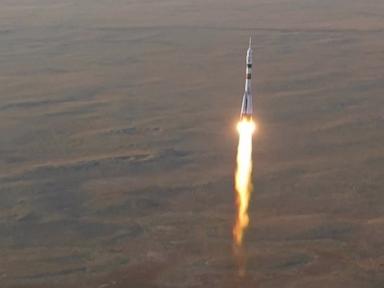
A Russian Soyuz rocket roared off the pad at the Baikonur Cosmodrome in Kazakhstan, carrying NASA rookie astronaut Anil Menon and veteran Russian cosmonauts Pyotr Dubrov and Anna Kikina into the sky. They're locked into an eight-month marathon aboard the International Space Station (ISS).
If you're wondering how an American astronaut is still hitching rides with Russia given the frostbite on international relations, you're looking at the reality of modern spaceflight. We need each other up there. The ISS literally cannot run without both countries, and this launch shows that the partnership isn't breaking anytime soon.
The Ride and the Crew
The Soyuz MS-29 spacecraft lifted off at 10:47 a.m. EDT, hunting down the space station in a quick two-orbit chase.
Soyuz MS-29 Flight Profile:
- Liftoff: 10:47 a.m. EDT
- Orbit Insertion: ~8 minutes, 46 seconds
- Docking: Scheduled for 1:56 p.m. EDT
For Menon, an emergency medicine physician and former SpaceX flight surgeon, this is his first time leaving the atmosphere. Interestingly, space travel is a family business for him. His wife, Anna Menon, flew on the commercial Polaris Dawn mission.
His seatmates are seasoned professionals. Dubrov spent nearly a year in orbit during his first run, and Kikina previously made history by flying on a SpaceX Crew Dragon. This kind of seat-swapping arrangement keeps both space programs deeply integrated.
What They're Actually Doing Up There
This isn't a passive observation mission. The crew is walking straight into a heavy scientific workload. Menon's background in medicine means he's basically a walking laboratory.
Instead of just testing the limits of human endurance, this mission focuses on manufacturing and advanced medicine.
- In-space semiconductors: Growing crystals in microgravity produces fewer defects. If we can refine this technique, it could change how high-performance computer chips and artificial intelligence hardware are manufactured back home.
- Bioprinting organs: The crew will test bioprinting vascular structures. Without Earth’s gravity pulling things down, printing delicate human tissues becomes a lot more viable.
- AI medical support: Menon will test augmented reality paired with artificial intelligence to perform complex medical ultrasounds. This matters because future crews heading to Mars won't have a real-time link to doctors on Earth. They'll have to be self-sufficient.
The Politics Behind the Handshake
It's impossible to ignore the elephant in the room. This launch happened with NASA Administrator Jared Isaacman watching live at Baikonur. It's the first time a NASA chief has set foot at the Russian-leased launch facility in eight years.
It sends a clear message. While Earthside diplomats are barely on speaking terms, space agencies are still trading seats and sharing meals. The ISS is physically divided into American and Russian segments, but the systems are codependent. Russia controls the propulsion and altitude keeping the station from burning up in the atmosphere; the US controls the electricity and life support.
They're stuck together. And for now, that's exactly how science gets done.
Next Steps for Space Observers
If you want to track this mission as it unfolds over the next eight months, here's what you should look out for next.
First, check out the live playback of the orbital docking. Watch the precise maneuvers as the Soyuz locks onto the station's docking port.
Second, follow the NASA Space Station blog for weekly operational updates. They regularly post raw data on the semiconductor and bioprinting experiments.
Finally, keep an eye out for scheduled spacewalks. Both the US and Russian segments have maintenance runs coming up later this year, which will showcase how these cross-agency crews work outside the hull.