Your home is supposed to be your sanctuary. For hundreds of farmers across rural Wales, that basic expectation turned into a multi-year nightmare of corporate intimidation, unannounced visits, and legal threats. Infrastructure firms often act like they own the place long before a single shovel hits the dirt. They issue sweeping notices, march onto private land, and treat local families like minor speed bumps on the road to corporate profits. But a major High Court decision has flipped the script. The latest pylon land access ruling has sent a clear, undeniable shockwave through the energy sector, proving that corporate muscle cannot simply override the fundamental statutory rights of ordinary citizens.
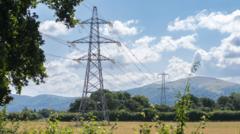
Mr Justice Kimblin handed down a judgment that directly rebuked Green Generation Energy Networks Cymru, known commonly as Green GEN Cymru. The company is trying to push through a massive 200-kilometer infrastructure project. This network of high-voltage overhead cables and towering pylons is designed to link newly planned wind farms in mid-Wales directly to the national grid network. The proposed routes cut straight through the heart of Powys, Ceredigion, and Carmarthenshire. For the 500 local farmers, business owners, and residents backing the legal challenge, the corporate approach felt less like public utility planning and more like a hostile invasion. Also making headlines lately: Why Turkey Is Using Security To Bargain With Europe.
The court made it clear that massive green energy ambitions do not give corporations a free pass to treat private farms like an unregulated Wild West.
The Backstory of the Great Welsh Power Struggle
This battle did not start in a polished courtroom. It began on narrow country lanes and family-run fields. Green GEN Cymru, a subsidiary under the Bute Energy umbrella, holds the legal status of an acquiring authority. This status grants them heavy statutory powers, specifically under Section 172 of the Housing and Planning Act 2016. In theory, this allows them to enter private property to conduct necessary environmental surveys and valuations before any formal compulsory purchase order is finalized. In practice, local campaigners argue the firm abused this power aggressively. More insights into this topic are detailed by Al Jazeera.
Landowners across mid-Wales reported a pattern of behavior that felt deeply intrusive. Agents acting for the energy company allegedly turned up without proper warning, ignored local gates, and blindsided residents who felt completely outnumbered. Natalie Barstow, who runs the Fforest Fields caravan and camping site in Powys, became the lead claimant in the landmark action. She helped build a coalition alongside the Campaign for the Protection of Rural Wales and the Land Justice Coalition.
The core of their grievance was simple. Green GEN Cymru was acting like their commercial timeline overrode every local concern. The firm issued vague, sweeping pro-forma notices to access land, sometimes months or years in advance, leaving farmers in a state of constant anxiety. They never knew when surveyors might suddenly appear in their backyards or livestock fields.
Inside the High Court Clash Over Private Farmland
When the case finally reached Cardiff’s Civil Justice Centre, the details that emerged painted a stark picture of corporate carelessness. Lawyers representing the farmers presented a mountain of evidence showing a complete disregard for the working reality of modern agricultural operations.
Rural properties are not empty spaces on a corporate map. They are highly sensitive economic ecosystems. In Wales, where roughly 90% of the land is dedicated to agriculture, entering a farm without strict safety precautions can ruin a family business overnight.
What the Wildlife Cameras Revealed
One of the most damning pieces of evidence came directly from secret footage captured on wildlife cameras installed on Natalie Barstow's farm. The energy firm had issued an access notice way back in August 2024. Nearly a year later, in July 2025, surveyors were caught on camera marching through a brook on her property. This occurred after Mrs. Barstow had been explicitly told that the planned survey work was deferred.
The unannounced entry was not just an annoyance. The stream they waded through happens to be a protected habitat for endangered native crayfish and otters. Walking through delicate waterways without proper environmental clearance or oversight flies directly in the face of the green credentials these companies love to wave around in public relations campaigns.
The Invisible Threat of Bovine TB and Biosecurity
The absolute biggest flashpoint in this dispute was biosecurity. Farmers accused corporate agents of crossing farm boundaries in dirty clothes and unwashed boots. In the agricultural sector, this is an unforgivable sin. It creates an immediate risk of spreading devastating livestock diseases like sheep scab or Bovine Tuberculosis.
Bovine TB restrictions are an absolute nightmare for cattle farmers. If a herd tests positive, the financial and emotional toll is catastrophic. Movements are restricted, animals are slaughtered, and livelihoods are put on ice. Yet, court documents revealed that the energy company's representatives routinely failed to agree to basic biosecurity protocols. They showed zero insight into the terrifying risks they were bringing onto these farms.
The Crucial Legal Takeaways From the Pylon Land Access Ruling
The decision from Mr Justice Kimblin provides a masterclass in how statutory balance is supposed to work. He did not rule that energy companies have no right to enter land. He ruled that they must do it with courtesy, precision, and a deep respect for the people who actually live there.
Where the Farmers Won a Clear Victory
The judge ruled that the access notice served to Natalie Barstow was legally flawed because it was unduly broad and completely lacked particularity. He ripped into the document, calling it a pro-forma notice that entirely failed to consider the specific circumstances of the land or the owners and occupiers.
Some key principles established by the judge include:
- Companies cannot rely on generic notices served months or years in advance.
- Every single individual landowner or occupier must receive clear, specific notice.
- The scale of a massive infrastructure project does not change the statutory balance of rights. Large projects must follow the exact same strict rules as small ones.
- The failure to properly address the transmission risks of Bovine TB showed a massive gap in the company’s insight into the justifiable needs of farmers.
The judge beautifully summarized the problem by stating that Green GEN Cymru was trying to take all the benefits of land access while bearing none of the burden of thinking about what is reasonable in the circumstances. Because the legal action forced the energy firm to completely overhaul its internal procedures and notice practices, the judge awarded the claimants 60% of their legal costs, totaling £21,000.
Where the Campaigners Fell Short
It is critical to look at this judgment honestly. The farmers did not win on every single front. The High Court rejected the argument that an energy firm must specify the exact first day of access down to the hour.
Mr Justice Kimblin also criticized Mrs. Barstow for occasionally recycling paperwork addressed generally to "The Occupiers" without reading them thoroughly. The farmers also lost their specific arguments centered around data protection laws. This shows that the courts will not completely block national infrastructure progress, but they will heavily police the bad behavior of the corporations building it.
Real Steps for Landowners Facing Corporate Infrastructure Claims
If an energy company or infrastructure firm serves you an access notice, do not panic. You have far more power than they want you to believe. This High Court ruling sets a major precedent you can use to protect your property.
First, demand absolute specifics. If a firm sends you a generic, broad pro-forma letter that looks like it was generated by a machine, you have every right to challenge it. Demand to know the exact dates, the exact personnel entering, and the specific areas of your property they intend to survey.
Second, enforce your own biosecurity rules immediately. Make it a hard condition of entry that any agent stepping onto your property must provide proof of clean equipment, clean clothing, and adherence to specific disease-mitigation protocols. If they refuse to engage with your biosecurity concerns, they are failing the legal standard of entering at a reasonable time under reasonable conditions.
Document absolutely everything. Install security or wildlife cameras near access points, log every single email, and never rely on verbal promises from corporate representatives. If they tell you a survey is deferred, get it in writing.
This legal victory proves that big energy can be forced to back down when local communities stand together and hold them to the letter of the law.
Stop letting corporate surveyors treat your livelihood like their playground. Use the framework of this High Court ruling to draw a hard line in the mud, demand genuine courtesy, and force these firms to respect your statutory rights from day one.