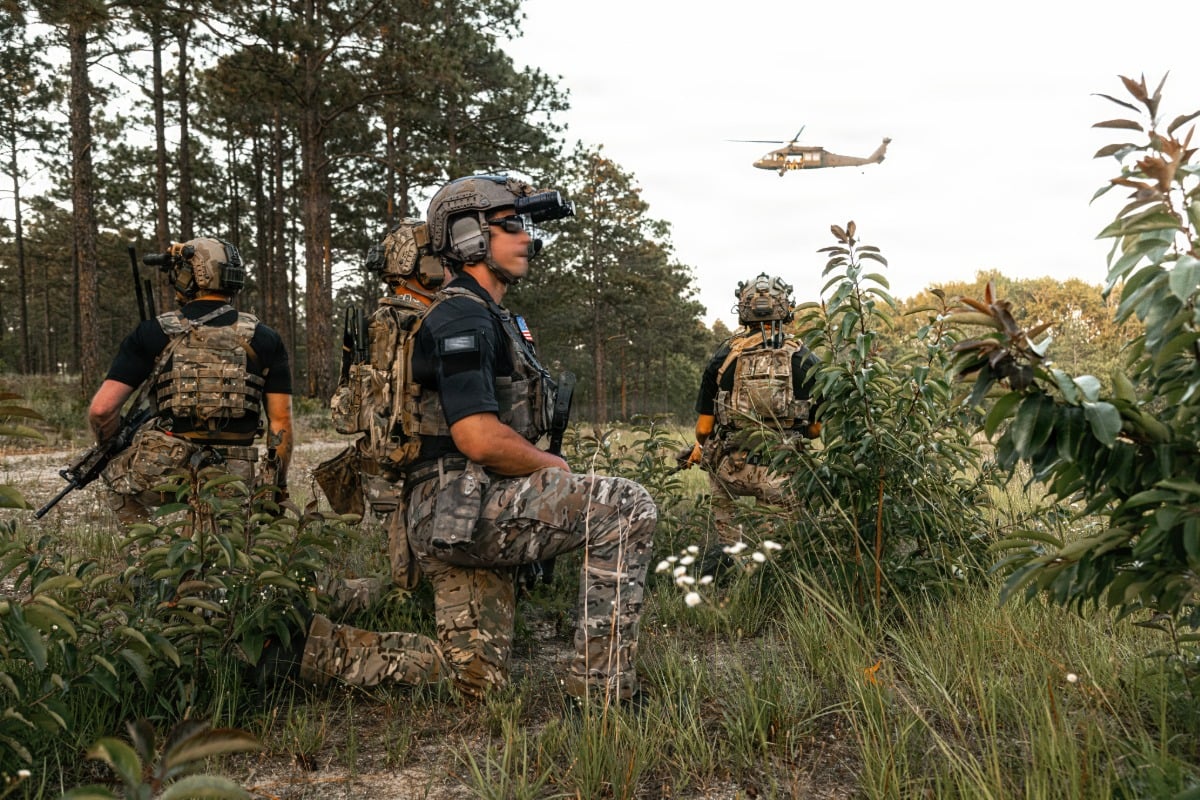
American troops are on the ground in Taiwan. It is no longer a hushed rumor passed around defense circles. Recent sightings of United States military personnel moving through Wuhan Camp in Longtan, Taoyuan, have made what used to be a covert operation impossible to ignore. This isn't a temporary deployment or a brief training exercise. It's a structured, permanent advisory presence right under the nose of Beijing.
If you've been following Indo-Pacific security, you know the old playbook. Washington used to keep its military interactions with Taipei completely invisible to avoid triggering a diplomatic crisis with China. Those days are gone. The presence of these operators highlights a massive shift in how the U.S. handles Taiwan's defense. For a different look, consider: this related article.
Understanding this development requires looking past the surface. It is not just about placing boots on the ground; it represents a tactical overhaul designed to prepare Taiwan for asymmetrical warfare.
The Reality of the Longtan Sightings
Wuhan Camp in Taoyuan serves as the nerve center for Taiwan's Aviation and Special Forces Command. This location is exactly where the U.S. military has set up its Special Operations Forces Liaison Element. Further coverage on this trend has been published by BBC News.
The personnel spotted aren't regular infantry. They belong to elite units, primarily Army Green Berets from the 1st Special Forces Group. Instead of hiding in the shadows, these trainers are actively integrated into Taiwanese command structures. They manage high-value tactical equipment and coordinate sophisticated training resources across the island.
The footprint spreads far beyond Taoyuan. Under the framework established by the 2023 National Defense Authorization Act, American operators are permanently stationed at forward amphibious bases in Kinmen and Penghu. Kinmen sits just six miles from the coast of mainland China. Having U.S. military advisors stationed that close to the Chinese mainland is an incredibly bold statement.
What Are They Actually Doing There
They aren't preparing for a massive tank battle. They are teaching Taiwan how to fight a brutal, asymmetrical defensive war if an invasion happens.
- Drone Integration: U.S. advisors are training Taiwanese elite units on micro-unmanned aerial vehicles like the Black Hornet Nano. They are co-authoring operational manuals to ensure these tiny surveillance tools can be deployed effectively during urban combat.
- Amphibious Counter-Incursions: Green Berets are working directly with Taiwan's 101st Amphibious Reconnaissance Battalion. They practice anti-landing operations, beach defense, and small-boat tactics to protect vital choke points like the Tamsui River estuary.
- Guerrilla Resistance Tactics: The core mission of the Green Berets has always been unconventional warfare. They train local forces to operate independently in contested environments, preparing them to fight on even if centralized command breaks down.
Breaking the 1979 Taboo
The U.S. pulled its official permanent military presence out of Taiwan in 1979 when it recognized the government in Beijing. For decades, any military assistance was handled with extreme secrecy. Instructors wore civilian clothes. They traveled on tourist visas.
That strategic ambiguity has completely eroded. Former Taiwanese President Tsai Ing-wen opened the door by acknowledging U.S. trainers in 2021. Now, the permanent placement of teams in Taoyuan and the outlying islands shows that Washington is willing to risk Beijing's anger to ensure Taiwan's forces are combat-ready.
China has responded exactly as expected, criticizing the cooperation and stepping up air and naval patrols around the Taiwan Strait. Yet, the training continues without interruption. The U.S. stance is clear: maintaining deterrence requires real capability, not just political promises.
What This Means for Regional Security
Don't misinterpret the size of this deployment. A few dozen special forces operators won't stop an invasion force by themselves. They aren't meant to act as a massive combat force. Instead, they act as force multipliers. They ensure that if conflict breaks out, Taiwanese forces can operate in unison with Western tech, intelligence streams, and doctrine.
This presence also builds institutional knowledge. The training programs ensure that the tactical lessons learned by American forces over decades of conflict are directly transferred to the soldiers holding the line in the Pacific.
Track the regional military exercises next. Watch how Taiwan incorporates these small-unit tactics into its larger defensive drills. Pay attention to upcoming defense acquisition bills to see how quickly Taiwan purchases the specific drone and communication tech these American advisors are introducing on the ground.