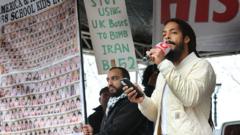
You won't get prosecuted in the UK simply for leading a controversial crowd chant. Pascal Robinson-Foster, better known as Bobby Vylan, just learned this firsthand.
The Metropolitan Police confirmed that no further action will be taken against the punk rap frontman following a lengthy investigation into remarks made at an Al Quds Day rally in central London. Officers consulted early investigative advice from the Crown Prosecution Service before quietly dropping the case.
Police investigations into speech rarely happen in a vacuum. This entire ordeal traces back through high-profile festival stages, fierce political backlash, and a fractured music industry. Let's break down what actually happened, why the case collapsed, and what it means for freedom of expression moving forward.
The Timeline of a Legal Battle
The scrutiny surrounding Bobby Vylan didn't start at a London rally. It escalated rapidly during the Bob Vylan duo's performance at the Glastonbury Festival.
During that set, Robinson-Foster led crowds in a chant directed against the Israel Defence Forces. The moment sparked immediate fallout.
- Prime Minister Keir Starmer labeled the remarks appalling hate speech.
- The BBC faced intense criticism for livestreaming the set, later apologizing for broadcasting behavior they deemed deplorable.
- Several independent music festivals and international venues canceled the band's upcoming appearances.
- Avon and Somerset Police launched a criminal probe, which was ultimately dropped in December 2025 due to insufficient evidence.
Despite those cancelled tour dates and industry blacklisting, the legal hurdle cleared when authorities acknowledged the high threshold required for a criminal conviction regarding public speech. The subsequent March demonstration brought fresh police scrutiny under the Metropolitan Police, but that investigation has now met the exact same legal dead end.
Why Prosecutors Couldn't Secure a Conviction
Free speech laws in the United Kingdom carry complex boundaries. People often assume offensive language automatically breaks the law. It doesn't.
For prosecutors to secure a conviction under public order offenses, the language must cross a specific legal line. It has to incite imminent lawless action, constitute direct targeted harassment, or clearly cross into violent incitement against protected groups under strict statutory definitions.
Crown Prosecution Service guidelines require a realistic prospect of conviction. Police and prosecutors reviewing the chants concluded that the words, while deeply offensive to many and heavily criticized by community groups, did not meet that rigorous criminal threshold. Law enforcement agencies must weigh freedom of expression protections heavily, even when dealing with speech that creates massive public outcry.
The Artist Reaction and Industry Fallout
Robinson-Foster didn't stay quiet after the Met Police dropped the investigation. Taking to social media, the frontman accused the police force of constant harassment, unnecessary internal data sharing, and intimidation tactics. He made it clear that the pressure wouldn't change his public stance.
At the same time, the broader professional consequences for Bob Vylan remain severe. Losing festival slots, international touring revenue, and facing public condemnation proves that legal clearance doesn't equal commercial immunity. The music industry remains deeply polarized over where to draw the line between political expression and unacceptable rhetoric.
When public figures use massive platforms to deliver polarizing political messages, the shockwaves extend far beyond courtroom verdicts. Legal systems operate on strict statutes, but public opinion operates on emotion, loyalty, and outrage.
Evaluate the facts clearly. The legal process has run its course, leaving the fundamental debate over free speech, protest limits, and artistic accountability entirely unresolved.