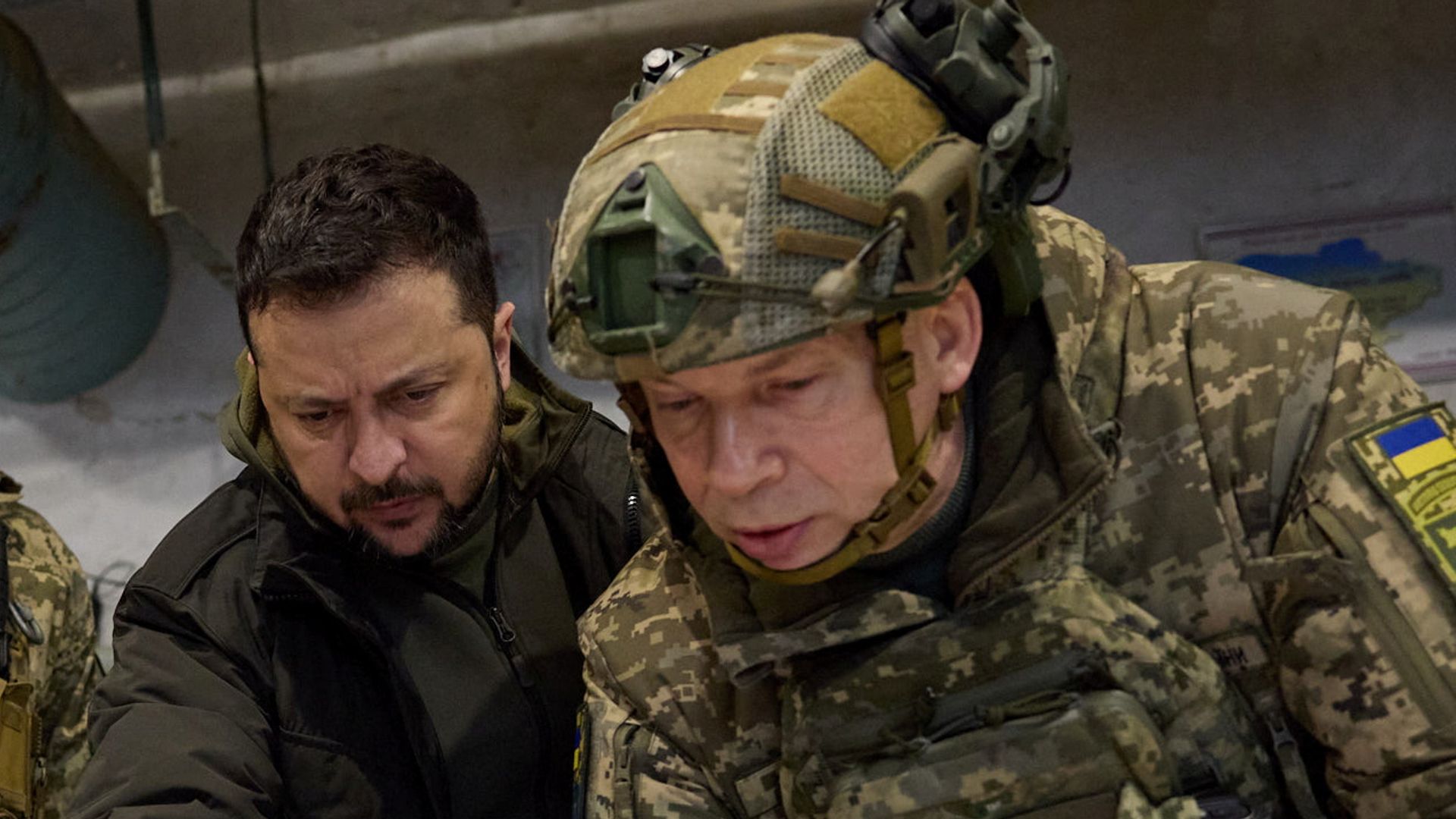
When thousands of protesters gather in Ivan Franko Square outside the presidential office in Kyiv during a full-scale war, something has gone deeply wrong inside the military high command. Ukrainian President Volodymyr Zelenskyy found himself backed into a corner. The firing of General Oleksandr Syrskyi—and his replacement with 44-year-old Major General Mykhailo Drapatyi—isn't just a routine personnel shuffle. It's the dramatic climax of a fierce internal war over how Ukraine fights, modernizes, and protects its soldiers on the front lines.
If you've been following the war, you know this wasn't an easy decision for Zelenskyy. Syrskyi was the general who helped orchestrate the defense of Kyiv in early 2022 and spearheaded the brilliant Kharkiv counteroffensive. But battlefield achievements from two years ago couldn't save him from a toxic breakdown in command, public outrage, and a fundamental disagreement over military strategy.
Understanding why this dismissal happened requires looking at the rift between Ukraine's old-school military hierarchy and a new wave of tech-savvy reformers. Here's what really triggered this historic shakeup and what it means for the future of the war.
The Boiling Point in Kyiv Streets
Civilian protests during wartime are almost unheard of in modern conflict. Ukraine's public understands the danger of internal instability while fighting an aggressive enemy. Yet, the street demonstrations in Kyiv, Lviv, and Odesa grew too big to ignore.
The spark was lit when Zelenskyy removed Defense Minister Mykhailo Fedorov. Fedorov, a 35-year-old cabinet minister and former digital transformation chief, was hugely popular. He represented the drive to turn Ukraine into an agile, drone-heavy, tech-first fighting force. He wasn't afraid to speak out against bureaucratic obstacles.
When Fedorov was dismissed after just six months in office, he didn't go quietly. He publicly revealed that Syrskyi had presented Zelenskyy with an ultimatum: fire the defense minister or else. Fedorov explicitly accused the army chief of blocking crucial reforms, ignoring field data, and protecting loyal officers over competent ones.
That open accusation struck a raw nerve. Veterans, active-duty troops on leave, and ordinary citizens streamed into the streets. Protesters held up cheese graters—a clever linguistic pun on Syrskyi's name, which sounds like cheese in Ukrainian. They demanded Syrskyi's dismissal and the reinstatement of reformist leadership.
Zelenskyy admitted publicly that the working relationship between his defense minister and military chief had collapsed completely. The two weren't even on speaking terms without the president sitting in the room to mediate. That kind of paralysis at the highest level of national defense is fatal during an ongoing war.
The Conflict Between Two Military Philosophies
The collapse of the Zelenskyy-Syrskyi dynamic goes far beyond personal squabbles. It exposes a massive structural divide inside the Ukrainian Armed Forces.
On one side stand traditional commanders trained in Soviet-era doctrines. This approach relies heavily on rigid, top-down command structures. Orders flow strictly from the top, local initiative is discouraged, and positions are held at enormous cost in human life. Syrskyi earned the grim nickname "the Butcher" among frontline soldiers precisely because of operations like the defense of Bakhmut, where heavy casualties were sustained to hold territory.
On the other side stand modernizers like Mykhailo Fedorov and a younger generation of officers. They argue that Ukraine cannot win a war of attrition against Russia if it trades life for life. Russia has vastly superior manpower and ammunition stockpiles. Ukraine's only path to victory is asymmetric warfare—using robotics, real-time intelligence, automated strike drones, and rapid tactical adaptations to exhaust the enemy while preserving Ukrainian lives.
"A commander has no right to remain silent about problems, especially when their cost is measured in lost opportunities, time, and human lives," wrote Major General Mykhailo Drapatyi shortly before his appointment.
When a military chief resists those technological shifts and favors traditional grind-it-out tactics, friction is inevitable. Investigative reports detailing high loss rates in units closely associated with Syrskyi only deepened the anger among front-line soldiers and military families.
Why Syrskyi's Historical Victories Couldn't Save Him
It's tempting to think that successful war generals hold lifetime immunity. History proves otherwise. Churchill was voted out of office right after winning World War II, and battlefield legends throughout history have been replaced when strategy stalled.
Syrskyi delivered monumental victories early in the war:
- Defense of Kyiv (2022): Successfully repelled Russian advance forces from taking the capital.
- Kharkiv Counteroffensive (2022): Executed a lightning operation that liberated thousands of square kilometers in northern Ukraine.
- Kursk Incursion: Managed risky cross-border operations into Russian territory.
However, wartime leadership requires constant evolution. As the front lines stabilized into a grueling 1,200-kilometer barrier, tactics that worked in 2022 became outdated.
The nature of modern warfare changed drastically over the past two years. Electronic warfare, autonomous drone swarms, and precision strikes redefined the battlefield. Syrskyi was widely perceived as struggling to adapt to this new reality. When Western partners and domestic allies voiced concerns that Ukraine was losing its technological edge due to top-level military resistance, the writing was on the wall.
Enter Major General Mykhailo Drapatyi
Selecting a replacement during active combat is a massive gamble. Zelenskyy needed someone with high military credibility who was respected by rank-and-file troops, aligned with modern technological warfare, and lacked overt political ambitions that could spark rivalries.
He found that balance in Major General Mykhailo Drapatyi.
Drapatyi first rose to public prominence in 2014, when he famously drove an armored vehicle through a pro-Russian blockade in Mariupol. That act made him a legendary figure among troops early in his career. More importantly, Drapatyi has consistently spoken out against military bureaucracy.
He publicly endorsed Fedorov's reform vision, calling for a complete overhaul of the General Staff, expanded robotic warfare, and an end to top-down micromanagement. His appointment signals that Zelenskyy has sided with the modernizers.
Key Differences Between Ukraine's Military Commanders
To see how Ukraine's high command has evolved since the 2022 invasion, it helps to compare the three men who have led the armed forces.
| Commander | Leadership Era | Primary Strategy | Major Strengths | Primary Criticisms |
|---|---|---|---|---|
| Valerii Zaluzhnyi | Feb 2022 – Feb 2024 | Mobile defense and Western integration | Immensely popular, flexible strategy | Clashed publicly with political leadership |
| Oleksandr Syrskyi | Feb 2024 – July 2026 | Traditional defense, strict discipline | Proven battlefield tactician in Kyiv and Kharkiv | High casualty rates, resistant to tech reforms |
| Mykhailo Drapatyi | July 2026 – Present | Asymmetric warfare, drone integration, troop preservation | High troop popularity, reform-minded | Untested at the supreme strategic command level |
Actionable Steps to Track Ukraine's Military Transition
This leadership change will filter down to the front lines over the coming weeks. If you want to evaluate whether Drapatyi's appointment is actually working, keep an eye on these specific indicators:
- Watch Drone and Tech Allocation: Look for structural changes in how unmanned systems are organized. Drapatyi is expected to give drone units independent command structures rather than tying them to traditional infantry brigades.
- Monitor Staff Overhauls: Pay attention to secondary dismissals within the General Staff. If Soviet-era senior officers are replaced with younger combat commanders, reform is genuinely happening.
- Track Frontline Casualty Metrics: A core goal of this leadership change is preserving soldier lives through technology. Look for shifts in tactical decisions around contested cities.
- Follow Government Re-integration: Watch whether former defense minister Mykhailo Fedorov takes up a newly created government post focused on military technology, as Zelenskyy suggested.
This high-stakes gamble shows that Ukraine is willing to endure painful internal political shocks if it means adapting faster than its adversary. The transition won't be smooth, but staying static was no longer an option.