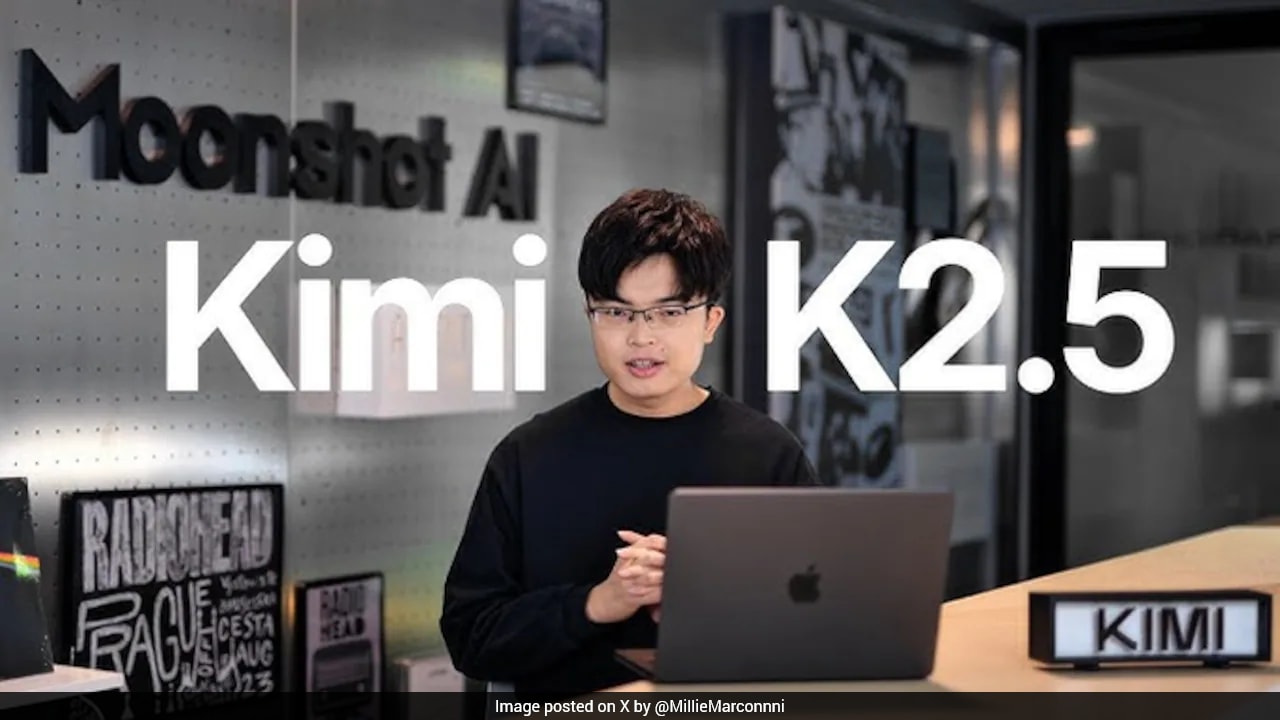
You have probably heard about Silicon Valley giants spending billions on large language models. But what about the quiet revolution happening in Beijing? Meet Yang Zhilin. He is the thirty-three-year-old mind behind Moonshot AI, a startup that recently pulled off a multi-billion-dollar valuation and caught the attention of the entire tech world.
While many ambitious researchers move west to California and stay there, Yang did the opposite. He packed up his education from American institutions, headed back to China, and built a massive contender that is now challenging OpenAI and Google on its own terms.
Let us look at how Yang got here, why his methods confuse traditional tech executives, and what his company's massive growth means for the future of artificial intelligence.
From Tsinghua Olympiads to Carnegie Mellon
Yang did not stumble into machine learning by accident. Long before Moonshot AI made headlines, he was deep in the competitive programming circuit. At seventeen, he spent countless hours coding and earned a spot representing his skills in China's National Olympiad in Informatics.
That early foundation led him straight to Tsinghua University. There, he worked closely with Professor Tang Jie, publishing machine learning papers that quickly gained academic traction. But Yang wanted a broader stage. He moved to the United States in 2015 to pursue a PhD at Carnegie Mellon University.
At Carnegie Mellon, he studied under heavyweight computer scientists Ruslan Salakhutdinov and William Cohen. His professors noticed something different about him immediately. He did not need hand-holding. While typical PhD candidates require constant oversight, Yang chased down his own research threads and solved complex problems independently.
During his time stateside, he also interned at Google Brain. In 2019, he co-authored papers with Quoc V. Le that have since racked up over twenty thousand citations. By all conventional measures, Yang was on track for a comfortable, high-paying career inside a major American tech corporation.
Why Yang Walked Away From Silicon Valley
Most mentors expected him to stay in the US. When Yang announced his intention to return to China to build an independent startup, his advisors pushed back. Ruslan Salakhutdinov openly cautioned against the move, noting it was not what he would have done in the same position.
Yang saw a different opportunity. He recognized that building competitive frontier models required massive pools of capital, specialized hardware, and a hyper-focused team. More importantly, he believed the Chinese market was uniquely primed for a new wave of consumer-facing AI applications.
He didn't just bring technical know-how back to Beijing; he imported a distinct workplace philosophy. Walk into Moonshot AI today, and you won't find rigid corporate hierarchies or endless chains of approval. Yang stripped away traditional titles. His team of around three hundred employees works in an environment where direct communication rules.
Conference rooms carry names of rock bands like Metallica, Queen, and Led Zeppelin. Employees frequently wear comfortable slippers at their desks. The company's Chinese name translates to "The Dark Side of the Moon," a nod to Pink Floyd that reflects Yang's personal tastes. This blend of Silicon Valley looseness with high-stakes engineering intensity has created an unusual corporate culture for a Beijing tech firm.
The Rise of Kimi AI
Culture alone doesn't build a fifty-billion-dollar company. The real engine behind Moonshot AI is its product line, specifically the Kimi family of models.
When the company released the Kimi K3 model, it turned heads across the global AI research community. The model handled massive context windows and complex reasoning tasks efficiently. Users gravitated toward it, and venture capital firms took notice. Private funding rounds pushed the company valuation up to staggering heights.
Now, the startup is scaling faster than most observers predicted. Reports indicate that Moonshot AI has confidentially filed for an initial public offering in Hong Kong, aiming to raise billions to fund future compute infrastructure.
What Founders and Tech Leaders Can Learn From Moonshot AI
If you are watching the global AI landscape, Yang's trajectory offers a few harsh truths about modern software development:
- Geography matters less than execution speed. Yang proved that world-class architecture doesn't have to originate in San Francisco.
- Talent attracts capital. Once Yang demonstrated his ability to ship high-performing models, funding followed rapidly, regardless of geopolitical friction.
- Culture is a deliberate choice. By throwing out bureaucratic management structures, Moonshot AI keeps its engineers focused on building rather than politics.
The global tech race is no longer a one-way street where ideas flow exclusively from West to East. Yang Zhilin built a powerhouse by taking Western research methodologies, merging them with Chinese engineering discipline, and moving faster than legacy institutions could react. Keep an eye on Beijing. The next major breakthrough might already be scaling right under your nose.