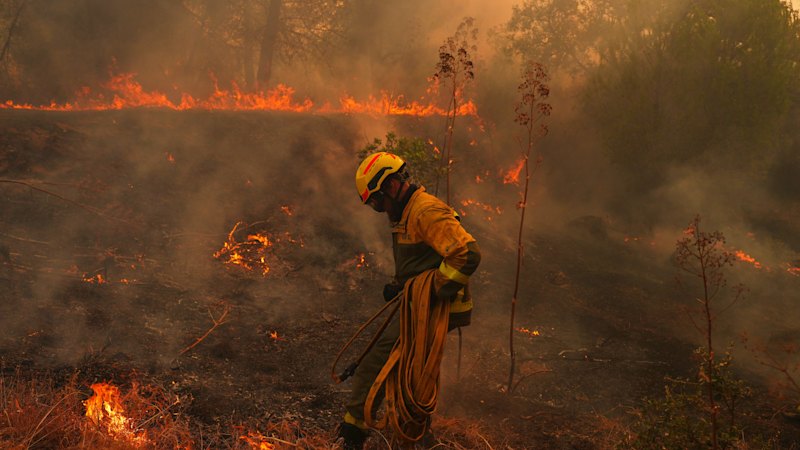
Flames are closing in on the edge of Bordeaux. If you've been watching the news, you know southwestern Europe is currently caught in a massive environmental crisis. Fires aren't just burning in remote forests anymore. They're sitting roughly 15 kilometres from the entry points of France's iconic wine capital, and the scale of the destruction is staggering.
Hundreds of thousands of people have been forced out of their homes. France alone has evacuated around 220,000 residents, mainly across the Gironde and Landes regions. Meanwhile, Spain is grappling with its own catastrophic emergency, where over 75,000 people have fled and another 30,000 are sheltering in place. Prime Minister Pedro Sanchez is visiting hard-hit areas like Avila, Madrid, and Toledo, where more than 45,000 hectares have already gone up in smoke.
What's Actually Happening on the Ground
The numbers tell a brutal story, but the tactical reality on the front lines is even worse. In France, the Cap Ferret peninsula on the Atlantic coast has been battered, and fires are actively chewing through the countryside surrounding Bordeaux. Interior Minister Laurent Nunez has publicly stated that the situation remains extremely difficult. Police officers have spent nights going door-to-door in municipalities like Marcheprime and Cestas, waking residents and forcing evacuations one by one.
Over in Spain, the crisis is splintered across multiple fronts. A major fire in the eastern Castellon province has torn through more than 4,300 hectares, pushing directly into the Sierra de Espadan natural park. Valencia regional leader Juanfran Perez admitted that particular blaze is out of control. It's tough to fight from a technical standpoint because shifting weather patterns keep feeding the flames.
The Climate Factors Making This Worse
You might wonder why these fires are moving so fast. It comes down to a lethal combination of prolonged drought and brutal summer heatwaves. Temperatures in both Bordeaux and central Spanish provinces have hovered around 32 degrees Celsius, sitting nearly 6 degrees above normal historical averages for July.
When you combine dry timberlands with erratic winds, the fires start generating their own weather systems. They become unpredictable beasts that march forward regardless of what fire crews try to throw at them. Spain has already seen over 150,000 hectares burn since January, which is six times the destruction seen during the same period last year.
How Europe is Responding
Governments aren't sitting back. European nations are mobilizing every resource possible under the EU Civil Protection Mechanism. Greece and Italy have sent Canadair firefighting aircraft to Spain, while Portugal has deployed over 100 military personnel with specialized equipment. Turkey is sending more planes to help out.
France has also leaned heavily on its military, deploying thousands of firefighters, soldiers, and police officers alongside specialized aviation units like the Airbus A400M military aircraft. Despite these heavy reinforcements, leaders are stressing that containment depends entirely on holding the line during narrow weather windows.
If you are tracking travel plans or have family in the affected regions of southwestern France or central Spain, keep a close eye on local emergency broadcasts. Follow mandatory evacuation orders immediately. There is no room to wait and see when a fire perimeter shifts this fast.