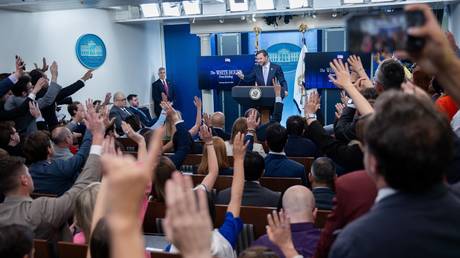
Imagine sitting ringside on the White House South Lawn, watching mixed martial arts under the summer sun, completely unaware that a coordinated network of online extremists is planning to drop explosive drones on your head.
That was almost the reality last weekend. On June 14, 2026, the White House hosted the historic UFC Freedom 250 event. It doubled as a massive celebration for the nation's 250th anniversary and President Donald Trump's 80th birthday. The crowd was a snapshot of pure power and wealth: tech billionaires, cabinet members, and high-profile politicians sat feet away from the Octagon.
But behind the scenes, federal law enforcement was racing against a ticking clock. Unsealed court documents reveal that the FBI and the Secret Service narrowly stopped a mass-casualty terror plot designed to trigger a modern revolution. The plan wasn't just to cause chaos. It was designed to assassinate the highest-ranking political and financial figures in the country.
Here is the real story of how a group of internet radicals almost pulled off an unprecedented attack on the executive mansion, and what it tells us about the terrifying evolution of domestic security threats.
The Bottleneck Blueprint
Most media reports focused on the headline-grabbing mention of drones. But if you look at the actual mechanics of the plot detailed in the federal affidavits, the real horror was the tactical planning. This wasn't a random, chaotic bombing. It was a highly structured, two-phase operation meant to maximize the body count of what the plotters called "capitalist elites."
The conspiracy started in the digital shadows, moving from a TikTok group named "Vanguard of the Old" into heavily encrypted Signal chats. Roughly 23 people were deep in these discussions. They shared detailed maps of Washington, D.C., scouted escape routes, and tried to set up a safe house in Fredericksburg, Virginia.
The plan was chillingly calculated:
- Phase One (The Flank): The group intended to stage a fake demonstration on the north side of the White House to distract security forces.
- Phase Two (The Aerial Strike): They planned to fly small drones rigged with explosives over the temporary outdoor arena on the South Lawn and detonate them.
- Phase Three (The Ambush): The plotters knew the drone explosions would cause immediate, blind panic. They expected the crowd to flee south to escape the blast zone. That's where the real trap was set. Armed snipers were ordered to take up pre-arranged positions, waiting to pick off fleeing attendees and high-value targets as they ran into the open.
- Phase Four (The Breach): A secondary wave of attackers was allegedly prepared to storm the White House gates during the absolute madness of the evacuation.
The list of targets found in the investigation reads like a political VIP roster. The plotters explicitly aimed to kill President Trump, Vice President JD Vance, tech mogul Elon Musk, Israeli Prime Minister Benjamin Netanyahu, and multiple members of Congress, including Arkansas Senator Tom Cotton and Tennessee Senator Marsha Blackburn.
They weren't looking for a small statement. They wanted a massacre to jump-start a total collapse of the American political structure.
An Intercepted Timeline
When you look at how close this came to reality, the timeline is deeply uncomfortable. The UFC event was scheduled for Sunday, June 14. The FBI didn't even know a plot existed until Wednesday, June 10. That's a four-day window to stop a multi-state terror cell.
The break in the case didn't come from some high-tech algorithm or advanced satellite surveillance. It came from a worried mother in Ohio.
On the night of June 10, the mother of 19-year-old Tycen Proper called local police. She was terrified by her son's sudden influx of firearm purchases, tactical gear, and the bizarre, radical conversations he was having online. Proper was admitted to a local medical facility due to homicidal intent, and the local authorities immediately looped in the feds.
The next morning, FBI agents interviewed Proper. He cracked. He detailed the entire plan, admitting he was supposed to drive a cache of weapons and body armor to the Virginia meetup spot. From his phone, investigators uncovered the broader network.
By Tuesday, June 16, federal prosecutors unsealed criminal complaints against five primary suspects spread across the country:
- Tycen Proper (19, Ohio): Caught with firearms, tactical gear, and thousands of rounds of ammunition.
- Abraham Hermosillo Alvarez (31, Nebraska): Identified online by the handle "Shepherd." Investigators name him as the aggressive tactical mastermind who drew up the maps and established a rigid four-tier system for the conspirators.
- Daniel K. Eskridge (32, Missouri): The logistics man who actively pushed the group to crowdsource $1,300 to purchase the "drones and charges."
- Michael Alan Thomas (32, California): Self-described as the "planner and advisor" who wanted to guide others on how to overthrow the government without pulling a trigger himself.
- Bryan Omar Roa (California): An associate who claimed he was only going to go as a protester, but couldn't make the trip because his car broke down.
The Secret Service and the FBI launched a massive, silent dragnet across multiple states just 72 hours before the first fight started on the South Lawn. Federal agents seized weapons and mountains of ammo. Interestingly, law enforcement sources later admitted that while tactical gear was recovered, no physical drones were found in the initial raids. The plotters were still scrambled in the execution phase, but their intent and coordination were fully locked in.
Inside the Radical Mindset
We've seen a lot of lone-wolf attacks over the last decade, but this group represents a weird, fragmented ideological shift. They didn't belong to a single, established extremist organization. Instead, they were a byproduct of internet echo chambers where wildly different conspiracy theories meld into a single, violent anti-government worldview.
According to court filings, the group's overarching goal was to tear down the United States government because they believed it was fundamentally corrupted and heading in the wrong direction. They explicitly stated the country needed to be leveled so it could be rebuilt from scratch.
Their grievances were a chaotic mix of internet culture and political anger. They talked about the handling of the Jeffrey Epstein files, arguing that anyone linked to Epstein shouldn't be allowed to govern. They ranted about data centers, corporate influence, and capitalist elites. They expressed deep fury over American foreign policy, specifically pointing to U.S. financial support for Israel and politicians who accepted donations from the American Israel Public Affairs Committee (AIPAC).
Proper's family told investigators the group held a mix of ultra-religious, anti-government, and deeply antisemitic views. It's a stark reminder of how modern radicalization works. It doesn't require a physical clubhouse anymore. A handful of angry people from California, Missouri, Nebraska, and Ohio can build a digital cell on TikTok, move to Signal, and coordinate a lethal paramilitary strike without ever meeting in person.
The Drone Problem is No Longer Theoretical
Security agencies have spent years warning about the threat of commercial drones being weaponized by domestic terrorists. The White House is arguably the most heavily defended piece of real estate on earth, protected by anti-air defense systems, radar, snipers, and quick-reaction forces. Yet, this cell believed a $1,300 budget for off-the-shelf hobby drones and makeshift explosives could bypass those layers.
Vice President JD Vance didn't mince words when addressing the arrests from the G7 Summit in France. He dismissed the idea that this was just a couple of isolated internet trolls.
"Twenty-three people do not get to the point where they're going to commit a mass terror incident in Washington, D.C. without some serious funding, without some serious coordination," Vance stated. "That's not a few guys doing crazy stuff, that is a coordinated planned terrorist plot."
While the event on the South Lawn went off without a hitch, the reality is that the threat was stopped by a stroke of luck—a family member speaking up at the absolute last second. If that phone call hadn't happened on June 10, the security protocols around the White House would have been tested in a way they never have been before.
What Happens Next
The investigation is far from over. Secret Service Deputy Director Matthew Quinn confirmed to reporters that this remains an active, sprawling case. With at least 23 people identified in the primary encrypted chat, more arrests are highly likely in the coming weeks. The five men currently in custody are being held without bail, facing severe federal charges including conspiracy to commit murder and conspiracy against the United States.
For everyday citizens and corporate security teams, this incident changes the calculus on public event safety.
If you are managing event security or local venue operations, you need to adapt immediately to the reality of low-cost, high-tech threats. Do not rely solely on traditional perimeter fencing or metal detectors.
Your immediate next steps should include:
- Audit Your Drone Detection Capabilities: Check if your venues have active radio frequency (RF) scanners capable of identifying commercial drone signatures before they enter your airspace.
- Review Evacuation Chokepoints: Evaluate your crowd control plans. Ensure your emergency exit routes do not funnel people into predictable, exposed bottlenecks that leave them vulnerable to secondary ground attacks or snipers.
- Strengthen Insider Threat and Community Reporting: Establish clear, anonymous channels for employees or community members to report rapid radicalization or suspicious tactical purchases. As this case proved, human intelligence is still the fastest way to break a hidden cell.