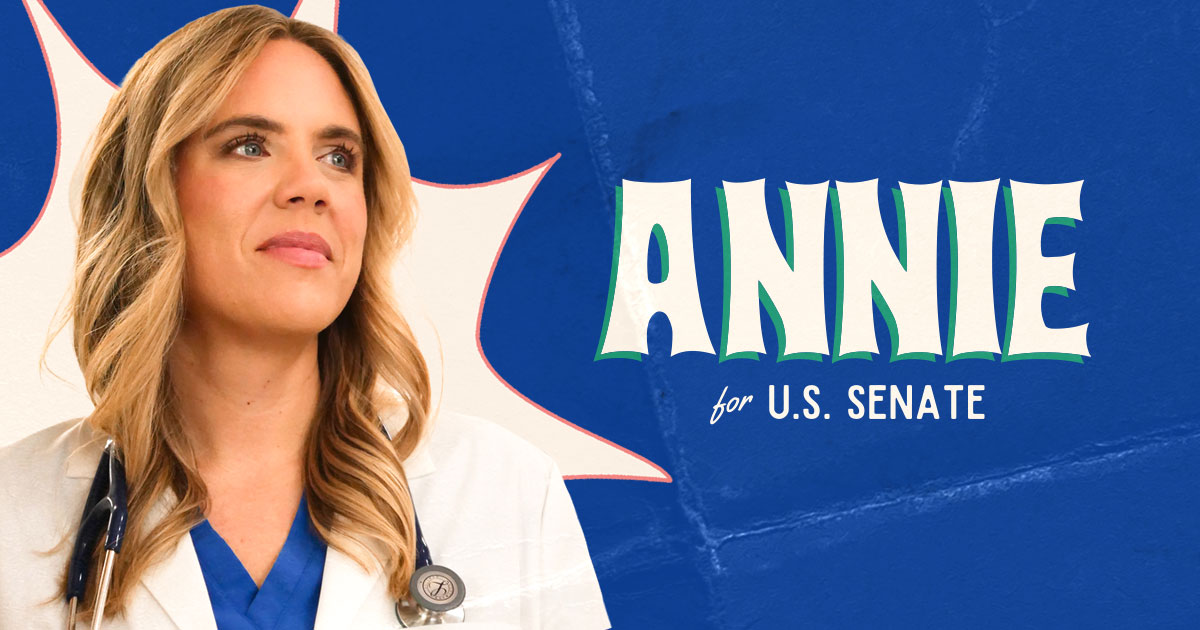
We like to imagine that if we inject enough clinical rationality into the political arena, the fever of partisanship will simply break. It's a comforting fantasy, one that casts physicians as neutral arbiters who can diagnose societal ailments with stethoscope-level precision and cure them with evidence-based policy. When pediatricians step out of sterile hospital corridors and onto campaign stages, voters often expect an untainted moral clarity. Yet the reality of modern campaigns is far more corrosive than any sterile ward, and even figures like Annie Andrews discover that medical credentials don't insulate you from the brutal gravity of partisan tribalism; if anything, they make you a sharper target.
For years, clinical work in pediatric trauma forces doctors to confront the raw, unvarnished consequences of legislative inaction. When you've spent your career treating children broken by structural failures and preventable violence, patience wears thin. You don't view public policy through the abstract lens of political theory; you view it through the monitors of an intensive care unit. This transition from bedside to ballot box looks, on paper, like the ultimate antidote to political corruption. We assume that a background in medicine grants an inherent immunity to the cynical theater of elections. But politics doesn't absorb the clinician; the clinician gets reshaped by the machinery. If you found value in this post, you might want to check out: this related article.
When the Clinic Meets the Campaign Trail
The friction begins the moment a healer enters an arena built entirely on division. In traditional medicine, diagnosis relies on consensus, empirical data, and peer-reviewed reality. In modern elections, reality is malleable, and consensus is treated as a tactical vulnerability. When Annie Andrews launched initial congressional bids in South Carolina, the campaign trail proved that opponents wouldn't engage with healthcare metrics or pediatric safety data on its own terms. Instead, the discourse instantly degraded into weaponized rhetoric, turning clinical experience into a lightning rod for culture-war skirmishes. You enter the race to talk about gun safety or maternal mortality, and you suddenly find yourself forced to defend your entire professional integrity against bad-faith attacks designed to mobilize a base rather than inform it.
Skeptics argue that this rough-and-tumble environment is just democracy working as intended—that thick-skinned combat is required to achieve power, and anyone entering public life should expect their background to be aggressively cross-examined. That view misses the structural transformation happening beneath our feet. When we reduce physicians running for office to mere avatars in a partisan proxy war, we don't test their resilience; we degrade the very expertise we claim to want in government. The point isn't that politics is unpleasant. The point is that the system actively repels empirical truth, chewing up domain-specific knowledge and spitting out partisan shibboleths. For another look on this development, refer to the latest update from The Washington Post.
The Limits of the Prescription Model
There is a deeper structural delusion at play here, and it's one that physicians-turned-candidates frequently carry like a hidden flaw in their diagnostic kit. We assume that governance functions like a patient chart—that if you correctly identify the pathology, prescribe the correct legislative dosage, and monitor compliance, the societal organism will heal. But politics isn't a physiological system; it's a distribution of power. Prescribing universal background checks or mental health funding doesn't fail because the policy lacks evidence. It fails because legislative bodies aren't designed to find the truth; they're designed to arbitrate competing interests and mobilize grievances.
When you treat a congressional district or a state electorate like an emergency room waiting room, you misread why people cling to their political identities. They don't want a diagnosis; they want validation. And when a candidate refuses to play the tribal game, offering statistical models instead of emotional catharsis, the electorate often responds with indifference or suspicion. We want our doctors to be scientists, but we demand our politicians to be priests. Bridging that chasm requires more than good intentions and a white coat; it requires surviving a crucible that tends to burn away the very objectivity that made the candidate appealing in the first place.
Ultimately, the friction defining this movement reveals less about the viability of medical professionals in governance and more about the deep sickness of the political market itself. We keep looking for a technical fix to a moral rot, hoping that the right resume will bypass the hard, grinding work of civic repair. But no credential can substitute for power, and no amount of clinical authority can override a system engineered to reward division over truth. The white coat doesn't change the Capitol. The Capitol changes the white coat.