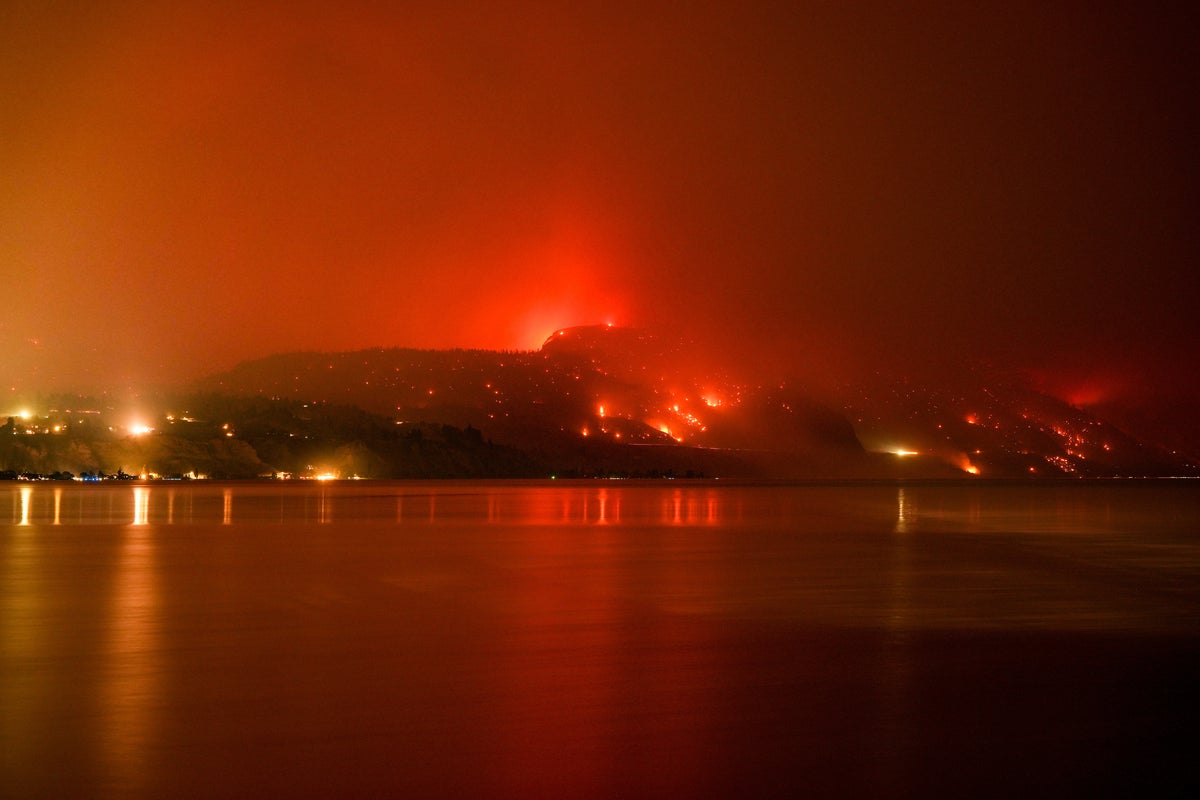
When a wildfire grows 50 square kilometres in a matter of hours, normal emergency plans fail instantly. That is the stark reality residents across British Columbia's Okanagan region faced when the Bald Range fire erupted.
If you are wondering how a single ignition point can turn into a regional disaster overnight, you are looking at a fundamental shift in how modern forest fires behave. The fire didn't just burn; it exploded, racing across fifteen kilometres to engulf the outskirts of Summerland and forcing more than 20,000 people to flee into the dark.
The Anatomy of an Explosive Fire Spread
Most people think wildfires spread in predictable directions, pushed slowly by a steady wind. The Bald Range blaze shattered that assumption. Igniting late Friday afternoon, it quickly scaled to extreme Rank 5 and Rank 6 behavior—the absolute highest classification for wildfire intensity.
At this velocity, ground crews cannot safely make a direct attack. Embers are carried a full kilometre ahead of the primary front, creating secondary spot fires that multiply the threat exponentially. Officials described the towering flames as resembling a bomb detonating, creating its own severe weather patterns and localized lightning. When a fire generates its own storm system, traditional containment lines become entirely useless.
Why Evacuations Turned Chaotic So Fast
When you have roughly 12,000 residents in Summerland and another 8,000 in nearby Peachland ordered to leave at midnight, bottlenecks are inevitable. Major corridors like Highway 97 jammed up instantly as families packed whatever they could into vehicles while thick smoke reduced visibility to absolute zero.
Dozens of people had to be rescued by air because the fire moved faster than vehicles could escape down the valley roads. Power grids failed, water treatment plants were bypassed, and boil-water advisories immediately went into effect for those remaining or trying to secure the perimeter.
What the Region Faces Next
British Columbia quickly declared a provincial state of emergency, unlocking special powers to manage travel restrictions and resource allocation. Yet, the psychological and physical toll on Canada's primary wine-producing region is immense. Vineyards, orchards, and hundreds of residential properties sit directly in the crosshairs of ongoing dry weather patterns.
With international firefighting reinforcements deployed from countries like Australia and New Zealand helping local crews battle over a hundred active blazes across the province, the immediate focus remains on securing human life before damage assessments can even begin.
Keep emergency bags packed if you live anywhere near interface zones, monitor provincial emergency portals directly rather than relying on delayed social feeds, and heed evacuation alerts before they become mandatory orders.