Walking away from a problem doesn't make it disappear. For the past few years, Western foreign policy toward Afghanistan has basically boiled down to a collective shrug. After the chaotic military withdrawal in August 2021, the world turned its back, hoping a strategy of total isolation would somehow force the Taliban to change its ways. It didn't work. Instead, the strategy created an isolated pressure cooker that is now threatening to blow back on the rest of the world.
Two top United Nations officials recently dropped a massive dose of reality on the international community. Barham Salih, the United Nations High Commissioner for Refugees, and Alexander De Croo, the head of the United Nations Development Program, just wrapped up a joint visit to Kabul. Their message was blunt. Ignoring Afghanistan is a dangerous mistake. It's an illusion to think that what happens within those borders stays within those borders. If the country collapses completely, the fallout will hit Western cities in the form of mass migration, resurgent extremism, and international criminal activity.
The current international approach is failing because it treats engagement as a reward for good behavior rather than a tool for survival. No one likes the Taliban regime. Their treatment of women is horrific, and their governance is deeply repressive. But starving out an entire nation of millions of innocent people to punish their rulers isn't statecraft. It's a recipe for global instability.
The Fatal Flaw of Diplomatic Isolation
Right now, Western capitals are stuck in a diplomatic holding pattern. No Western government formally recognizes the Taliban. The first country to officially break the ice was Russia, which extended formal recognition in 2025. China and other regional players have also established strong working relationships with Kabul. The West, meanwhile, remains on the sidelines, watching its influence erode while the humanitarian situation spirals out of control.
A small crack in this isolation showed up recently when an Afghan delegation traveled to Brussels to meet with European Union officials. The talks focused on diplomatic services and managing the return of migrants. This meeting shows that even the most reluctant Western nations are realizing they have to talk to the people in charge, whether they like them or not. You can't coordinate borders, manage refugee flows, or track security threats with a government you refuse to speak to.
True expertise in international relations means recognizing that diplomacy isn't about talking to your friends. It's about talking to your adversaries. When the West cut off ties and froze billions in Afghan central bank assets, the goal was to cripple the Taliban. Instead, it crippled the local economy, leaving normal families unable to buy bread while the rulers in Kabul tightened their grip on power.
A Crisis Piled High With More Crises
Alexander De Croo described the situation on the ground perfectly during his visit. He noted that in Afghanistan, there is never a single crisis happening on its own. It is always a crisis piled directly on top of another crisis. Decades of war left the infrastructure in ruins. Then climate change hit, bringing severe droughts and devastating earthquakes that wiped out entire villages.
On top of the environmental disasters, the country is facing a historic migration emergency. Nearly 6 million Afghans have returned to their homeland since 2023. The vast majority were pushed out by neighboring Pakistan and Iran, both of which launched aggressive crackdowns on undocumented migrants. Another 2 million people are projected to return by the end of 2026.
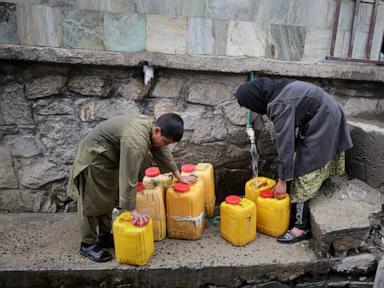
Think about those numbers for a second. That is 8 million people flooding into an economy that can barely support the population it already has. Returning families are arriving with absolutely nothing. They are moving into communities that lack clean water, electricity, jobs, or schools. It's a logistical nightmare that would break a wealthy nation, let alone an impoverished country cut off from global banking systems.
The Paradox of Progress Under the Taliban
Here is the part that many Western politicians don't want to admit. Despite everything, the Taliban has achieved progress in areas where the previous, Western-backed government completely failed. UN officials openly acknowledged this during their recent trip.
Security has improved dramatically across most provinces. The rampant corruption that defined the previous administration has been heavily curtailed. Most surprising of all is the war on drugs. Soon after taking power, the de facto authorities launched a strict campaign to wipe out poppy cultivation. The results are undeniable. Opium and heroin production has dropped by a staggering 95%.
This creates a bizarre paradox for Western policymakers. For two decades, NATO forces spent billions trying to stop the Afghan drug trade and failed. The Taliban did it in a couple of years. If the international community continues to withhold financial support and turn its back, this progress will vanish. If the economy completely bottoms out, the Taliban will lose the ability to enforce these bans, and the country will quickly revert to being the world's primary source of cheap narcotics.
The Human Toll of Withdrawing Global Support
The cost of Western detachment is measured in closed clinics and hungry children. Massive cuts to international aid have torn a hole through the country's basic safety net. The numbers are genuinely devastating.
In the span of just one year, 422 medical centers across Afghanistan were forced to shut their doors forever. They closed because the foreign funding that kept their lights on simply vanished. This left over 3 million people without any access to basic medical services. Pregnant women are giving birth without doctors, and preventable diseases are making a comeback.
The food situation is just as grim. The World Food Program recently revealed that due to severe budget shortfalls, it had to turn away three out of every four acutely malnourished children who came seeking lifesaving meals. Think about that choice. Aid workers are forced to look at a starving child and say no because Western donors have moved their attention elsewhere.
At the same time, the domestic policies of the regime make things infinitely worse. Over 3.8 million girls between the ages of 7 and 18 are completely barred from attending school. Denying education to half the population is an act of economic self-sabotage that creates a permanent, multigenerational cycle of poverty. Western nations are understandably disgusted by these edicts, but cutting off healthcare funding doesn't help those girls. It just ensures they grow up illiterate and sick.
Real Steps Toward Pragmatic Engagement
So where do we go from here? The current policy of conditional isolation has reached a dead end. We need a new strategy that prioritizes human lives and global security over diplomatic posturing.
First, Western governments must separate humanitarian aid from political recognition. Funding for healthcare, clean water, and agricultural development should flow directly to non-governmental organizations and UN agencies on the ground, bypassing the central government's coffers. This ensures that innocent people survive without legitimizing the regime.
Second, we need a framework of hard-headed, transactional diplomacy. The West should offer targeted sanctions relief and technical assistance in exchange for verifiable policy changes. For example, access to banking channels could be tied directly to allowing girls back into primary and secondary schools in specific provinces. We should test their willingness to compromise rather than assuming they never will.
Finally, regional stability must be treated as a shared security objective. Western nations need to work closely with regional neighbors like India, Uzbekistan, and even Iran to manage border security and economic transit routes. If the neighborhood collapses, the shockwaves will eventually travel across Europe and beyond.
The price of inaction is simply too high. If we leave Afghanistan to rot, we will pay for it later through increased border security, counter-terrorism operations, and refugee integration programs. It is far cheaper, and far more humane, to engage now.
To push this conversation forward, Western foreign ministries must immediately appoint dedicated regional envoys tasked with establishing permanent, low-level diplomatic channels in Kabul. Setting up these channels doesn't mean endorsing the regime. It means protecting our own long-term security interests while saving millions of lives from an entirely preventable catastrophe.