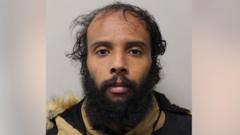
Blackmailers know exactly how to find your breaking point. They don't just look for money. They look for leverage. In conservative communities, that leverage is often reputation, family honor, and deeply private aspects of identity. When 31-year-old Waleed Saeed targeted young South Asian and Muslim men across the UK on apps like Snapchat and Grindr, he wasn't just committing random acts of cybercrime. He was executing a calculated campaign of psychological terror, weaponizing cultural shame to keep his victims silent while he extorted, assaulted, and raped them.
Saeed, who hails from Ilford in east London, was jailed for 16 years at Snaresbrook Crown Court. He was convicted of 17 offences against five males, including rape, blackmail, and making indecent images of children. But the police don't think his crimes stop at those five individuals. Investigators believe there are anywhere between 50 and 90 more victims out there, completely anonymous, suffering in absolute silence because they're terrified of what will happen if their families find out. Don't forget to check out our recent article on this related article.
This case exposes a massive flaw in how we think about digital safety. It shows how online predators exploit cultural dynamics to build walls of silence around their prey. Understanding how these scams work is the only way to tear those walls down.
The Mechanics of a Digital Trap
Predators don't just stumble into these schemes. They plan them meticulously. Saeed was highly systematic, using over 100 online aliases across various social platforms to hunt for targets. He operated under usernames like "Trans Girl Leah", "amzyyyy09.", "blsup", and "ComeDeal". His hunting grounds included Snapchat, Grindr, and Twitter. To read more about the context here, The Guardian offers an in-depth breakdown.
The strategy was straightforward but lethal. He would catfished his targets by posing as a young woman or a transgender woman. He would engage them in conversation, build a sense of intimacy, and quickly steer the interaction toward exchanging explicit photographs. For a young guy from a conservative or traditional religious background, finding a private space online to explore their sexuality feels like a lifeline. In reality, it was a carefully laid trap.
Once Saeed secured an intimate photo, the trap snapped shut. The persona of the friendly, attractive online companion vanished instantly. A different account, run by Saeed, would suddenly message the victim. The tone would shift from flirtatious to aggressive. The demand was always clear: pay up, or these photos get sent to your family, your friends, and your local community mosque.
For many of these young men, the threat of exposure felt worse than death. Two of the victims became actively suicidal during their ordeal. One victim, who was just a teenager when the ordeal began, ended up handing over more than £3,600 to keep the predator quiet. He told the court that Saeed took his virginity through forced compliance and left him feeling completely trapped and lost, carrying a burden of shame that he feels he'll have to live with forever.
Turning the Psychological Screw
Judge Timothy Greene noted during sentencing that Saeed, who holds a university degree, was incredibly adept at turning the psychological screw. He didn't just want cash. He craved control. He took a sick pleasure in the sheer terror he induced in his victims.
When victims ran out of money or couldn't pay his exorbitant demands, Saeed escalated his tactics. He used the threat of exposure to force them into face-to-face meetings. In August 2024, he coerced an 18-year-old man into meeting him late at night in an east London park. Saeed turned up with his face covered to hide his identity. He didn't just collect money; he sexually assaulted and raped the young man. He did this during three separate forced meetings. After one horrific assault, Saeed coldly told his victim, "that's all for today," before walking away into the dark.
This is the brutal reality of sextortion. It rarely stops at a single payment. Once a blackmailer knows you're willing to pay or comply to protect your secret, they'll keep squeezing until you have nothing left to give. They treat their victims like personal property, escalating from financial extortion to physical violence because they believe their victims are too terrified of the social fallout to ever go to the police.
Why Cultural Conservatism is a Goldmine for Blackmailers
We need to talk about why this specific demographic is so incredibly vulnerable to this type of targeting. Predators like Saeed aren't choosing South Asian and Muslim men by accident. They're specifically exploiting the concept of "izzat"—the South Asian concept of family honor and reputation—and the intense stigma surrounding LGBTQ+ identities or premarital sexual activity in conservative communities.
In these environments, a leaked image doesn't just mean personal embarrassment. It can mean complete social ruin. It can mean being completely ostracized by your family, thrown out of your home, or facing severe community backlash. Predators understand this dynamic perfectly. They know that a victim from a secular, liberal background might be angry or upset about a leaked photo, but they'll eventually tell their friends or call the police. A victim from a deeply religious, conservative background will often do absolutely anything to prevent that leak, making them the perfect target for long-term extortion.
The Metropolitan Police explicitly stated that Saeed operated on the deliberate assumption that these victim-survivors would be far less likely to report anything to law enforcement. He counted on their fear of exposure to grant him total immunity. This is a terrifying blind spot in community safety. When communities make the social cost of sexual exploration or identity so high that young people can't talk about it, they accidentally create an ideal ecosystem for predators to thrive.
The Investigative Breakthrough and Unseen Scale
The case finally cracked open in late 2024. The 18-year-old victim who had been raped in the park made the incredibly brave decision to contact the police despite his terror. Detectives from the Met's digital forensics units tracked the digital footprint of the blackmail accounts. They traced the IP addresses and account creation metrics directly back to Saeed's home in Ilford.
When officers arrested Saeed in November 2024, they seized two mobile phones. The forensic data on those devices was horrifying. Not only did they find the accounts used to terrorize the primary victims, but they also discovered a massive cache of intimate images belonging to dozens of unidentified men. Some of the images showed individuals who appeared to be underage. Saeed had actually been arrested and bailed way back in 2018 after a victim went to the police, but because charges weren't brought at the time, he simply continued his campaign of terror for another six years under new names.
The sheer volume of data indicates that the five victims named in the court case are just the tip of the iceberg. The Met police have found dozens of explicit images where the faces aren't visible, or where the usernames used by the victims were entirely fake, making it incredibly difficult to track them down and offer support. There are potentially 70 to 90 men walking around right now, carrying the trauma of what Saeed did to them, completely unaware that he's finally behind bars.
How to Protect Yourself from Online Sextortion
If you're using dating apps or social media, you need to accept that not everyone is who they say they are. Catfishing isn't just an annoying internet trend; it's a primary tool for serious criminal exploitation. You can protect yourself by taking a few immediate, non-negotiable steps when talking to people online.
First, never send explicit photos that show your face, distinctive tattoos, or identifiable backgrounds. If a predator doesn't have your face in the frame, their leverage drops significantly. They can't easily prove the photo belongs to you.
Second, vet the people you're talking to before you get intimate. If someone refuses to jump on a quick live video call on WhatsApp or FaceTime, or if their camera is "broken," drop them immediately. That's a massive red flag. Real people can verify their identity in five seconds. Predators using stolen photos of transgender women or young girls will always make excuses to avoid live video.
Third, keep your personal social media accounts completely separate from your dating profiles. Don't link your Instagram, Snapchat, or LinkedIn to your Grindr profile. Blackmailers look for your real name, your workplace, or your family members' profiles to figure out exactly who to send the photos to if you don't comply. Limit the amount of open-source intelligence you give them.
What to Do If You are Being Blackmailed Right Now
If you find yourself caught in a sextortion trap, you need to change your strategy immediately. Stop communicating with the predator. Do not send more money. Paying them will not make them delete the photos; it just proves that their blackmail works, and they'll come back for more tomorrow.
Block the accounts across all platforms, but make sure you screenshot everything first. Save the chat logs, the usernames, the bank details or crypto addresses they gave you for payment, and any phone numbers they used. This is critical evidence that law enforcement can use to track them down.
Reach out for help. The Metropolitan Police have explicitly stated that they've wrapped dedicated, sensitive support around the survivors in the Saeed case. They understand the cultural complexities and the intense shame involved. They aren't there to judge your lifestyle, your sexuality, or your religion; they're there to lock up dangerous criminals. If you're in the UK, you can report online extortion confidentially. Organizations like the National LGBT+ Anti-Violence Network or specialized support groups can help you navigate the situation without exposing you to your family or community. Don't let a predator use your fear to destroy your life.

,webp/026/046/677/v2/2560x1440.208.webp)