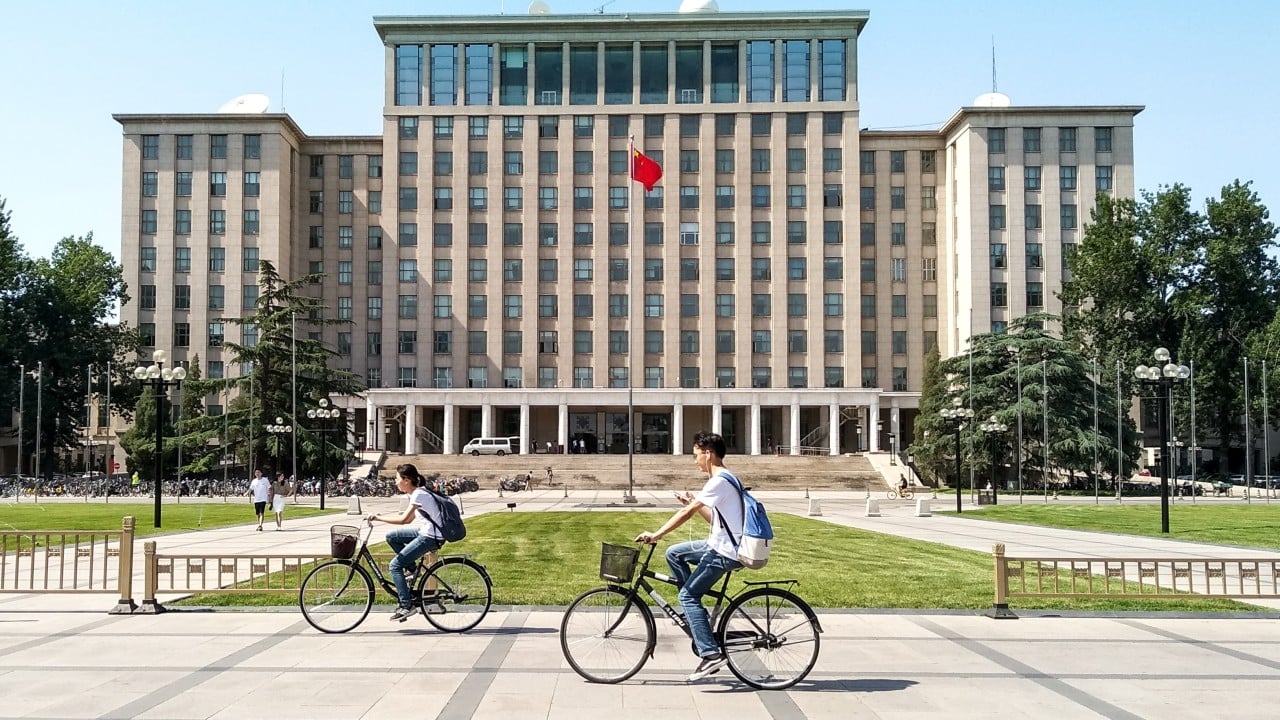
Washington is tightening the screws on academic cooperation. A high-profile US lawmaker has pushed the Pentagon to add dozens of Chinese universities and technology labs to an aggressive national security blacklist, targeting institutions like Tsinghua University. Beijing isn't staying quiet. Officials have hit back hard, condemning the move as an overreach that weaponizes education and damages global scientific progress.
If you look past the political posturing, this escalation highlights a permanent shift in how superpowers view research. Knowledge sharing is no longer seen as a universal good. Instead, academic partnerships are treated as frontline battlegrounds in the race for technological supremacy.
The Push for a Sweeping Academic Blacklist
The strategy centers on cutting off financial and institutional ties. A congressional committee letter recently urged US Defense Secretary Pete Hegseth to place 58 Chinese universities and 62 technology labs on a strict Pentagon restriction list.
The targets are heavy hitters. They include institutions focusing on semiconductors, quantum computing, and artificial intelligence. Under the proposed restrictions, the Department of Defense would be barred from providing funding to any entity that collaborates with these Chinese schools.
It is a warning shot to American academia. If US universities continue partnering with these specific Chinese institutions, they risk losing vital federal research dollars.
Tsinghua University sits right in the crosshairs. As one of China's premier breeding grounds for engineering and political elite, Tsinghua has long maintained deep ties with Western corporations. High-profile figures from companies like Nvidia, Apple, and Advanced Micro Devices have served on advisory boards for its business school. This new pressure forces multinational board members into an awkward corner. Do they maintain institutional bridges, or do they retreat to avoid political fallout at home?
Beijing Pushes Back Against Institutional Isolation
Beijing's reaction was swift and predictable. Foreign ministry officials criticized the move as an abuse of state power designed to suppress China's technological rise. Chinese authorities argue that decoupling academic research harms global innovation. Science thrives on open exchange. Building walls around universities doesn't stop innovation; it just forces duplicated efforts and breeds mutual suspicion.
China isn't standing still while Washington builds barriers. The Ministry of Education has ramped up domestic investments, planning to inject tens of thousands of extra undergraduate places into top-tier science and engineering programs by 2030. The goal is clear: maximize the nation's domestic engineering dividend to outpace external restrictions.
You can see the long-term impact on global talent pipelines. When visas become harder to secure, and research collaborations face constant scrutiny, international students and researchers look elsewhere.
The Collateral Damage to Global Science
Let's be realistic. Blacklisting universities sounds tough on a campaign trail, but it creates messy practical problems for laboratories worldwide. Modern scientific breakthroughs rarely happen in a vacuum. Breakthroughs in AI algorithms, material science, and clean energy rely on cross-border data sharing and peer review among global experts.
When political mandates dictate who can talk to whom, scientific rigor takes a backseat. US universities are already feeling the pinch. Investigators are probing numerous American campuses over suspected visa irregularities and ties to Chinese institutions. Researchers now spend hours dealing with compliance red tape instead of running experiments.
Meanwhile, open-source AI models developed in China continue to attract global users because they are accessible and cost-effective. Trying to gatekeep basic research in a globally connected digital economy is like trying to hold back the tide with a sieve.
What This Means Moving Forward
The tech cold war between Washington and Beijing has moved from corporate boardrooms into university lecture halls. Expect more restrictions, tougher audits on federal grants, and increased pressure on Western executives to sever institutional ties with Chinese academia.
If you're working in tech or research, you can't afford to ignore these regulatory shifts. Compliance is now part of the innovation process. Keep a close eye on funding sources, audit your institutional partnerships, and prepare for a fractured global research landscape where cooperation takes a back seat to national security.