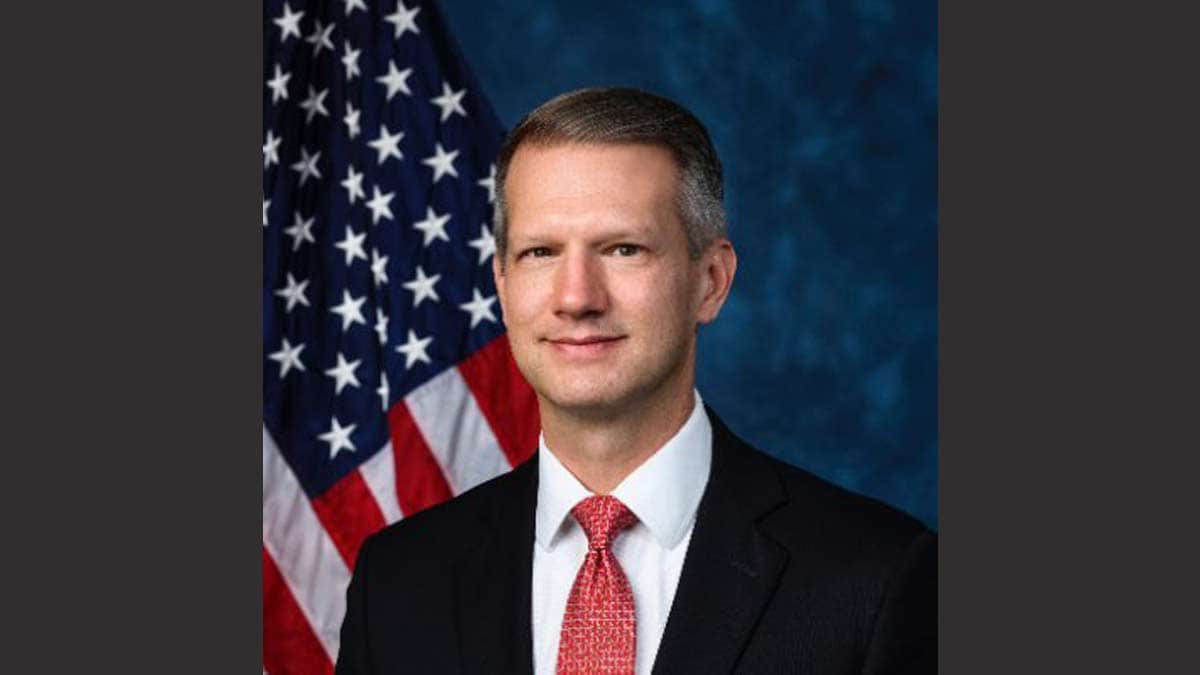
Foreign policy rarely mixes well with domestic religious anxieties, but a single social media post just threw New Delhi and Washington into an unexpected diplomatic spat. US Congressman Riley Moore recently took aim at India's legislative agenda, claiming that sweeping modifications to foreign donation laws represent an aggressive move targeting religious minorities.
You need to understand what is actually driving this sudden friction. It is not just a routine policy disagreement. It touches raw nerves regarding national sovereignty, financial transparency, and international oversight of non-governmental organizations.
What Sparked the International Outcry
The storm erupted after Republican Representative Riley Moore of West Virginia published a sharp critique online. He pointed directly to the Foreign Contribution (Regulation) Amendment Bill, 2026, currently being debated during India's Monsoon Session. Moore argued that the proposed legal changes could permit the government to seize administrative control of churches and faith-based charities once their licenses lapse or face cancellation.
He didn't mince words. He called it a direct threat and warned that pushing the legislation forward could damage bilateral relations between the United States and India.
This intervention instantly polarized observers. Critics inside and outside India view the legislative changes as a heavy-handed tool to squeeze civil society groups. Supporters counter that sovereign nations have every right to tighten financial tracking to prevent illicit money flows.
Breaking Down the Foreign Contribution Regulation Bill
To see why people are taking sides, you have to look at the actual text of the legislation. The Foreign Contribution (Regulation) Act has long governed how local trusts, educational entities, and religious bodies receive money from overseas.
Data from the Ministry of Home Affairs highlights the sheer scale of these transactions. Between 2019 and 2022, thousands of organizations pulled in tens of thousands of crores in foreign contributions. By mid-2026, official registries showed roughly 14,449 active certificates, while more than 22,000 registrations had already been cancelled and over 15,000 had expired.
The 2026 amendment introduces a crucial administrative shift: the creation of a Designated Authority.
- This authority steps in when an entity loses its clearance, taking charge of residual foreign funds and physical assets built using those donations.
- For places of worship, the bill mandates that the state-appointed authority preserve the religious character of the site.
- It also imposes stricter activity floors, meaning groups spending or receiving less than a specific financial threshold over a two-year window risk losing renewal eligibility.
- Penalties for technical violations are actually being softened from five years of imprisonment down to one year, though critics argue the asset-seizure rules outweigh this concession.
Why Domestic and Foreign Critics Are Worried
Anxiety runs highest in regions with deep-rooted Christian institutional networks, such as Kerala and parts of Northeast India. For generations, foreign grants built schools, hospitals, and community welfare centers that rely entirely on external funding streams.
When registrations lapse due to bureaucratic delays or minor compliance errors, local leaders fear these sprawling assets could fall into state hands. Regional political parties, including ruling coalition allies in specific states, have voiced heavy reservations, asking lawmakers to reconsider the text before voting.
On the flip side, New Delhi maintains that these rules are non-negotiable safeguards. Transparency is the stated goal. Officials argue that tracking foreign money prevents external interference in domestic affairs, cutting off unauthorized funding channels that bypass national oversight.
Where India-US Ties Stand Now
Will a single Congressman's grievance derail an entire strategic partnership? Unlikely. Defense agreements, trade negotiations, and geopolitical alignment against shared regional challenges carry far more weight in Washington and New Delhi than a single legislative dispute.
Yet, public statements from American lawmakers signal that human rights and religious freedom benchmarks remain pressure points. Indian officials routinely push back against external commentary, framing such remarks as misinformed interference in domestic legislative processes.
Watch how Parliament handles the final committee reviews and floor votes. The real test is not what foreign politicians post online, but how smoothly local institutions adapt to tighter financial compliance without losing their operational independence.