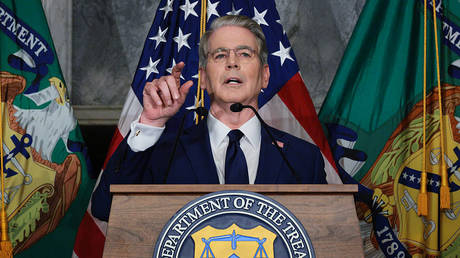
The United States just launched what it calls "Operation Economic Outcast," aiming to choke off every remaining financial lifeline keeping Tehran afloat. Treasury Secretary Scott Bessent stood at a podium and promised an economic onslaught, warning foreign entities that doing business with Iran brings severe consequences. Yet, beneath the aggressive rhetoric of an impending financial D-Day, Washington is quietly picking up the phone instead of instantly dropping the hammer.
If you look past the headlines about maximum pressure, a more nuanced strategy is playing out behind closed doors. Why would an administration touting the toughest sanctions in history simultaneously lean into quiet diplomacy with nations tied to Iran? The answer reveals a lot about how modern economic statecraft actually works when global financial stability is on the line.
The Reality Behind the Warning Shots
When Bessent announced the new Treasury campaign, he stopped short of immediately penalizing major global players like China or smaller trading hubs facilitating Iranian oil movements. Critics immediately wondered if the administration was backing down. They aren't.
Instead, Washington is giving foreign capitals a brief window to correct course. Bessent noted that instantly unleashing indiscriminate secondary sanctions would risk blowing up the global financial system. Nobody wants a complete meltdown of international markets.
President Donald Trump has been personally calling world leaders, laying out clear expectations. The message is direct. You either sever your financial, logistical, and energy ties with Tehran, or you deal with the full weight of American secondary sanctions.
Why Third-Party Nations Are in the Crosshairs
Iran doesn't operate in a vacuum. Its economy relies on a complex shadow fleet of tankers, front companies scattered from Hong Kong to the United Arab Emirates, and exchange houses that launder petroleum revenue.
For years, gray-market operators have exploited loopholes. The new Treasury push targets those exact enablers.
- Shadow fleet oil transport networks
- Foreign financial institutions processing cash transfers
- Ports and airports welcoming Iranian logistics
The administration wants to make operating in those gray spaces legally and financially toxic. If a country allows its infrastructure to support Iranian trade, it becomes a target.
The China Factor and Global Energy Markets
China remains the elephant in the room. Beijing purchases the vast majority of Iran's seaborne oil exports. Direct, punitive sanctions on major Chinese banks would trigger massive shockwaves across global trade, driving up energy prices and fracturing international relations.
That is precisely why quiet diplomacy takes center stage. Pressuring Beijing behind closed doors to help stabilize the Strait of Hormuz and wind down Iranian crude imports is a delicate balancing act. Washington wants compliance without accidentally sparking a wider economic war with its biggest trading rivals.
Patience isn't infinite here. Treasury officials have made it clear that the grace period is short. Countries ignoring the warning shot will soon see real ramifications.
Watch how foreign capitals respond over the coming weeks. The real test of this strategy won't be measured by the volume of press releases, but by whether the shadow tankers stop moving.