Jim O'Neill didn't mean to start a geopolitical revolution. Back in 2001, the Goldman Sachs economist sat down and wrote a paper that simply grouped four emerging giants together: Brazil, Russia, India, and China. He used the acronym BRIC. It was supposed to be a clever marketing hook for investors trying to figure out where future growth might hide. Wall Street loved catchy tickers.
Fast forward to today, and that simple four-letter financial shorthand has morphed into BRICS+, an expanded powerhouse reshaping international relations. Most analysts completely miss the plot when they look at this group. They call it an anti-Western club or a direct threat to the US dollar. Reality is messier. It's an evolving coalition of nations tired of taking orders from institutions built in 1944. If you found value in this piece, you might want to check out: this related article.
The Accidental Birth of an Economic Club
Nobody in Brasília, Moscow, New Delhi, or Beijing woke up in 2001 demanding an alliance. They were distinct nations with competing interests, historic border tensions, and wildly different political systems. China was a manufacturing juggernaut. India was ramping up its tech and service sectors. Russia rode high on massive energy reserves. Brazil supplied the world's commodities.
O'Neill's insight was purely numerical. He noticed that the combined weight of these economies would eventually eclipse the G7. He was right. But governments aren't banks. Diplomats saw the acronym, looked at each other, and realized a marketing term could be turned into real political leverage. In 2009, they held their first official summit in Yekaterinburg, Russia. South Africa joined a year later, turning BRIC into BRICS. For another perspective on this event, check out the recent coverage from BBC News.
Moving From Paper to Power
For years, skeptics dismissed the grouping as a talk shop. They pointed out that China and India share a disputed Himalayan border. They noted that Russia and Brazil have completely different economic cycles. Critics asked how a bloc could function when its members lack a unified currency or a shared military pact.
Those critics missed how global influence actually works in the twenty-first century.
BRICS didn't need a unified currency to change the room. They created the New Development Bank as an alternative to the World Bank. They started trading in local currencies to bypass traditional exchange bottlenecks. They proved that developing countries could build parallel financial architectures without needing permission from Washington or Brussels.
Why the Plus Matters
When the group officially invited new members like Egypt, Ethiopia, Iran, and the United Arab Emirates, the name changed to BRICS+. This expansion wasn't just about collecting flags on a map. It was about controlling energy corridors and shipping lanes.
Take a look at oil. By bringing major energy producers like Iran and the UAE into the fold alongside Russia, the bloc suddenly represents a massive slice of global oil production. If you want to understand why traditional western dominance is slipping, look right there. Developing nations want a louder voice in global trade rules. They're tired of watching international monetary policy hurt their local currencies without any consultation.
The Real Challenges Ahead
Let's be completely honest. Holding this coalition together is exhausting work. Internal friction is constant. India and China remain wary strategic rivals. Economic performance varies wildly across member states, with some facing severe domestic inflation and currency depreciation.
Building a coherent foreign policy when your members include democratic republics and heavily sanctioned authoritarian regimes is nearly impossible. They don't agree on UN resolutions. They don't share a common ideology. Their only real binding agent is a shared frustration with the current global governance model.
Yet, that frustration is a powerful glue.
What Comes Next
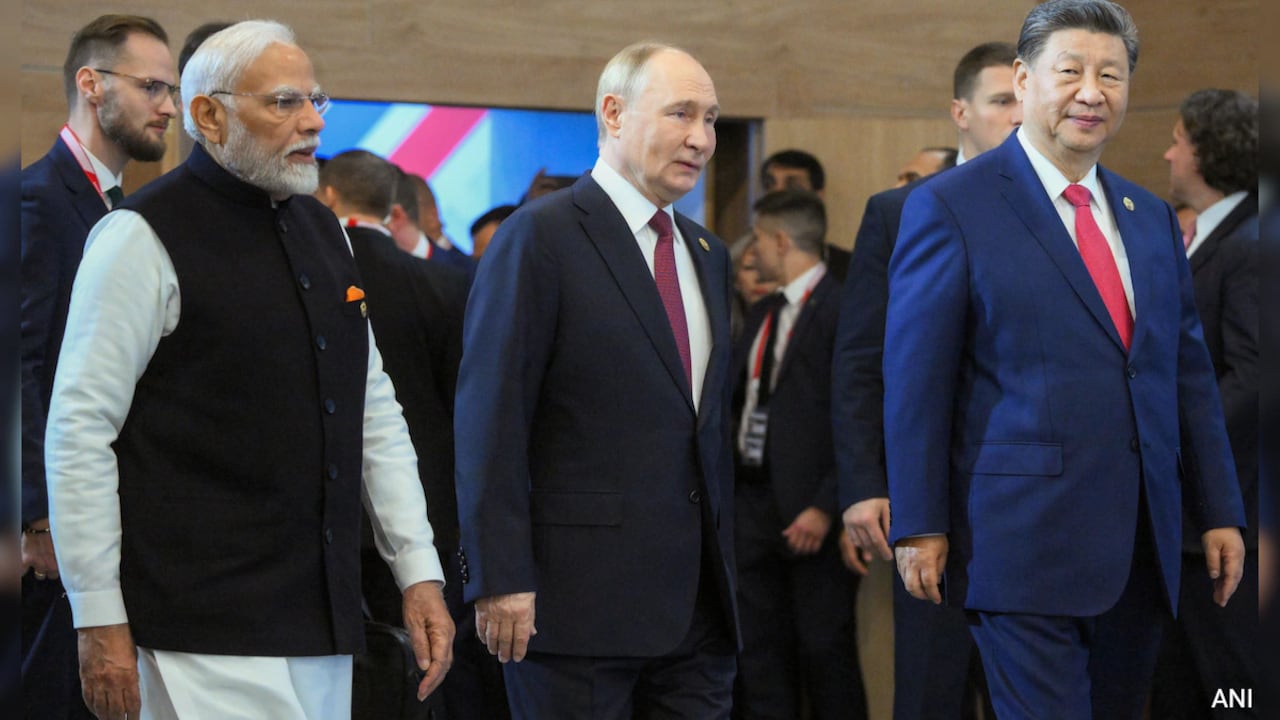
The trajectory of BRICS+ proves that global power is drifting away from traditional Western capitals. New Delhi's recent chairship highlights how middle powers are stepping up to shape multilateral agendas.
You shouldn't expect a single unified currency tomorrow. You shouldn't expect NATO-style mutual defense treaties either. What you will see is a steady chipping away at Western financial dominance. Alternative payment systems will grow. Trade agreements will bypass traditional Western clearinghouses. The twenty-first-century economic order belongs to whoever adapts fastest to a multipolar reality.
Pay attention to how these nations handle supply chain agreements over the next few years. That's where the real rubber meets the road.
How BRICS Became a Global Power Bloc
This video provides a quick breakdown of how the BRIC concept evolved into an influential international bloc.