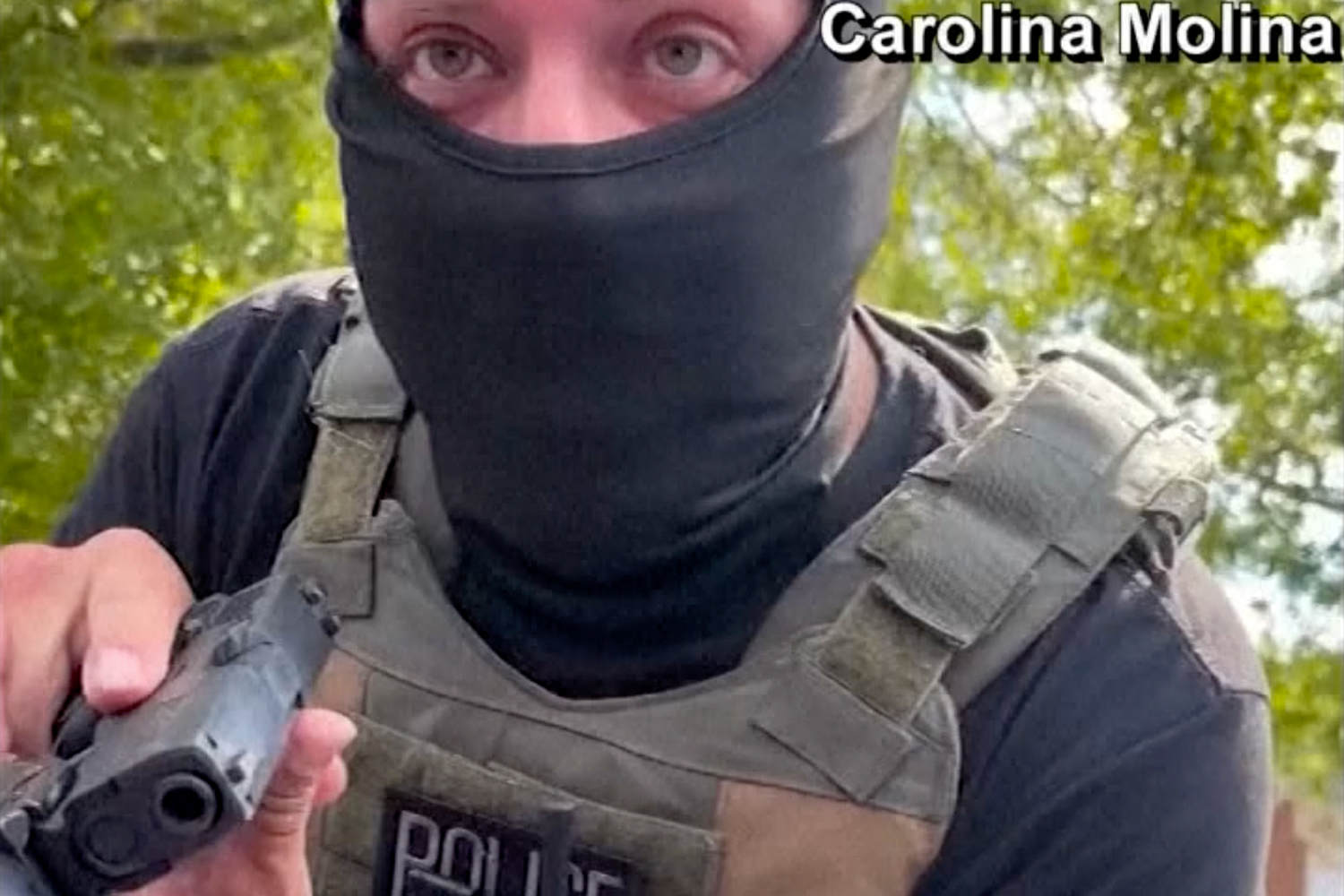
A masked federal agent pointing a firearm at a local counselor sitting inside her car in a Northern Virginia parking lot didn't just shock witnesses. It triggered an instant firestorm over federal overreach and the thin line separating routine enforcement from outright intimidation.
If you have watched the viral footage from Bailey's Crossroads, you already know how fast a routine afternoon errand can derail into a high-stakes standoff. Carolina Molina, a local professional counselor who provides psychological evaluations for immigration cases, found herself staring down the barrel of an ICE agent's gun after shouting a quick critique at agents conducting an arrest. You might also find this similar coverage interesting: Why China Frozen Embryo Cases Are Breaking The Legal System.
How a Parking Lot Encounter Escalated into a Weapon-Pointing Standoff
The timeline matters. Around 3 p.m. on a Monday, Molina was visiting local law offices near Columbia Pike to drop off her business cards. She spotted Immigration and Customs Enforcement agents executing an arrest on two men. Rolling down her window, she voiced her disapproval before driving off to finish her work.
What happened next became the center of a fierce public dispute. Molina made a U-turn to head back to an office, prompting federal vehicles—an unmarked gray SUV and a license-plate-free white SUV—to box her car in. As discussed in detailed reports by The New York Times, the effects are widespread.
Dashcam and cellphone recordings show a masked agent approaching her driver-side window, drawing his weapon, and shouting accusations.
"You almost ran us over," the agent yells in the footage.
"I didn't almost run you over," Molina fires back, noting that she is a legal citizen.
Another agent points a finger, warning that they possess the absolute authority to lock her away. Yet, the moment Molina calmly states that her vehicle is equipped with a dashcam recording the entire interaction, the tone shifts completely. The guns lower, the threats cease, and the agents walk away. No arrest is made. No citation is issued.
The Dangerous Gap Between Official Claims and Video Evidence
The Department of Homeland Security later defended the operation, claiming agents were targeting criminal targets involved in drug trafficking and a hit-and-run. DHS officials characterized Molina as an agitator who weaponized her vehicle against the officers.
That narrative crumbles under the weight of the video.
Independent recordings show no frantic driving, no attempted vehicular assault, and no lawful grounds for drawing a deadly weapon on a seated motorist. Local lawmakers, including Representative Don Beyer, slammed the encounter as a glaring example of habitual dishonesty and systemic accountability failures within federal immigration enforcement.
When armed authorities can fabricate a justification of lethal force—only to back down instantly upon learning a camera is rolling—public trust evaporates. It raises an uncomfortable question for drivers everywhere: what happens to citizens who lack a dashcam to disprove a federal agent's false claims?
What You Should Do If Confronted by Law Enforcement
Incidents like this prove that chaotic roadside encounters demand absolute composure. If you ever find yourself boxed in or targeted by aggressive law enforcement or federal agents, follow practical survival steps immediately.
- Keep your hands visible on the steering wheel at all times. Do not reach for phones or documents until explicitly instructed.
- State clearly and calmly that you are recording the interaction. Dashcams and phone cameras serve as objective witnesses when verbal statements are misconstrued.
- Avoid arguing on the street. Escalating a verbal match with armed agents rarely changes their immediate behavior in your favor.
- Document everything immediately afterward. Note badge numbers, agency names, vehicle descriptions, and secure copies of any digital footage before it can be misplaced or deleted.
Accountability won't fix itself overnight. Demand transparency from local officials and protect your rights with reliable recording tools.


