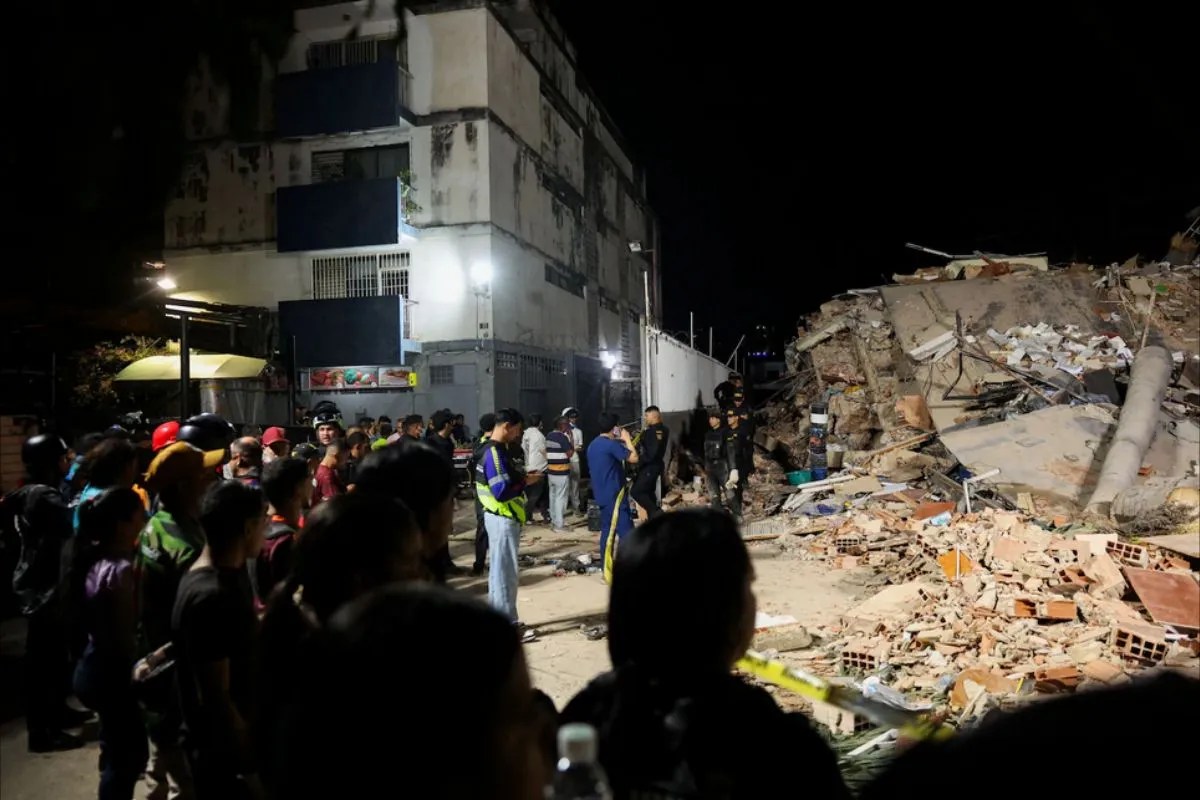
The ground shook twice, and within minutes, thousands of lives shattered across northern Venezuela. When the twin earthquakes measuring 7.2 and 7.5 magnitude struck near Caracas and the coastal state of La Guaira, the initial panic focused on the immediate devastation. Buildings pancaked. Entire neighborhoods lost power. But as the dust begins to clear, a complex international crisis is emerging.
Spain is now grappling with a massive rescue and repatriation nightmare on the other side of the Atlantic. What started as an initial report of two dead Spanish nationals and 80 missing has rapidly spiraled into a much larger, more desperate situation.
If you are looking at the headlines trying to understand why a disaster in South America is causing so much heartbreak in Madrid and Bilbao, you need to look at the deep historical ties between these two nations. Around 200,000 Spanish citizens live in Venezuela. It is one of the largest expat communities in the world. When the high-rise apartments in San Bernardino and La Guaira came down, they buried decades of shared history under the concrete.
The Rapidly Escalating Toll Under the Rubble
The situation on the ground changes by the hour. The Spanish Ministry of Foreign Affairs, led by José Manuel Albares, is working frantically to track down compatriots who have gone silent. While early media dispatches focused on the initial figure of 80 unaccounted individuals, the true scale of the disaster is far worse. The number of missing Spanish citizens has surged past 100, while rescue teams have confirmed multiple Spanish fatalities.
The human stories behind these numbers are brutal. Take the case of Alazne Solabarrieta Lezea. She was a 65-year-old woman originally from Biscay but born in Caracas. She lost her life when her apartment building in the San Bernardino district of the capital completely collapsed. Her husband, Koldo Olalde, survived the catastrophic collapse but remains hospitalized with severe injuries.
Then there are the people still trapped or missing. Families in Spain are glued to their phones, waiting for any sign of life from loved ones like Jon Sustacha. He is a 69-year-old engineer from Bilbao who spent his life working in Venezuela. He was right on the verge of retirement, planning to finally move back home to Spain this very year. His building in La Guaira collapsed, and his family is terrified because he suffers from chronic hypertension and has no access to his daily medication. Every hour without a rescue team reaching him lowers his chances.
Why the Chaos in La Guaira is Blocking Rescue Missions
La Guaira is a complete disaster zone. The UN reports that over 100 buildings, including massive high-rise apartment blocks, have totally collapsed in this coastal region north of Caracas. The acting Venezuelan president, Delcy Rodríguez, has militarized the state to keep order and prevent looting, but the logistics of saving lives there are a mess.
The local infrastructure was already fragile before the tremors hit. Now, with roads cracked open and communications down, rescue teams are playing catch-up. Local volunteers and firefighters spent the first 24 hours digging through concrete with their bare hands and basic tools. There simply was not enough heavy machinery available to lift the massive slabs pinning people down.
Spain has sent 54 elite rescue troops from the Military Emergencies Unit along with specialized engineers and sniffer dogs. But landing a military plane and getting boots on the ground is only half the battle. Moving heavy cutting and drilling equipment through ruined streets is an absolute logistical nightmare.
Critical Emergency Contacts for Families
If you have family members or friends in Venezuela who have not checked in, you should stop waiting for them to call you. The local cellular networks are highly unstable, and many areas have no electricity at all. You need to contact the emergency consular lines immediately.
The Spanish government has established specific emergency phone lines for this crisis. Do not use the standard embassy numbers as they are completely overwhelmed.
- Calling from Spain: +34 910001249
- Emergency Consular Lines in Venezuela: +58 424 2090264
- Alternative Caracas Lines: +58 212 6270300 or +58 212 6270314
The Spanish Consulate in Caracas is telling anyone who has been displaced or left homeless to head to the nearest Spanish cultural center. These centers have been converted into emergency shelters. If you are in Caracas, go directly to the Hermandad Gallega de Caracas or the Hogar Canario. You will need to show a Spanish passport or a national identity card to access emergency housing and food supplies.
The Geopolitical Twist That Might Actually Save Lives
An unexpected development in this tragedy involves international diplomacy. Venezuela has been under heavy economic sanctions from the United States for years, which typically prevents the government from executing major international financial transactions or receiving certain types of foreign equipment.
The US Treasury Department has temporarily lifted some of these sanctions. This allows the Venezuelan government to make emergency transactions specifically for earthquake relief. It means aid, heavy machinery, and medical supplies can flow into the country without hitting the usual bureaucratic walls.
International teams from over 17 countries are arriving. The US Southern Command has deployed teams to coordinate logistics, while countries like Mexico, Colombia, Italy, and Germany are sending specialized structural experts. Spain has also offered to deploy its specialized field hospital next week to assist the local healthcare system, which is buckling under the weight of thousands of injured citizens.
What to Do Right Now If You Are Affected
Do not sit around scrolling through social media feeds for updates. The situation requires direct action.
If you are a Spanish citizen currently in Venezuela and you are safe, call the consulate or check in at one of the designated cultural centers. Letting authorities know you are alive removes your name from the missing lists, allowing rescue teams to focus their dwindling resources on the buildings where people are actually trapped.
If you are trying to find a missing relative, register their details with the citizen-led initiative website for missing persons in the Venezuela earthquake. Give specific details about their last known location, the name of their apartment building, and any urgent medical conditions they have. This data is being fed directly to the international rescue teams on the ground who are prioritizing which ruins to excavate first. Time is running out for the people still trapped under the concrete blocks of La Guaira and Caracas. Take action immediately.