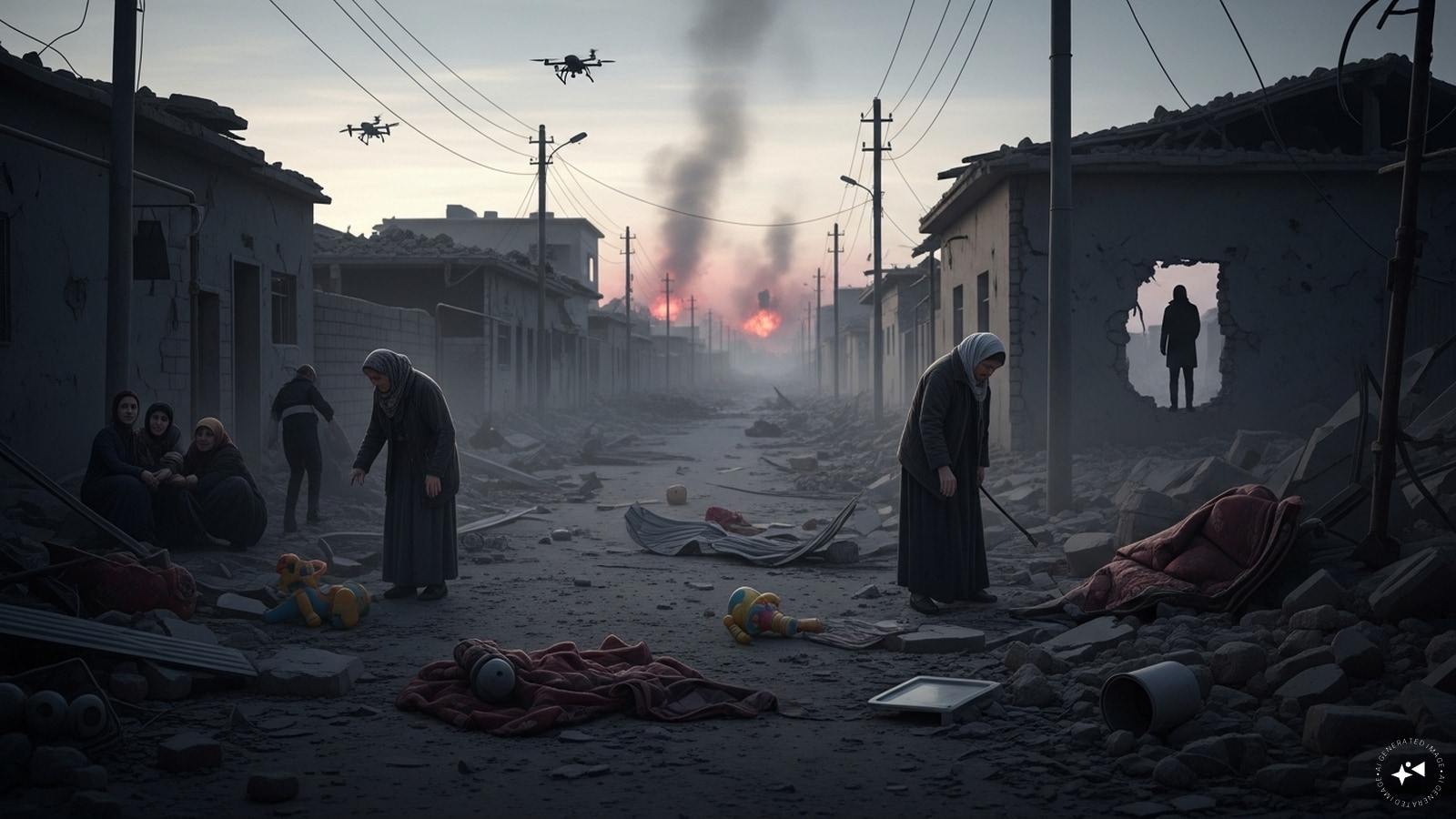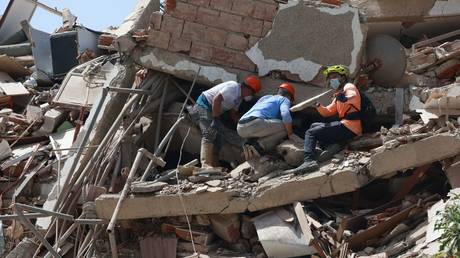
The ground didn't just shake in northern Venezuela on June 24, 2026. It shattered. Two massive earthquakes struck less than a minute apart, triggering a humanitarian crisis that has left local communities completely overwhelmed. Officials have confirmed that the death toll has reached 1,430 people, but the real tragedy lies in what happens next. Tens of thousands of residents remain missing, structural damage has paralyzed the region's main logistical hubs, and everyday citizens are digging through crushed concrete with bare hands.
This isn't a standard natural disaster. It's the strongest seismic event to hit the country in more than 125 years. Understanding why this doublet earthquake caused such staggering devastation requires looking beyond the raw magnitudes to the structural and political reality on the ground. Meanwhile, you can find other developments here: Why The European Heatwave Is Terrifying And What Lies Ahead.
The Science of a Doublet Earthquake
Seismologists from the U.S. Geological Survey (USGS) confirmed that northern Venezuela was hit by a rare doublet event. A magnitude 7.2 earthquake rattled the coast, followed roughly 39 seconds later by a massive 7.5 magnitude mainshock. The epicenters were located near Morón on Venezuela's Caribbean coast, just about 100 miles west of the capital city of Caracas.
When two major shocks hit the exact same area within seconds, the damage doesn't just double. It multiplies exponentially. The first 7.2 tremor weakened structures, cracked foundation beams, and compromised support columns. Before anyone could evacuate or find safety, the second 7.5 shock hit. Buildings that might have survived a single major tremor pancake-collapsed instantly, trapping thousands inside. To explore the full picture, we recommend the excellent analysis by NPR.
The violent ground shaking tore through the capital and heavily impacted surrounding states, particularly La Guaira, Aragua, and Carabobo.
Desperation in La Guaira
The coastal state of La Guaira took the absolute brunt of the destruction. According to Jorge Rodríguez, president of Venezuela's National Assembly, more than 73,736 families have required urgent assistance, and over 3,238 individuals are officially treated for severe injuries.
But figures on paper don't capture the panic on the streets. In seaside towns like Caraballeada, neighborhoods have been replaced by mountains of jagged concrete. Local residents complain bitterly about the speed of the official response, noting that the military, firefighters, and police were clearly caught off guard by the sheer scale of the disaster.
Local volunteer Mileidy Romero described the harrowing scene to reporters, pointing out where signs of life had disappeared beneath the rubble while families waited for heavy machinery that arrived too late. The crucial 72-hour rescue window has officially slammed shut. While international crews have arrived to assist, the operation is rapidly shifting from a search for survivors to a grim recovery mission.
Why the Toll is So High
Several critical factors turned these tremors into a worst-case scenario.
- Pre-existing Infrastructure Vulnerabilities: Decades of economic strain meant building codes were rarely enforced strictly, leaving older concrete apartment complexes highly susceptible to collapse.
- The Logistics Bottleneck: The main international airport located in La Guaira sustained critical damage. This disrupted incoming flights and blocked the seamless transport of heavy excavation equipment.
- Paralyzed Public Services: Power grids and telecommunication networks dropped offline immediately after the quakes. Families couldn't call for help, and rescue teams couldn't coordinate effectively across different zones.
The UN migration agency estimates up to 6.76 million people could feel the long-term impact of this disaster. Early UN estimates place the physical infrastructure damage at $6.7 billion, a staggering sum representing roughly six percent of Venezuela's gross domestic product.
The International Relief Pipeline
Faced with a catastrophe of this magnitude, international aid has started pouring across borders. Acting President Delcy Rodríguez restricted unauthorized civilian travel to La Guaira to keep the narrow coastal roads clear for emergency vehicles and heavy machinery.
The United States government announced a major funding response, building on an initial $150 million emergency package with an additional nine-figure aid commitment. Specialized search-and-rescue teams from Los Angeles, Virginia, and Miami have deployed to the hardest-hit zones, joining over 1,600 international rescue workers and medical staff—including specialized doctors from nearby Curaçao.
The Poliedro de Caracas has been transformed into a massive volunteer registration and collection center, where thousands of local citizens are packing food, water, and medical supplies to ship to the coast.
Actionable Next Steps for Relief and Safety
If you are looking to support the ongoing relief efforts or find yourself in an active seismic zone, specific steps matter.
Supporting the Crisis Response
- Prioritize Established Clean Water Funds: With local water infrastructure shattered in La Guaira, waterborne illnesses pose an immediate secondary threat. Direct financial donations to organizations like World Vision or Americares ensure funding goes directly toward water purification and field hospital supplies.
- Avoid Independent Travel to Impacted Zones: If you are in Venezuela, do not attempt to drive to La Guaira or affected coastal towns to help independently. You will clog critical transit lanes needed for heavy earth-moving equipment and ambulances.
Immediate Earthquake Safety Realities
- Expect Aftershocks: Doublet earthquakes leave regional fault lines highly unstable. Severe aftershocks are guaranteed over the coming weeks. If a building shows even hairline structural cracks, evacuate immediately and do not re-enter.
- Drop, Cover, and Hold On: If shaking begins, do not attempt to run outside if you are inside a concrete structure. Most injuries occur when people try to move during active shaking. Seek shelter under a sturdy table away from exterior walls and glass windows.