Every time you take a hot shower or run the dishwasher, thousands of gallons of thermal energy head straight down the drain and disappear into the municipal sewer system. Most cities treat this warm wastewater as a total loss. Vancouver decided to do something different.
Beneath the streets of Southeast False Creek, a municipal district energy utility pulls warmth directly out of raw sewage and reroutes it to heat local homes, offices, and university buildings. It sounds unusual, but the engineering works remarkably well.
How Wastewater Becomes Radiator Heat
The mechanics behind sewage heat recovery are straightforward. Wastewater running from showers, sinks, and commercial kitchens usually sits at a cozy temperature between 10°C and 20°C, even during cold Canadian winters.
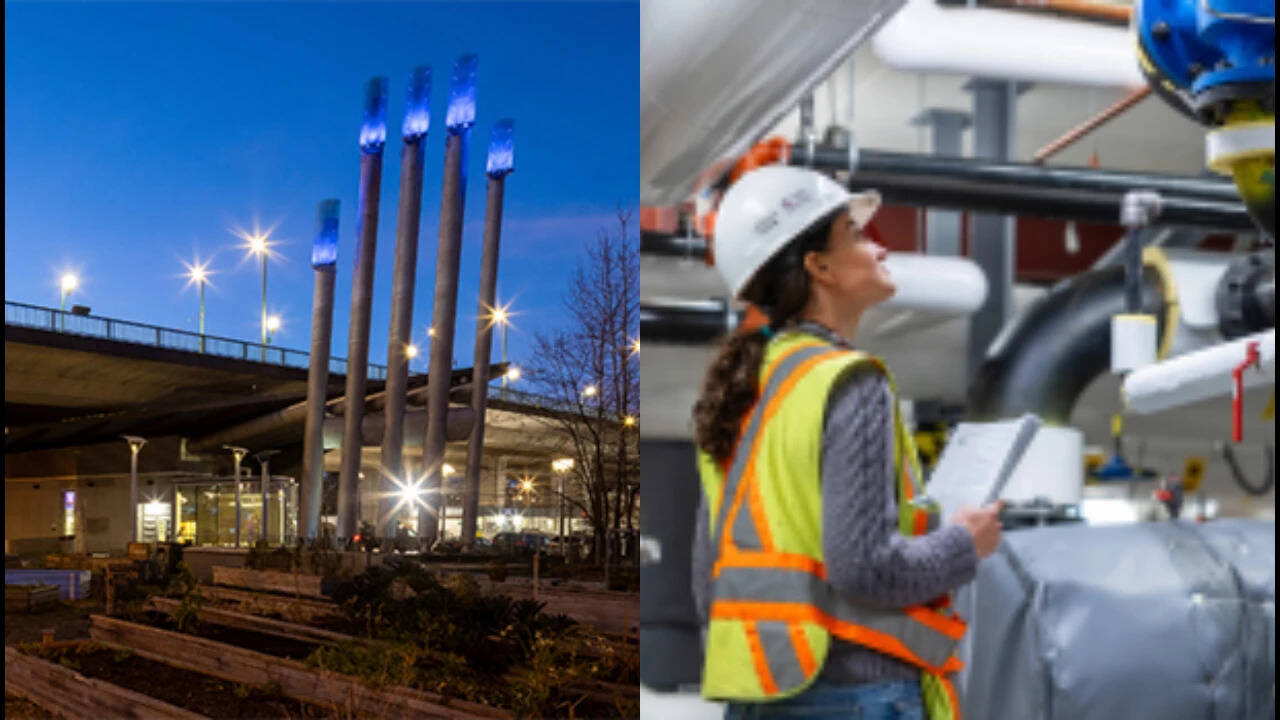
The False Creek Neighbourhood Energy Utility (NEU) intercepts this flow near the Cambie Street Bridge. Industrial-grade filtration screens catch the solid debris, while large heat pumps extract the thermal energy from the remaining liquid.
Those heat pumps transfer the collected warmth into a closed-loop network of clean water running underground. That clean water gets heated up to roughly 65°C, which is plenty hot enough to provide space heating and domestic hot water for multi-family residential towers and commercial spaces. When bitter winter cold snaps hit, high-efficiency natural gas boilers kick in to supplement the system.
Scaling Up From an Olympic Experiment
This setup didn't appear overnight. The utility first broke ground to supply the Athletes Village for the 2010 Winter Olympic Games. City planners wanted an alternative to individual fossil-fuel boilers in every building.
What started as a localized experiment for a few blocks has grown into a massive district energy network. A major expansion completed recently tripled the facility's sewage heat recovery capacity to 9.8 megawatts. Two massive new sewage-to-water heat pumps came online, pushing overall system efficiency past 140% during peak operating periods.
Today, the utility covers dozens of buildings across Southeast False Creek, Mount Pleasant, and the False Creek Flats. More than 70% of the energy distributed by the network now comes from renewable sources, primarily captured wastewater. That transition slashed thousands of tons of greenhouse gas emissions compared to older baseline standards.
Why Other Cities Are Taking Notice
Urban planners from across North America routinely visit the False Creek Energy Centre to see the hardware in person. Traditional geothermal systems require deep drilling and massive land plots, which are nearly impossible to install in dense downtown cores. Sewage lines, on the other hand, are already built out beneath every major city on earth.
The International District Energy Association even recognized the Vancouver utility with its System of the Year award, pointing to its reliable multi-decade track record and continuous scaling. Other municipalities across British Columbia, including Burnaby and Surrey, are now drafting plans to tap into their own subterranean wastewater streams.
If you want to implement similar district energy models in your own municipality, the path forward starts with mapping high-density commercial and residential zones directly over major trunk sewer lines. Mandating utility connections for new developments ensures financial viability from day one, turning everyday waste into a reliable municipal asset.