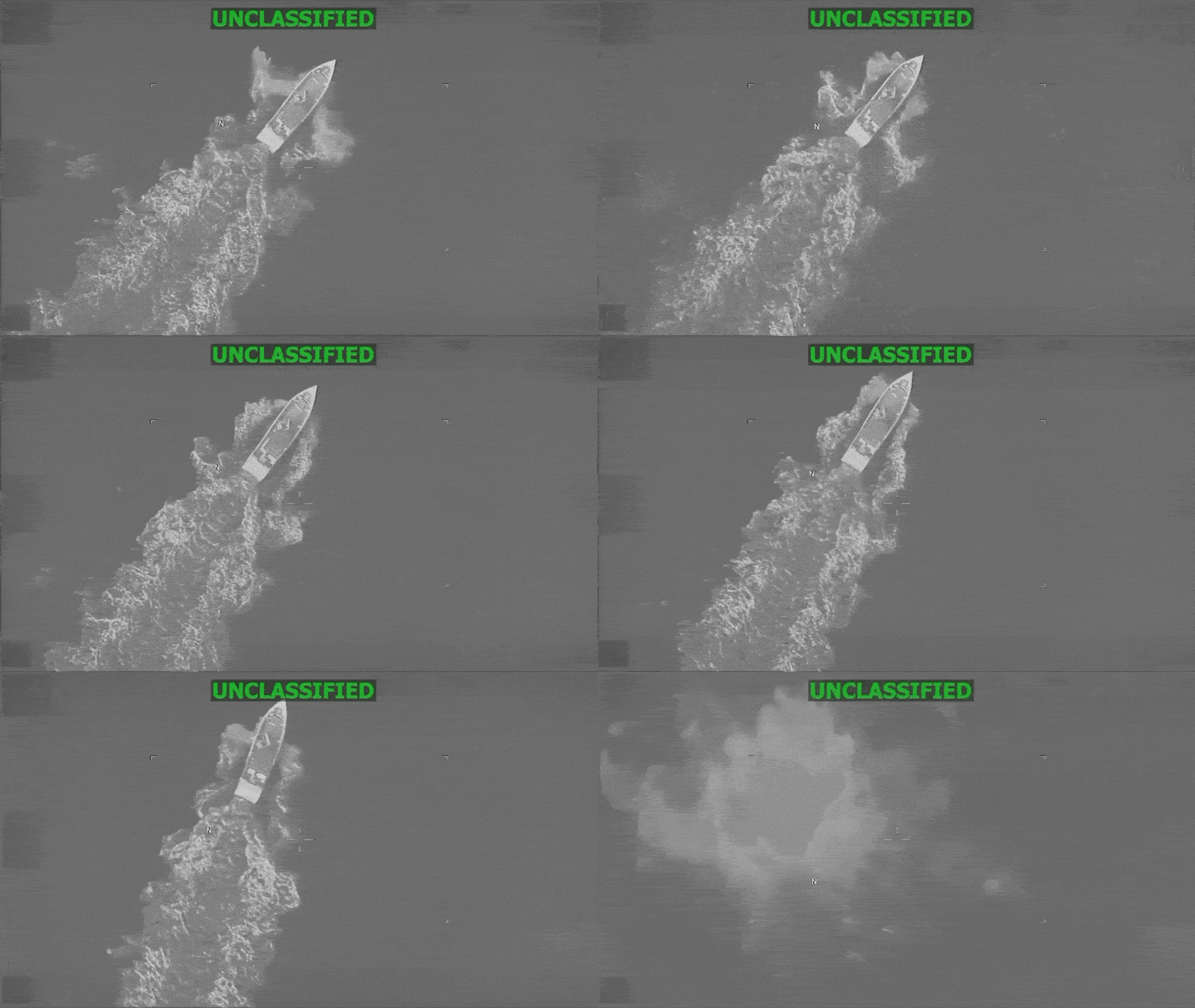
The videos released by the US Southern Command look surgical and absolute. A fast-moving vessel cuts through the Caribbean Sea, followed by a sudden thermal flash, a plume of smoke, and total destruction. Four people are dead. Washington calls them narco-terrorists, but international observers call the campaign an unverified escalation.
When you look past the official press releases, the numbers tell a staggering story. Over the past year, these controversial boat strikes have claimed at least 227 lives across 68 separate operations in the Caribbean and the eastern Pacific. The administration insists it's an active armed conflict against cartels, but legal scholars and human rights groups are demanding hard proof that these targets were actually hauling contraband. Also making headlines recently: Why Christian Brueckner Staying Just Yards Away From Madeleine Mccann Changes Everything.
The Evidence Gap That Won't Go Away
Transparency remains the elephant in the room. In the latest Caribbean operation, US Southern Command stated that confirmed intelligence proved the vessel was actively involved in drug trafficking. Yet, like dozens of strikes before it, authorities released zero public evidence of cargo, intercepted communications, or passenger identities.
You can't verify what you can't see. For independent monitors like Human Rights Watch and Amnesty International, this lack of disclosure transforms military engagements into unlawful extrajudicial killings. When a government claims it's fighting a war, citizens expect accountability. Instead, we get short clips posted on social media platforms with little room for public scrutiny. Additional information on this are covered by The New York Times.
Strategy Versus Reality on the Ground
Critics point out a glaring mismatch between these high-seas kinetic strikes and the actual mechanics of the domestic drug crisis. Fentanyl drives the vast majority of fatal overdoses in the United States. Where does that fentanyl come from? Most of it enters across the land border from Mexico, manufactured using precursor chemicals imported from Asia.
Blowing up go-fast boats in the Caribbean might disrupt specific maritime smuggling lanes, but it does little to stem the tide of synthetic opioids flowing through traditional land ports of entry. Defense officials argue that applying systemic friction to cartels breaks their financial backbone, but lawmakers want proof that the strategy actually saves lives at home.
The Legal Battleground Inside Washington
The campaign isn't just facing pushback from human rights advocates—it's under internal review. The Pentagon’s inspector general announced plans to examine whether the military strictly followed its established six-phase Joint Targeting Cycle during these operations. While that review stops short of judging the overarching legality of the attacks, it signals growing concern within military ranks about how these targets are selected.
At the same time, the administration is aggressively trying to expand these operations onto land. Defense Secretary Pete Hegseth recently pushed for joint military agreements across Latin American nations, though regional pushback remains fierce.
The stakes couldn't be higher. As the death toll climbs past 227, the debate between national security aggression and international law continues to intensify.
US military's lethal kinetic strike
This video report breaks down the context behind the ongoing US military maritime operations against suspected drug trafficking vessels near Latin America.
http://googleusercontent.com/youtube_content/1