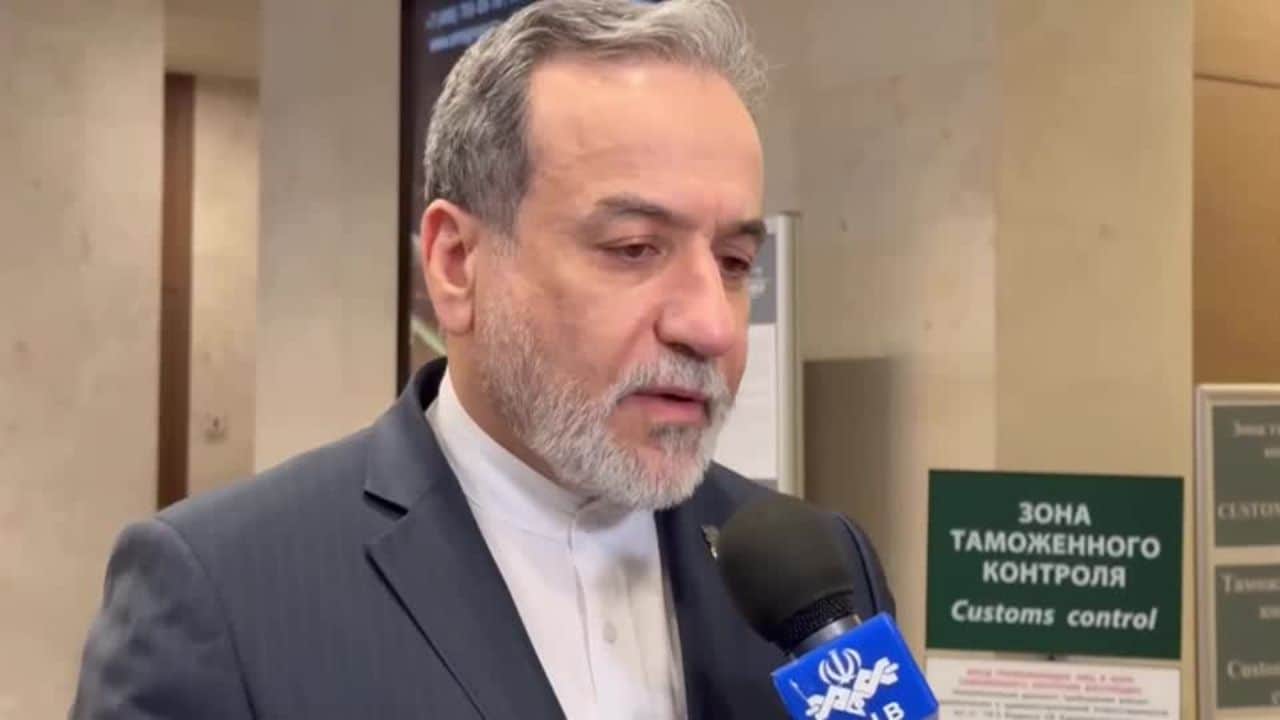
The ink isn't even on the paper, and the highly anticipated peace deal between the United States and Iran is already staring down a barrel. Just a day after Washington and Tehran shocked the world by announcing a memorandum of understanding to end their months-long war, Iranian Foreign Minister Abbas Araghchi threw a massive wrench into the gears.
He didn't mince words. Araghchi made it clear that if Israel doesn't pack up and pull its troops out of southern Lebanon, the entire deal is dead in the water. For another view, see: this related article.
This isn't just a minor disagreement over wording. It's a fundamental, foundational clash of realities. Iran views the conflict through a broad lens, insisting that the deal mandates an immediate and permanent end to the war on all fronts, explicitly including Lebanon. Israel, which isn't a direct party to the bilateral US-Iran text but is entirely entangled in the actual fighting, has a completely different plan. Prime Minister Benjamin Netanyahu and Defence Minister Israel Katz have already fired back, stating Israeli forces are staying in their established security zones for as long as they see fit.
If you're wondering why this matters to you, look no further than your local gas station or grocery store. This war has kept the vital Strait of Hormuz effectively choked off, sending global energy and food prices through the roof. We were promised a signing ceremony in Switzerland this Friday to finally reopen the shipping lanes. Instead, we're looking at a game of diplomatic chicken that could trigger a return to total regional warfare. Further reporting on this trend has been provided by USA.gov.
The Lebanon Friction Point
Let's look at what Araghchi actually said during his televised briefing with foreign diplomats in Tehran. He argued that the war simply cannot end without the complete withdrawal of Israeli forces from the territories occupied since the conflict escalated.
"Any military attack by the Zionist regime on Lebanon from now on and the continued occupation of Lebanese territories from now on will be considered a violation of the memorandum of understanding in our view."
✨ Don't miss: food stamps phone number
According to regional officials close to the closed-door talks, Iran pushed hard in the final days of negotiations to get Lebanon written into the scope of the agreement. For Tehran, Hezbollah and Iran are on one side of this conflict, while the US and Israel are on the other. You can't settle scores with one without stopping the fight with the other.
The trouble is, the Americans seem to have negotiated a different narrative. An anonymous US official countered Araghchi's claims almost immediately, telling reporters that the actual framework text does not explicitly call for an Israeli withdrawal from Lebanon.
So, what gives? It looks like we have an unpublished agreement where both sides ran back to their respective capitals and started spinning entirely different interpretations to save face.
Netanyahu Refuses to Budge
While Iran draws its line in the sand, Israel is digging its trenches deeper. The Israeli military pushed hard into Lebanon earlier this year, occupying vast swaths of the south to neutralize Hezbollah rocket sites. They have no intention of walking away just because Washington and Tehran shook hands.
Netanyahu explicitly stated that Israeli troops will remain in security zones across Lebanon, Syria, and Gaza for as long as necessary to protect the country. Defense Minister Israel Katz went even further. He noted that these border zones will continue to be cleared of terror infrastructure, which means blowing up contact-line villages that served as Hezbollah outposts.
Look at the massive disconnect here:
- Iran's Position: Continued Israeli presence in southern Lebanon violates the peace deal.
- Israel's Position: The IDF stays in Lebanon indefinitely, regardless of foreign pressure.
- The US Position: Caught in the middle, trying to secure a major foreign policy win while its primary regional ally openly defies the spirit of the truce.
Even US President Donald Trump admitted to reporters that he's not happy with how things are playing out in Lebanon, noting that the endless friction throws a negative light on the big deal with Iran.
The Trillion Dollar Stakes
This isn't just about lines on a map in the Middle East. The real-world consequences of this diplomatic deadlock are staggering.
The interim deal was supposed to trigger a 60-day clock. During this time, a broader ceasefire would take hold, Iran's frozen assets would be released, Gulf Arab states would inject billions into the battered Iranian economy, and crucial talks would begin regarding Tehran's stockpile of highly enriched uranium.
Most importantly for the rest of the world, the deal promised the immediate reopening of the Strait of Hormuz under Iranian arrangements. That means oil tankers can move freely again, which would immediately cool off global inflation.
But if Araghchi's demands are an absolute dealbreaker, none of that happens. If the Friday signing in Switzerland falls apart, the uneasy ceasefire we are currently seeing will shatter instantly. Hezbollah is already launching fresh attacks against Israeli forces trying to advance in southern Lebanon, proving that the ground reality is a tinderbox waiting for a match.
What Happens Next
We're less than 72 hours away from the scheduled signing ceremony in Switzerland. Watch these specific indicators over the next two days to see if the deal survives:
- The Geneva Delegation: Keep an eye on whether Iranian negotiator Mohammad Bagher Ghalibaf actually boards the plane to Switzerland, or if Tehran stalls the trip demanding written clarifications on the Lebanon clause.
- US Diplomatic Leaning: Watch for frantic backchannel communications from Washington to Jerusalem. The US needs to either convince Netanyahu to temper his rhetoric or convince Iran to accept a vague, kick-the-can-down-the-road phrasing on Lebanon.
- Strait of Hormuz Movements: Monitor shipping insurance rates. If maritime insurers keep premiums sky-high over the next 48 hours, it means the markets don't believe this peace deal will actually open the shipping lanes.
The reality is simple. You can't have a lasting peace deal when the people pulling the triggers on the ground aren't reading from the same script as the diplomats in the hotel conference rooms. If Washington cannot bridge the gap between Araghchi's ultimatums and Netanyahu's security zones by Friday, this landmark deal will be dead before it ever had a chance to live.