Video footage showing disarmed soldiers shot at point-blank range has forced a international reckoning over northern Mali.
The United Nations High Commissioner for Human Rights took a firm stand on July 23, 2026, demanding an independent investigation into reports of torture and summary executions following a bloody military engagement in the Gao region. The violence unfolded on July 18, when a government military convoy ran directly into a brutal ambush while traversing northern Mali. Dozens of Malian soldiers were reportedly captured, subjected to severe torture, and executed.
The incident highlights a horrific breakdown of international humanitarian law in the Sahel. It also exposes the chaotic security situation facing the country's ruling military junta.
       UN High Commissioner Call for Independent Probe (July 23, 2026)
                                     │
           ┌─────────────────────────┴─────────────────────────┐
           ▼                                                   ▼
July 18 Gao Ambush & Captures                      Leaked Video Evidence
  • Convoy targeted in Gao region                   • Disarmed soldiers executed
  • Dozens captured during clash                    • Hands tied behind heads
  • Heavy military equipment lost                   • Outrage over war crimes
Graphic Videos Reveal Execution of Captured Malian Troops
Footage began circulating across social media platforms within days of the July 18 clash. What it shows isn't just standard combat footage. It documents clear war crimes.
The videos depict disarmed Malian soldiers kneeling or lying on the ground, hands bound behind their heads, helpless and waiting. Moments later, armed fighters open fire on them at close range. International observers and UN human rights officers analyzed the footage and verified that the victims were hors de combat—meaning they had formally surrendered or were no longer capable of participating in active combat.
Under the Geneva Conventions, the rules aren't negotiable. Once a soldier surrenders, you can't shoot them. You can't torture them. You're legally required to treat them humanely.
Instead, these captured men faced horrific mistreatment before being executed. Reports indicate that dozens lost their lives in this single incident alone. The graphic nature of the footage caused immediate shockwaves, forcing international agencies to intervene publicly before the videos could be dismissed as propaganda.
The Gao Ambush and Strategic Chaos in Northern Mali
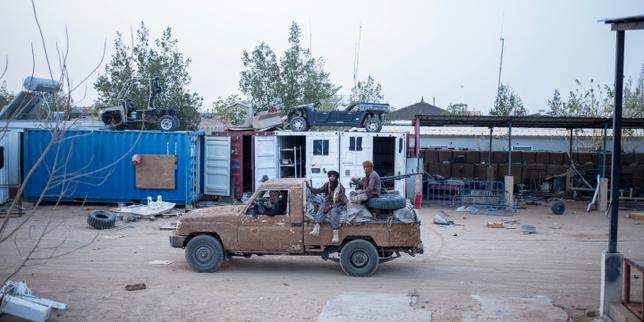
To understand how this nightmare happened, you have to look at the ground reality in Gao. The Malian Armed Forces (FAMa) were attempting to move a heavy convoy through a territory crawling with hostile insurgent networks.
The state-level response from Bamako was predictable. On July 18, the Malian military staff acknowledged that an ambush took place. Official military statements claimed that prompt air strikes enabled the convoy to break free from the trap and resume its push toward Gao. Army leadership omitted any mention of casualties, captured personnel, or summary executions.
"Official channels painted a picture of tactical success through air support, but the leaked ground footage told a completely different story—one of capture, torture, and mass execution."
This discrepancy between official claims and ground reality isn't new. For years, the military authorities in Bamako have tried to control the narrative surrounding operations in the north. But when video evidence directly contradicts press releases, official silence breaks down fast.
+-----------------------------------------------------------------------+
|                 GENEVA CONVENTIONS & CAPTURED TROOPS                  |
+-----------------------------------------------------------------------+
|  Status: Hors de Combat (Surrendered or Incapacitated)               |
|                                                                       |
|  1. Mandatory Humane Treatment: No torture, humiliation, or abuse.   |
|  2. Absolute Ban on Summary Execution: Shooting POWs is a war crime.  |
|  3. Right to Medical Care: Wounded combatants must be treated.        |
+-----------------------------------------------------------------------+
Why International Humanitarian Law Demands Action Now
International human rights organizations aren't treating this as an isolated skirmish. Volker Türk, the UN High Commissioner for Human Rights, emphasized that those who commit such atrocities must be held accountable regardless of who they are.
Executing captured combatants violates Article 3 common to the four Geneva Conventions. It constitutes a flagrant war crime. When insurgent groups post videos of executions, they think they're projecting strength and striking fear into government ranks. In reality, they're documenting evidence for future prosecution.
Here's a straightforward breakdown of what international law dictates versus what actually happened in Gao:
- What the law requires: Captured combatants must be protected from acts of violence, intimidation, and public curiosity.
- What happened in Gao: Disarmed soldiers were filmed, abused, tortured, and shot while defenseless.
- What the UN demands: A transparent, impartial, and independent investigation to identify perpetrators and commanding officers.
- The current stance of Malian authorities: Silence regarding the casualties and executions, alongside claims that air support saved the unit.
The legal precedent is crystal clear. If non-state armed groups or national military forces execute prisoners, the commanders responsible face individual criminal liability under international law.
Escalating Cycle of Atrocities and Impunity
The July 18 attack in Gao didn't happen in a vacuum. It represents the latest flare-up in a conflict that has spiraled out of control across central and northern Mali.
Since the military junta took power and requested the departure of UN peacekeepers (MINUSMA) alongside French forces, security conditions haven't improved. Instead, the void was filled by Russian mercenaries—formerly known as the Wagner Group, now operating as Africa Corps—working alongside Malian state forces.
This shift hasn't brought stability. Armed opposition groups, including both Islamist coalitions like JNIM and northern separatist coalitions, have escalated their offensives across the region.
A Pattern of Violations on All Sides
When violence becomes standard operating procedure, civilians and captured soldiers pay the price.
- Insurgent Atrocities: Armed groups regularly use ambushes, summary executions, and blockades to paralyze government supply lines and terrorize local populations.
- State and Partner Abuses: Independent UN experts and rights organizations have repeatedly documented extrajudicial killings, arbitrary detentions, and village destructions during counter-insurgency operations.
- The Information Vacuum: Independent journalists face extreme restrictions in Mali, making verified video evidence one of the few windows into northern operations.
This continuous tit-for-tat dynamic creates a toxic environment where no party respects basic rules of engagement. When one side executes prisoners, the other side retaliates in kind during the next sweep through a village.
Concrete Steps to Ensure Accountability
An official UN press release demanding an investigation won't stop bullets by itself. Real accountability requires concrete actions on the ground and through diplomatic channels.
If the international community wants to stop summary executions in Mali, several immediate measures must happen right away.
First, the Malian government must grant independent investigators from the UN Human Rights Council full, unrestricted access to the site of the Gao ambush and all relevant military medical facilities. Self-investigation by military command rarely yields honest results.
Second, digital forensics teams need to preserve and analyze all original video files from the Gao executions. Extracting metadata, identifying exact geolocations, and matching facial features of the perpetrators can build rock-solid case files for international prosecutors.
Third, regional bodies like the African Union must step up pressure on both the Malian junta and armed groups. Condemning attacks against civilians while ignoring war crimes against captured soldiers creates a dangerous double standard that erodes credibility.
Finally, international aid and military cooperation must be strictly tied to compliance with international humanitarian law. Parties that routinely execute prisoners or tolerate torture shouldn't receive diplomatic cover or material support.
Demand an immediate, independent forensic review of all video footage from the Gao attack, push for direct UN investigator access in northern Mali, and insist on transparent casualty reporting from the Malian Defense Forces.