Russia thought its expensive warplanes were safe behind concrete walls and heavy air defense layers in occupied Crimea. They were wrong. Overnight, a swarm of long-range attack drones operated by the Security Service of Ukraine (SBU) proved that no shelter on the peninsula is truly safe.
The SBU confirmed that five Ukrainian drones hit Russian fighters at Crimea's Saki air base during the early hours of July 1, 2026. This was not a random harassment raid. It was a precision strike aimed directly at airfield infrastructure, specifically targeting the hangars housing Russia's premier multi-role fighter jets.
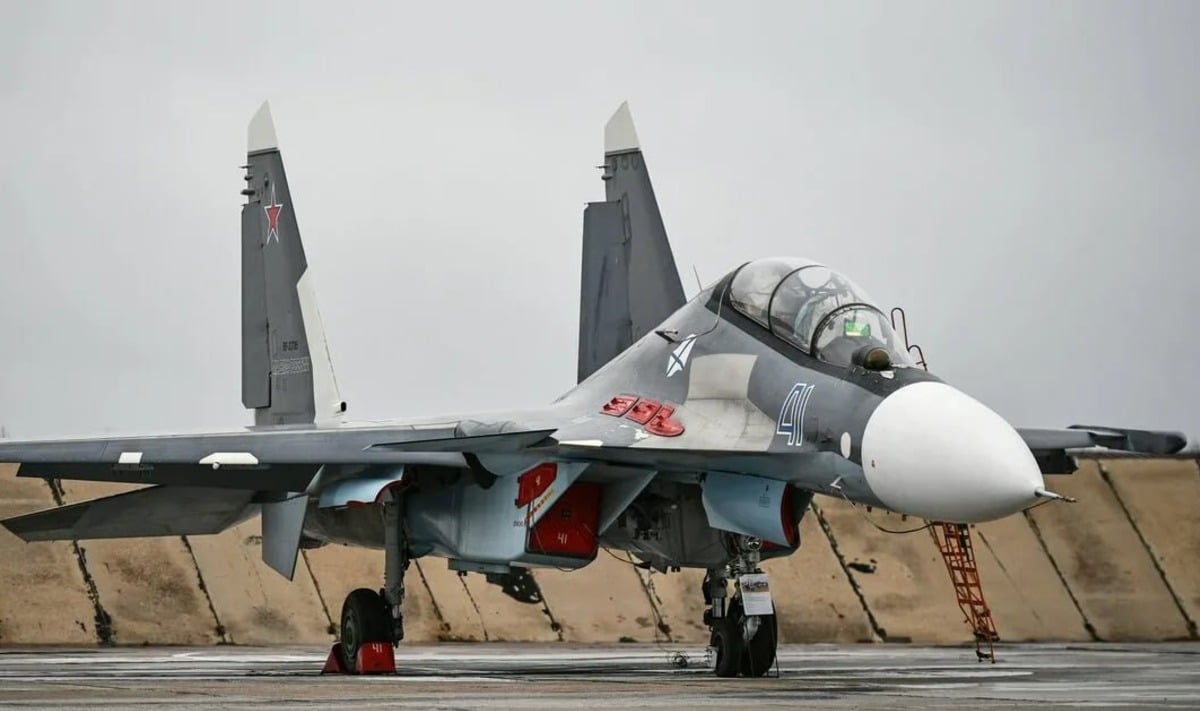
Eyewitnesses near Novofedorivka reported a chaotic night filled with the frantic rattle of anti-aircraft gunfire and heavy explosions echoing after midnight. Local monitoring groups quickly flagged thermal signatures breaking out just west of the main runways. When the smoke cleared, the SBU announced a devastating result. Two hangars containing elite Su-30 and Su-30SM fighter jets took direct hits, sparking a massive fire that destroyed or severely damaged at least one Su-30SM.
This strike matters because it signals a fundamental shift in Ukraine's strategy for the summer of 2026. Ukraine is no longer just defending its cities from incoming missiles. It is actively hunting down the platforms that launch them, stripping Russia of its ability to project power over the Black Sea.
Inside the Saki Air Base Attack
The Saki military airfield near Novofedorivka has a long, bloody history in this war. It serves as a central hub for the Russian Aerospace Forces, hosting the 43rd Independent Naval Attack Aviation Regiment. From this single base, Russian pilots routinely take off to drop guided glide bombs on Ukrainian positions and launch anti-ship missiles across shipping lanes.
The SBU utilized a swarm strategy to overwhelm the base's local electronic warfare networks and point-defense systems. Five explosive drones successfully bypassed the perimeter defenses. They did not just explode on the tarmac or hit empty fuel depots. They punched directly through the roofs of the aircraft hangars.
Preliminary intelligence data shows that Russia had parked its modern Su-30 and Su-30SM fighters inside those exact structures. The SBU confirmed that a major secondary fire erupted inside the hangar holding the Su-30SM. In military aviation, a fire inside an enclosed hangar housing an fueled, armed aircraft is almost always catastrophic. The airframe ruins easily. The electronics melt. The plane becomes scrap metal.
The Forty Day Influence Operation Explaining the New Strategy
This latest raid did not happen in a vacuum. It represents the opening salvo of a highly coordinated, high-pressure campaign authorized directly by Ukrainian President Volodymyr Zelenskyy. On June 25, 2026, Zelenskyy officially approved a 40-day SBU influence operation designed specifically to force the Russian state toward peace by systematically destroying its most valuable military assets deep behind the front lines.
Ukraine is picking targets based on maximum financial and psychological impact. Look at the timeline of the last few days alone.
- On June 26, SBU Alpha forces struck Russian military supply vessels and specialized air defense networks in Kerch.
- On June 28, Ukrainian drones successfully hit the Slavyansk oil refinery.
- On June 30, reports surfaced of strikes against a strategic defense research facility in Penza that manufactures critical missile components.
- On July 1, the Saki airfield hangars burned.
The logic here is brutal and direct. Ukraine is betting that Russia cannot sustain these compounding material losses while simultaneously funding a stagnant frontline offensive. By launching a tightly packed series of deep strikes over a forty-day window, the SBU is testing the breaking point of Russian domestic logistics and military resolve.
The Mind Boggling Cost of Burning Sukhoi Jets
Losing a fighter jet hurts any military. Losing them inside your own heavily fortified airbase hurts even worse. The Su-30SM is a highly capable, two-seat multi-role fighter. It is essentially a 4++ generation evolution of the Soviet-era Su-27, packed with upgraded radar, vector-thrust engines, and advanced avionics designed to achieve air superiority or engage maritime targets.
The financial cost alone is staggering. The SBU estimates that each Su-30 variant costs between $30 million and $50 million depending on its specific configuration and electronic warfare suite.
[Su-30SM Financial Damage Assessment]
Estimated Unit Cost: $30,000,000 - $50,000,000 USD
Replacement Timeline: 12 to 18 months (due to sanctions on microelectronics)
Tactical Loss: High-end multi-role capabilities lost in the southern theater
But the real damage to the Russian war machine is not just the dollar figure. It is the replacement timeline. Because of tight international sanctions blocking the import of western-made microchips, manufacturing a brand-new Su-30SM takes months, if not over a year. Russia cannot simply order a dozen more off an assembly line to replace what burned in Novofedorivka. Every single airframe lost represents a permanent reduction in Russia's total operational capacity.
Why Crimeas Air Defense is Sinking Fast
How did a group of relatively slow-moving long-range drones manage to infiltrate one of the most heavily defended airspace sectors on the planet? The answer lies in Ukraine's systematic dismantling of Russia's radar and surface-to-air missile (SAM) networks over the preceding weeks.
Just days before the Saki strike, the SBU’s Special Operations Center Alpha carried out highly successful raids near the Kerch Strait and Hvardiiske airfield. They did not go after planes during those missions. They went after the guards.
Ukrainian forces successfully hit and destroyed two valuable assets belonging to Russia's top-tier S-400 surface-to-air missile system. To make matters worse for Moscow, they also wiped out two Pantsir-S1 air defense missile and gun systems in the exact same area. The Pantsir-S1 is specifically designed to protect larger systems like the S-400 from low-flying drone swarms. It failed.
When you look at these events together, a clear pattern emerges.
- Ukraine uses targeted strikes to blind Russian radar and blow up Pantsir defense units.
- Russia is forced to pull back its air defense assets or leave gaps in its coverage.
- Ukraine immediately exploits those blind spots by sending drone swarms straight into major military airfields like Saki.
The SBU openly stated that every air defense system they destroy opens up fresh opportunities for subsequent attacks. Russia is losing its grip on the Crimean skies. They cannot patch the holes fast enough.
What This Means for Control of the Black Sea Skies
For the first two years of the conflict, Russia used Crimea as an unsinkable aircraft carrier. They parked planes at Saki, Belbek, and Hvardiiske with total impunity, using them to police the Black Sea and launch devastating strikes into southern Ukraine. That era is completely over.
Ukraine has effectively neutralized the Russian Black Sea Fleet using homegrown naval drones, forcing most major surface vessels to flee to Novorossiysk. Now, Ukraine is running the exact same denial strategy against the Russian Aerospace Forces.
If Russia cannot protect its multi-million dollar jets inside reinforced hangars at Saki, it has only two real choices. They can keep them there and watch them burn one by one, or they can withdraw their fighters back to airbases inside mainland Russia. If they pull back to mainland bases, the flight time to the front lines doubles. That means less time on station, higher fuel consumption, more wear and tear on aging airframes, and far less effective support for their ground troops. Either option is a massive win for Ukraine.
Practical Steps to Track the Crimeas Air War Yourself
If you want to look past the official propaganda from both sides and see what is actually happening to Russia's air bases in real-time, you do not have to wait for official military press releases. You can track this battlefield evolution yourself using freely available public tools. Follow these steps to monitor the situation.
Monitor Public Thermal Satellite Data
Use NASA's FIRMS (Firms Information for Resource Management System) tool. It uses satellite sensors to detect active fires on the earth's surface. When an attack happens at an airfield like Saki, check FIRMS immediately. If you see bright red thermal dots concentrated directly over the coordinates of known aircraft hangars, you know a strike was successful long before satellite photos hit social media.
Follow Verified OSINT Accounts on X
Open-source intelligence (OSINT) analysts track these developments meticulously. Look for updates from credible accounts like DeepStateUA, MT_Anderson, or Brady Africk. These researchers specialize in purchasing high-resolution commercial satellite imagery from Planet Labs and Maxar, providing side-by-side comparisons of airfields before and after drone strikes.
Cross Reference Local Telegram Channels
Local Crimean monitoring groups like the "Crimean Wind" channel frequently post raw video footage, audio recordings of explosions, and eyewitness accounts within minutes of a strike. Cross-reference these local ground reports with official statements from the SBU and the Russian Ministry of Defense to get a clearer, unfiltered picture of the true damage scale.
Russia's air superiority over the peninsula is fracturing under the weight of sustained, low-cost drone innovations. The strike at Saki air base proves that big walls and expensive missile defense systems mean nothing if your opponent can consistently find the blind spots and exploit them with terrifying precision.