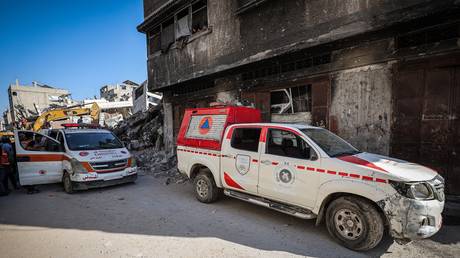
The war for Ukraine’s survival has entered a grueling fourth year, and the political consensus that once kept the country laser-focused on the frontline is fraying. For months, the debate over whether to hold national elections during martial law was whispered in the corridors of power. Now, it’s out in the open.
Mykhailo Fedorov, the recently dismissed defense minister, shattered the relative silence earlier this week. In a widely circulated video, the 35-year-old former Zelenskyy ally demanded that the state "restore a full democratic process" despite the ongoing conflict. It’s a move that has effectively turned the question of elections into the most significant domestic threat to Volodymyr Zelenskyy’s presidency since the full-scale invasion in 2022.
The Argument for Change
Fedorov isn't just asking for a vote. He’s attacking the current governance structure, alleging that the administration prioritizes personal loyalty over the competence required to manage a long-term war. When you watch the video, the subtext is clear: the current leadership is failing to adapt to a changing battlefield, and he believes only a fresh mandate can clear the rot.
He argues that democracy isn't a "peacetime luxury" to be shelved until victory. Instead, he positions it as the very thing Ukrainians are dying for. For a population that has spent years under the shadow of Russian missiles, this message carries weight. It taps into a growing frustration regarding systemic corruption—a recurring sore spot that fueled mass protests across the country when Fedorov was first ousted in July 2026.
Why the Status Quo Holds
Zelenskyy’s team has a ready-made defense, and frankly, it’s a difficult one to argue against. The legal reality is that martial law, enacted after the February 2022 invasion, effectively suspends national elections.
If you look at the constitutional framework, the path to a ballot box is blocked. MPs and legal experts argue that holding a national campaign right now would be a gift to the Kremlin. It creates a target-rich environment for disinformation, cyberattacks, and logistical chaos. How do you ensure the voting rights of millions of refugees spread across Europe? What about soldiers in active trenches?
The fear is that a polarized election cycle would "bury the country" by exposing its domestic vulnerabilities precisely when it needs to be most unified. It’s a lesson in history, too. Leaders from Winston Churchill to modern strategists have noted that during existential survival battles, internal political competition is often a luxury the state cannot afford.
The Core Conflict
The pressure on Zelenskyy isn't just about the vote itself. It’s a proxy war over the future of the administration. Fedorov’s critique is broad, hitting on "systemic failures" and a governance crisis that has seen other high-level departures in recent weeks, including the prime minister.
When a government starts reshuffling its top tier while a war is raging, it signals instability. Zelenskyy claims these moves are necessary to resolve friction between military commanders and civilian oversight—essentially arguing that if he doesn't force a resolution, the machine stops running. His detractors see it differently. They see a leader consolidating power, insulating himself from criticism, and losing touch with the "modernizing" spirit that defined his early successes.
What Comes Next
You shouldn't expect an election any time soon. The legal barriers remain, and there’s no broad political appetite for a vote while the frontlines are volatile. However, the political cost of this delay is rising.
Zelenskyy is now facing a dual challenge. He has to convince a war-weary population that his administration is still the best vessel for survival, while simultaneously managing a growing group of former allies who feel sidelined and empowered to speak out.
If you're watching the situation, keep an eye on these indicators:
- Government Reshuffles: Further changes in the cabinet or high-ranking military posts will only deepen the perception of a "governance crisis."
- Legislative Pressure: Watch how members of parliament from Zelenskyy’s own party respond. If the "monomajority" begins to splinter, the demand for a formal mechanism to restore democratic processes will grow louder.
- Public Sentiment: The recent protests following Fedorov’s ouster showed that Ukrainians are willing to take to the streets if they feel the government is moving away from the ideals they are fighting to protect.
This isn't a debate about election dates. It’s a debate about who gets to define the future of Ukraine. Zelenskyy is betting that stability is the ultimate currency of war. Fedorov and his supporters are betting that without the friction of a true democratic process, that stability is nothing more than a slow slide into stagnation.
The war is changing. The politics are changing. And the pressure on Kyiv is only going to intensify.