Donald Trump still commands the spotlight of the Republican Party, but anyone telling you his endorsement is a golden ticket isn't paying attention.
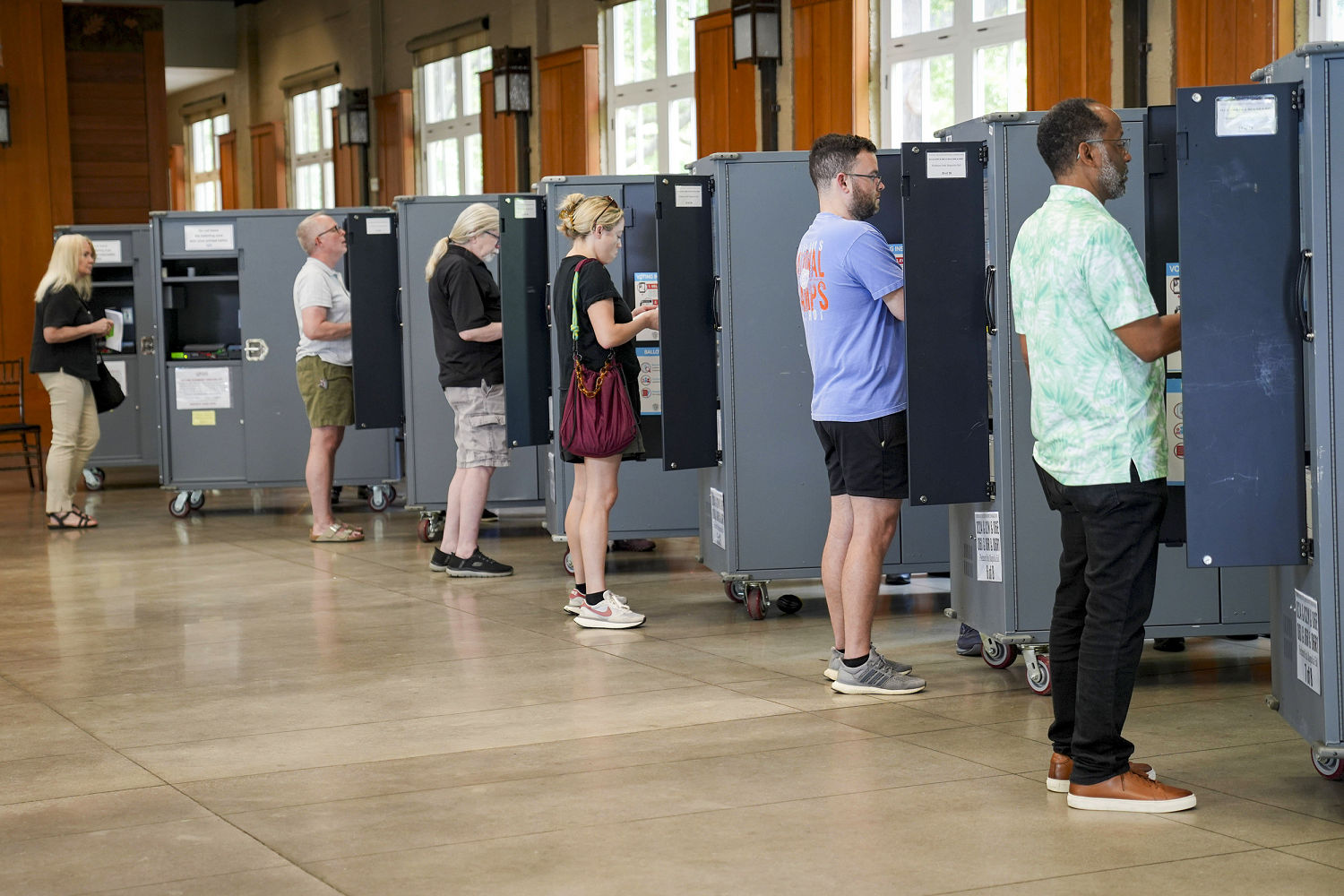
The June 2026 primary elections just blew up that narrative. Across crucial battlegrounds and deeply red territories, voters sent a messy, conflicting message. The political landscape isn't a monolith. In some states, Trump’s backing carried candidates across the finish line. In others, local pocketbook issues and pure exhaustion over Washington drama pushed voters to break away from the script.
If you're trying to figure out who controls Congress and the governor mansions come November, you need to look past the talking points. The real story lies in the data and the sudden shifts happening in key states.
The Big Upset in Iowa’s Corn Belt
Let's start where the ground shook hardest. Iowa’s 4th Congressional District was supposed to be an easy night for incumbent Rep. Randy Feenstra. He had the official Trump endorsement. He had the establishment backing. He had the institutional money.
He lost anyway.
Political newcomer Zach Lahn pulled off a stunning upset, capturing 38% of the vote to Feenstra's 37.2%. That's a microscopic margin of fewer than 2,000 votes, but it screams volumes. Lahn, a local businessman, ran to Feenstra’s right, tapping into deep frustration over high interest rates, persistent inflation, and localized economic pain.
This wasn't an anti-Trump vote. Lahn's supporters consider themselves fiercely loyal to the America First movement. Instead, it was a rejection of the idea that a nod from Washington can shield an incumbent from voter anger over local economic struggles. When gas prices and grocery bills stay high, voters don't care who signed your report card. They want someone to blame, and the person holding the seat gets the boot.
Meanwhile, Iowa Democrats set up their own high-stakes fall matchup. Voters selected tech executive Sarah Turek to challenge Republican incumbent Rep. Ashley Hinson for a crucial swing Senate seat. Democrats view Iowa as a vital component of their strategy to flip the upper chamber. They need a net gain of four seats nationally, and they're betting that local economic anxiety will make rural voters look twice at fresh faces.
California's Jungle Primary Chaos
Out West, the narrative flipped entirely. California utilizes a nonpartisan blanket primary system where the top two vote-getters advance to November, regardless of party. With Governor Gavin Newsom term-limited, the race to lead the nation's most populous state turned into a frantic, expensive scramble.
The early favorite, former Representative Eric Swalwell, dropped out of the race weeks ago following intense scrutiny over misconduct allegations. That left a massive power vacuum.
Billionaire philanthropist Tom Steyer dropped a staggering $213 million of his personal fortune into the race. He formed an unconventional alliance, picking up backing from Our Revolution, the progressive organization aligned with Senator Bernie Sanders. Steyer positioned himself as a populist outsider fighting special interests.
It wasn't enough to secure the top spot.
Health and Human Services Secretary Xavier Becerra captured 27.7% of the vote, locking in his spot for November. He will face Republican businessman John Hilton, who surged to 25.1% by consolidating the state's conservative base. Steyer finished a close but disappointing third at 22.4%, proving that even nine-figure ad buys can't always buy a spot on the ballot.
California Gubernatorial Primary Vote Share
- Xavier Becerra (D): 27.7% (2,177,556 votes)
- John Hilton (R): 25.1% (1,975,062 votes)
- Tom Steyer (D): 22.4% (1,759,328 votes)
- Jon Bianco (R): 10.3% (806,486 votes)
The real takeaway for Capitol Hill watchers, though, lies in California's House districts. Due to redistricting and retirements, five vulnerable Democratic-leaning seats are wide open. In the Central Valley's 13th District, Democrat Adam Gray and Republican incumbent John Lincoln both advanced, setting up a rematch that will see tens of millions of dollars in spending. Control of the House almost certainly runs through these specific California valley towns.
South Carolina and Nevada Hold the Line
If Iowa showed the limits of the Trump endorsement, South Carolina demonstrated its enduring power.
Senator Lindsey Graham easily clinched the Republican nomination for a fifth term, avoiding a runoff entirely. Graham's relationship with Trump has famously fluctuated for a decade, but direct presidential praise kept the state’s conservative base aligned. Trump publicly mocked Graham’s primary challenger, Greenville businessman Mark Lynch, calling him a "disaster" for the party. That intervention ended the contest before it really started.
The governor’s race in the Palmetto State is a different story. Lieutenant Governor Pamela Evette rode a late Trump endorsement straight into a high-stakes June 23 runoff against state Attorney General Alan Wilson. Evette wasted no time drawing lines, immediately framing the upcoming vote as a choice between an outsider fighting "woke culture" and a career politician.
Over in Nevada, the economic pain of the mountain west is setting up one of the most volatile gubernatorial races in the country. Republican Governor Joe Lombardo is widely considered one of the nation's most vulnerable incumbents this fall. Nevada voters chose Democratic Attorney General Aaron Ford to challenge him.
Ford’s primary campaign focused almost entirely on the state's severe lack of affordable housing and some of the highest gas prices in the country. He successfully blamed both Lombardo and national economic policies for the squeeze on working-class families. Lombardo is countering by promising aggressive housing affordability initiatives in his second term. It’s a race where local economic reality completely eclipses national cultural talking points.
What the Data Actually Tells Us
Stop looking for a single headline to summarize these results. The real insight requires looking at the cross-currents.
First, voters are highly transactional right now. An endorsement matters when a race is sleepy or low-information. But when inflation hits local communities, voters become unpredictable. Feenstra’s loss in Iowa proves that voters will punish incumbents who feel distant, even if those incumbents have a stamp of approval from the party leader.
Second, the spending floor has vanished. Tom Steyer’s $213 million third-place finish in California shows that voters are becoming desensitized to massive television and digital ad blitzes. Grassroots organizing and clear, pocketbook-focused messaging are outperforming raw capital.
Your Next Steps for Tracking the 2026 Cycle
The primary season shifts into hyper-drive for the rest of June, with 15 states holding votes. Don't get distracted by the loudest voices on social media. If you want to know where the country is actually heading, keep your eyes on these specific indicators:
- Watch the runoffs: Keep a close eye on the June 23 South Carolina gubernatorial runoff between Evette and Wilson. It will reveal exactly how much weight a fresh Trump endorsement carries when face-to-face with an established statewide political machine.
- Track suburban margins: Look at the upcoming primaries in Maryland, New York, and Utah on June 23. Pay attention to turnout numbers in suburban counties outside major cities. These voters consistently decide the general election.
- Monitor the independent surge: In states like Nevada and California, nonpartisan and independent voters are registering in record numbers. Watch how major-party candidates alter their tone over the summer to appeal to this unaligned bloc.
The old political rules are failing. The 2026 midterms aren't a simple referendum on a single person or a single party. They're a chaotic, state-by-state reaction to local reality.