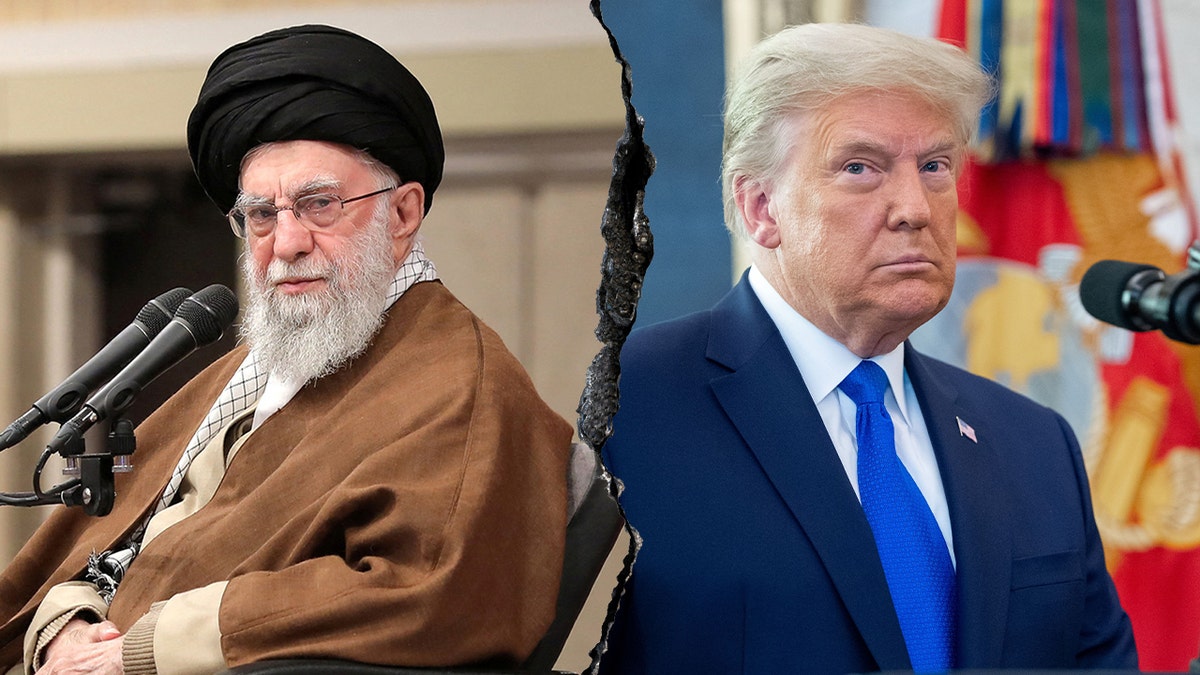
Donald Trump loves strongmen, and he doesn't care who knows it. In his latest post-G7 media blitz, the US President singled out Indian Prime Minister Narendra Modi, calling him a "very tough cookie" and a "great leader" who knows exactly how to stay out of bloody conflicts. It's vintage Trump vocabulary, but underneath the casual Hollywood-style praise lies a much deeper shift in how Washington views New Delhi.
This isn't just about two politicians back-slapping at a summit in France. Trump's comments to Axios offer a raw, unfiltered look at what it takes to survive in modern geopolitics. While American pundits obsess over diplomatic niceties, Trump respects raw political survival and market size. For India, being called a tough cookie by the leader of the Western world is both a badge of honor and a warning sign that future trade talks won't be a walk in the park.
The Hollywood Standard of Global Governance
Trump didn't just praise Modi. He lumped him together with Chinese President Xi Jinping, describing them as the two global figures he respects most for their sheer power and ability to deliver results. He even joked that if you wanted to make a movie about either leader, you couldn't find anyone in Hollywood with enough presence to play the part.
What fascinates Trump about Modi is the contrast between his public persona and his internal grit. He noted that Modi operates with a great calmness on the surface, but underneath, he is an absolute bare-knuckle negotiator. Trump respects leaders who can hold onto power for over a decade. He pointed out that Modi has guided a nation of 1.5 billion people for more than 12 years, bringing immense stability to a region that historically felt unpredictable to Washington outsiders.
The Myth of India's Rotating Door Leaders
Trump got a bit carried away with his history lessons during the interview. He claimed that before Modi, India used to swap out prime ministers every six months or a year.
That is flatly wrong.
If you look at the actual data, India has enjoyed remarkable political stability for nearly thirty years. Manmohan Singh ran the country for a decade between 2004 and 2014. Before him, Atal Bihari Vajpayee held the office for six years. You have to go all the way back to the late 1990s—specifically the brief tenures of H.D. Deve Gowda and I.K. Gujral between 1996 and 1998—to find the kind of political instability Trump is talking about.
But historical accuracy has never stopped Trump from making a point. In his mind, India was a chaotic mess until a strong leader stepped in to steady the ship. This perspective matters because it shapes how the White House negotiates. Trump views Modi as the sole anchor of Indian stability, ignoring the deep institutional foundations that keep the world's largest democracy running.
Staying Out of Wars Is Simply Smart Business
The most telling line from Trump's interview was his praise for India's foreign policy. He explicitly stated that Modi stays out of wars, adding a blunt two-word verdict: "which is smart."
Think about the global environment right now. Europe is fractured by ongoing conflict, and the Middle East is an absolute powder keg. Yet India has managed a masterclass in strategic autonomy. New Delhi refuses to be dragged into Western alliance blocks, maintains its energy ties with Russia, and keeps its focus entirely on domestic economic growth.
Trump hates foreign military entanglements. His "America First" doctrine matches perfectly with Modi's focus on national development. By refusing to play the role of the West's regional policeman, India has protected its economy from the inflation and devastation hitting other parts of the world. Trump sees this non-interventionist stance not as weakness, but as ultimate strategic competence.
The Bitter Reality of India US Trade Negotiations
Don't let the compliments fool you. Trump's praise always comes with a financial price tag. Right after calling Modi a great leader, Trump immediately pivoted to his favorite grievance: international trade.
He claimed that India used to completely rip off the United States because of stupid American politicians who allowed lopsided deals to pass. Trump bragged that under his watch, the US now does fair business with India. He even smirked that Indian officials aren't very happy about it because they used to do much better under previous US administrations.
This is where the rubber meets the road. Behind the warm body language at the G7 summit, the economic relationship between Washington and New Delhi is fiercely transactional. Trump has already imposed fresh tariffs and restricted key technology transfers since returning to office. He treats international relations like a zero-sum game. If India is winning, Trump feels America is losing.
Why the Quad and Indo Pacific Alignments Are Shifting
For years, Washington policymakers viewed India as the ultimate counterweight to China's rise in Asia. They built frameworks like the Quad to bind New Delhi closer to American security ambitions.
Trump doesn't care about those legacy frameworks. He prefers direct, transactional deals with individual leaders. His simultaneous praise for Xi Jinping and Narendra Modi shows that he views global politics through the lens of strongman bilateralism, not multinational security pacts.
This leaves Indian diplomats in a tricky spot. On one hand, Modi's personal chemistry with Trump keeps the communication lines wide open. On the other hand, Washington's focus on short-term trade victories means India cannot rely on America as a predictable long-term economic partner. New Delhi has to keep adjusting its strategies to handle an American administration that values immediate financial wins over long-term strategic chess.
How to Navigate a Transactional Washington
If you're managing cross-border investments or tracking global policy, you can't rely on political flattery. You have to look at the actions behind the words. Trump's rhetoric tells us exactly how to handle business with the US over the next few years.
First, lock in bilateral deals quickly. Symmetrical trade agreements are dead under this administration. Everything is a case-by-case negotiation.
Second, emphasize economic scale. Trump respects India because it represents 1.5 billion consumers. If you want leverage in Washington, you talk about market access and manufacturing power, not shared democratic values.
The era of soft diplomacy is entirely over. Surviving the global marketplace requires adopting the exact trait Trump highlighted. You need to be a tough cookie who keeps your head down, stays out of unnecessary fights, and focuses entirely on the bottom line.